


Google has introduced a new feature in its "My Ad Center" that reveals whether ads on Google Search, Google Discover, and YouTube have been created or edited using AI. This label appears under the "how this ad was made" section, accessible via the three dots or info button on ads. Ads generated with Google's AI tools will automatically display the label, while ads created with other AI platforms require manual labeling. This update enhances transparency, allowing users to better understand the origins of digital ads.

OpenAI is winding down its ChatGPT Atlas browser, a tool designed to complete tasks for users autonomously, less than a year after its introduction. Announced last October, the company has set August 9th as the official shutdown date for Atlas. This move aligns with OpenAI's recent strategy to streamline its services and enhance productivity offerings, reportedly merging Atlas, the ChatGPT app, and Codex into a unified desktop platform called ChatGPT Work. The decision highlights OpenAI's focus on consolidating features to compete more effectively with Anthropic in the productivity space.

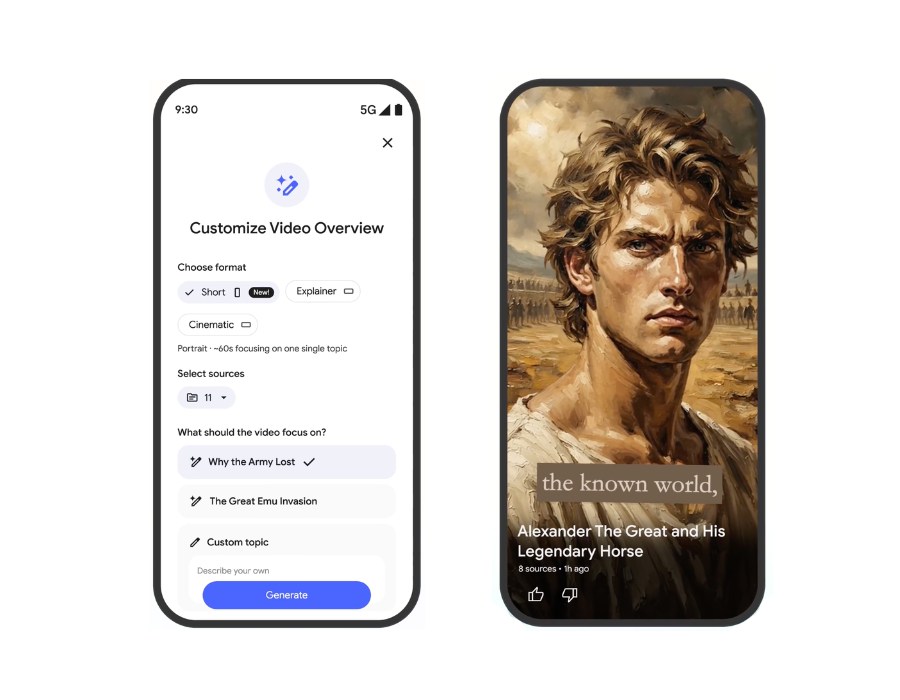
Google's NotebookLM is launching a new feature for Google AI Ultra and Pro subscribers that creates 60-second vertical AI videos to summarize your research notes. These TikTok-inspired clips use AI-generated narration and visuals, such as paper cutout-style animations, to present your data in an engaging way. One example highlights Australia's failed emu war with creative AI art and storytelling. This feature complements other NotebookLM tools that generate AI podcasts, cinematic videos, and visual explainers to help you interact with your research more dynamically.
The Federal Trade Commission imposed a $2.25 million fine on Amazon for failing to assist customers victimized by identity theft. According to the FTC, Amazon violated the Fair Credit Reporting Act by refusing to disclose information related to fraudulent accounts. Victims reported being caught in a frustrating cycle where support representatives demanded the name of the fraudster before sharing any purchase records. This complaint highlights serious customer service shortcomings in handling identity theft cases. For complete details, visit The Verge.

A new legislative proposal seeks to prevent the sale of Americans' health and location data to data brokers, including data shared with AI chatbots like ChatGPT and Claude. Senator Elizabeth Warren (D-MA) and Representative Mary Gay Scanlon (D-PA) are expected to introduce an updated Health and Location Data Protection Act soon. Initially proposed in June 2022, the bill banned data brokers from collecting and selling health and location data. The updated version broadens the scope by prohibiting other companies from selling this sensitive data to brokers, specifically addressing challenges posed by AI technologies.

China's Zhipu AI (Z.ai) has launched its latest open-weight model, GLM-5.2, which some experts believe matches the capabilities of Mythos in specific bug detection and cybersecurity tasks. Though GLM-5.2 trails behind models from Anthropic and OpenAI in more generalized functions, this development signals a significant narrowing of the technology gap between Chinese AI models and their American counterparts. This rapid advancement has raised concerns within the US government, which has imposed restrictions on China's access to advanced AI models like Mythos and Fable, as well as the technology needed for their development. The issue highlights the broader geopolitical tensions in AI innovation and security.

Barret Zoph, who was leading OpenAI's enterprise AI sales, has left the company just five months after returning. Zoph came back to OpenAI in mid-January following his role as co-founder and CTO of Thinking Machines Lab, an AI firm founded by former OpenAI CTO Mira Murati. Upon his return, he was tasked with spearheading OpenAI's enterprise strategy—a critical focus area as the company aims to concentrate on major revenue streams like enterprise solutions and coding in preparation for its upcoming IPO. OpenAI has confirmed his departure, though further details were not provided.

Dario Amodei, CEO of Anthropic, recently took part in a working lunch with G7 leaders, tech CEOs, and innovation experts during the June 2026 G7 Summit in France, amidst rising tensions over frontier AI development. This conflict recalls the early Trump administration's factional disputes, highlighting competing visions and interests within the AI field. For a deeper dive, read the full coverage on The Verge.

A recent Pew Research poll reveals that while 49 percent of Americans now use chatbots at least occasionally, 63 percent believe AI technology is advancing too quickly. Since 2024, chatbot use has surged from 33 percent, with ChatGPT usage doubling since 2023 as 44 percent of respondents have used it. Despite the growing adoption, skepticism remains high, with only 16 percent optimistic about AI’s impact on society. Younger generations lead in AI use but also tend to hold more negative views on its societal effects.
A recent Semafor report indicates that the White House's export restrictions on Anthropic’s Mythos may be due to worries that a China-linked group accessed the technology. If the Chinese government has obtained Mythos 5 or Fable 5, it could pose significant national security threats, including the risk of reverse engineering the AI model through distillation techniques. While the White House has not publicly confirmed these claims, and Trump advisor David Sacks’s comments on X did not mention China, these developments highlight ongoing tensions regarding AI security and control.
