The European Commission has increased its investment in the flagship research and innovation programme by an additional €500 million, bringing the total budget to approximately €14.8 billion. This significant funding boost aims to further support advancements in key sectors such as biodiversity and artificial intelligence.


The research involved interviews with 39 executives across 10 countries and diverse industries, plus an online workshop with 36 enterprise data leaders to explore how digital technologies address sustainability challenges. Additionally, surveys of 360 Swiss manufacturing employees revealed approaches to energy efficiency. Rising global energy costs, heightened by geopolitical events like conflicts involving the U.S., Israel, and Iran, press companies financially, especially in energy-intensive sectors such as cement, chemicals, and metals. These industries, along with manufacturers relying on complex supply chains, face profit margin pressures due to increased fuel and power expenses.
Businesses are expanding efforts to enhance energy efficiency not only to support sustainability but also to achieve tangible cost savings, bolster resilience, and enable growth. Some have cut energy consumption by up to half at certain facilities and improved process efficiency by 10-20%. Success stems from comprehensive strategies integrating digital system upgrades and clear executive accountability with performance targets.
Three key strategies emerged: first, investing in data collection and analysis to enable real-time energy management through sensors, dashboards, and centralized platforms; second, redesigning operations to optimize energy use, reduce waste, and deploy AI for continuous improvement; and third, creating products and services that help customers meet energy efficiency goals.
Companies like Clariant utilize digital platforms and AI to monitor and reduce energy use across global sites, achieving significant savings. Similarly, Georg Fischer combines energy-saving technologies, renewable energy, and circular economy practices to lower fossil fuel dependence and emissions. Producers like ABB and DMG Mori offer energy-efficient products and data-driven services that help customers reduce consumption and improve operational efficiency.
The findings highlight a reinforcing cycle where visibility into energy consumption drives operational redesigns, funding further innovations for customers. Organizations that prioritize energy efficiency with clear goals position themselves advantageously amid volatile fossil fuel markets.


Senate Democrats blocked a bill aimed at mitigating the energy impact of data centers on consumer electricity bills, labeling it insufficient ahead of the upcoming midterm elections. The Ratepayer Protection Act was defeated in a 57-to-43 vote, just short of the 60 votes needed to pass in the Republican-controlled Senate. Four Democrats—Maggie Hassan, Amy Klobuchar, Jon Ossoff, and Raphael Warnock—voted with Republicans in favor of the legislation.


As data centers adopt alternative energy sources, states are working swiftly to update regulations to keep pace with these changes.


The U.S. Energy Department announced a $2 billion investment aimed at strengthening the nation's aging power grid through 31 projects in 26 states, expected to add over 23 gigawatts of electricity capacity—enough to power 16 million homes. These efforts focus on deploying advanced technologies like sensors for real-time weather monitoring to optimize electricity transmission and avoid congestion. The upgrades aim to boost power reliability and reduce costs for around 100 million Americans. The initiative comes amid rising electricity demand driven by the rapid growth of AI-powered data centers and addresses concerns that energy infrastructure may be overwhelmed. Some projects, such as a $71.5 million modernization of high-voltage lines in northern Pennsylvania, respond directly to surging local demand. Funding from the bipartisan infrastructure law will be matched by recipient contributions, with utilities, cooperatives, and state agencies receiving grants. The Energy Department hopes these improvements will be in place before winter to mitigate potential price spikes during extreme weather. The investments mark a significant step toward modernizing America's electric grid with cutting-edge technology while balancing political and environmental challenges around energy sources and data center expansion.
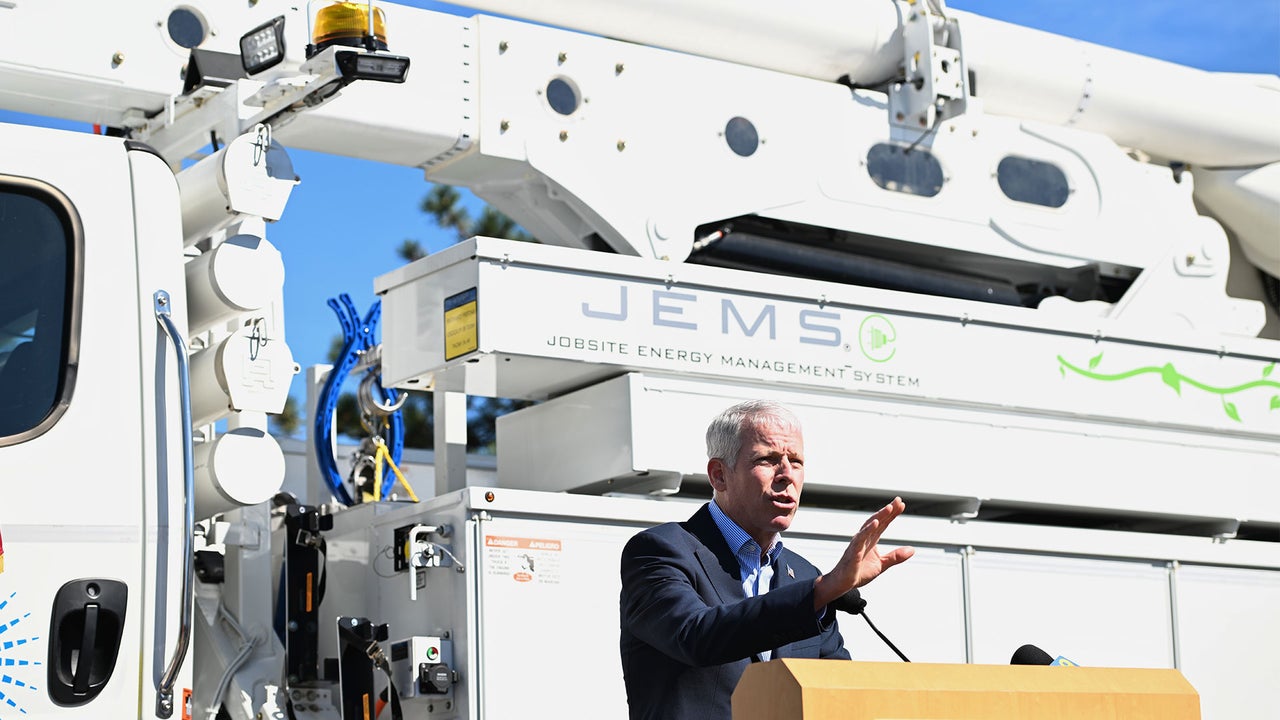

California Governor Gavin Newsom has signed new legislation aimed at increasing transparency around data centers' impact on local resources. These new rules require data center operators to disclose more details about their electricity and water consumption starting next year. The move comes amid growing concerns from communities across the US about the strain data centers—crucial to AI infrastructure—place on power grids and water supplies. While the new regulations won't reveal everything, they mark a significant step toward giving communities more information and influence over these facilities.

Tjada McKenna, CEO of the organization now known as Prosper Global (formerly Mercy Corps), discusses the urgent humanitarian crises worldwide—from Nepal's floods to conflicts in Syria, Sudan, Ukraine, and Gaza. She explains the reasoning behind rebranding a 40-year-old aid group during a funding crisis, emphasizing the shift from mere survival aid to fostering long-term prosperity and sustainability. Prosper Global aims to reflect its evolved mission by supporting communities not just in emergency relief but also through innovative, market-driven solutions like cash assistance, seed insurance, and blockchain for identity management. McKenna highlights how global conflicts, such as the Strait of Hormuz tensions, disrupt food and fuel supplies in fragile countries, and stresses the importance of resilience in the face of climate-related and man-made disasters. This transformation underscores a commitment to empowering people to thrive rather than just survive, aligning with their ongoing work including efforts to protect Ukraine’s grain supply amidst wartime destruction.

The European Union is aiming to reduce the environmental impact of data centres as it plans to triple their capacity within the next five to seven years. The new proposal suggests establishing a common energy rating scheme to better manage and mitigate energy consumption across data centres.

Corporate sustainability efforts frequently face significant challenges. Net-zero commitments are being quietly scaled back, regulatory pressures are easing in some regions, and shareholders increasingly demand clear business value. Sustainability leaders often find themselves defending their role instead of expanding it. This leads to a common tension: balancing profit with purpose.
Rather than outright failures, many sustainability transformations gradually lose their drive. Initial ambitious goals fade as everyday decisions increasingly mirror those made without sustainability in mind. This gradual weakening often goes unnoticed until much later.
Our research following six startups committed to sustainability or social impact revealed that the key factor differentiating success from failure was cognitive approach. Teams that saw profit and purpose as mutually exclusive tended to struggle or fail. Conversely, those that embraced the paradox of balancing both goals—maintaining a flexible, iterative approach—were more successful.
This mindset shapes early structural decisions, from target-setting to team composition, creating lasting impacts on the transformation’s path. Often, the dominant pragmatic voice in established companies pushes for strong business cases first, risking sidelining sustainability ambitions permanently.
To counteract this drift, transformation leaders should:
- Build teams with diverse viewpoints to encourage productive tension.
- Incorporate early reality checks through stakeholder feedback to avoid premature lock-in.
- Start with simple, adaptable program designs before scaling complexity.
By fostering a culture that holds profit and purpose in creative tension, companies can navigate the pressures threatening sustainability initiatives and preserve their transformative edge.


George Osborne, OpenAI's head of countries, shared with Bloomberg at Mark Carney’s investment summit in Toronto that the company is considering partnerships for data centres in Canada, attracted by the available land and energy resources. This comes as OpenAI paused its British data centre project in April, citing regulatory challenges and energy costs. The company is looking to expand its infrastructure where conditions are more favorable.