One common but costly misconception about AI is the belief that technology can fix a business without first improving its underlying processes. While AI can speed up operations, automate routine tasks, and quickly identify issues, it cannot remedy fundamentally flawed or fragmented workflows. True business transformation requires streamlining processes before AI can truly add value.

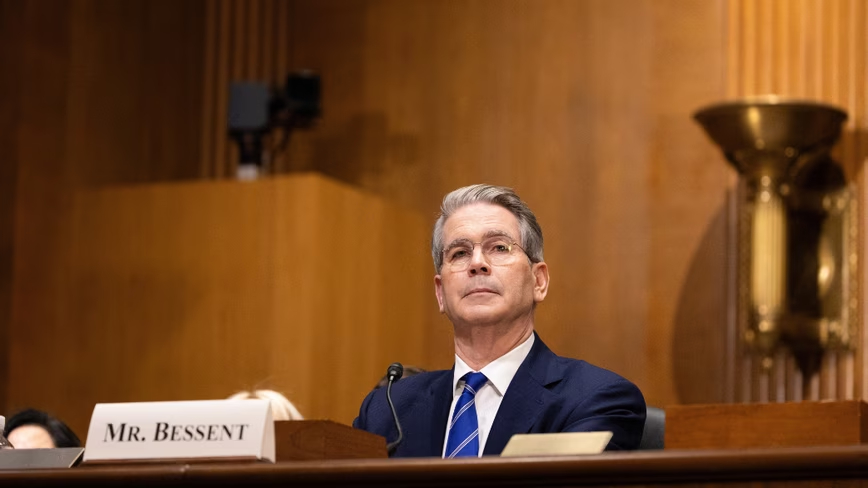
US Treasury Secretary Scott Bessent has expressed frustration with certain AI industry leaders who raise alarm about potential risks but fail to propose effective solutions. In an interview with Axios, Bessent emphasized that such alarmism without actionable remedies does not constitute true leadership. His comments come amid growing debates over the future and regulation of artificial intelligence technologies. Prominent figures like Anthropic’s Dario Amodei, OpenAI’s Sam Altman, and xAI’s Elon Musk have been central to these discussions.
The upcoming financial crisis might not originate within traditional banks, India's central bank governor, Sanjay Malhotra, cautioned. Speaking at the Kautilya Economic Conclave in New Delhi, Malhotra highlighted that such a crisis could be triggered by geopolitical tensions, cyberattacks, or technological failures. His warning underscores the evolving risks in the financial system that extend beyond conventional banking threats.

Anthropic has issued a caution in its IPO prospectus about how the US government's perspective on the company might affect its relationships with business clients, partners, and government contracts. This information surfaced in a Reuters report, which obtained the document before its public release. The prospectus highlights potential risks tied to government attitudes that could influence Anthropic's market and governmental engagements.

FieldAI is in the process of raising $700 million, reaching a valuation of $10 billion, a significant increase from just over a year ago. The company's focus is on developing software that operates robots without building the robots themselves. This move stands out, especially as Europe's largest robotics investments this year have mainly supported machine manufacturers. Compared to FieldAI, other European robotics firms have much lower valuations, with the closest competitor valued at roughly a third of FieldAI's.

Executives representing more than 300 news publishers have gathered in Washington this week to urge Congress to pass legislation prohibiting AI 'stealth bots.' The delegation, organized by the News/Media Alliance—a coalition of news and magazine publishers—includes prominent figures such as Condé Nast CEO Roger Lynch and the president of Hearst Magazines. Their goal is to address growing concerns over the deceptive use of AI bots in the media industry, as reported by Digiday. This effort highlights the publishing sector's push for regulatory measures to protect authentic journalism.
Google is compensating approximately 100 digital publishers whose content helps train its AI systems. According to The Information, the payments for some small and mid-sized publishers involved in the pilot program amount to less than 0.1% of their advertising revenue. This initiative aims to acknowledge the role of publishers in powering AI-generated answers, as reported by Alix Coutures and Catherine Perloff, referencing insiders familiar with the trials. Further details are available at The Next Web.

A court in Tokyo has ruled that Japanese law safeguards the human voice, following a lawsuit by anime voice actor Kenjiro Tsuda against TikTok. Tsuda claimed that TikTok used an AI-generated clone of his voice in videos without consent. While the court recognized the voice's protection, it denied Tsuda's request to have the videos removed, according to Agence France-Presse. The case highlights emerging legal challenges as AI technology advances.

Update as of 29 September 2026: This article now includes details about the regional availability of OpenAI's new AI agents, dots, along with feedback from an early user. Currently, Pro users located in the European Economic Area, Switzerland, and the UK won't have access to dots. OpenAI's dots are designed to operate continuously on their own cloud-based systems, enhancing AI interaction and efficiency.

Companies can now develop OpenAI-powered agents that run completely within Amazon Web Services, ensuring their data remains securely inside AWS. This new capability, launched during OpenAI’s DevDay 2026 in San Francisco, is part of the Bedrock Managed Agents offering created by OpenAI in partnership with Amazon. Currently, this product is available in a limited preview, enabling businesses to leverage advanced AI agents without their data ever leaving the AWS environment.