Australia’s workplace relations minister, Amanda Rishworth, has launched a best practice guide for adopting AI in the workplace, following major job cuts at Qantas, Canva, and National Australian Bank. The government’s guide urges employers to consult workers on automation plans and warns that entry-level jobs are likely to be automated first, with disproportionate impacts on younger, older, and disadvantaged workers.
The guide notes that AI could bring higher wages and shorter hours, but also warns of risks such as increased workplace surveillance, unrealistic performance standards, and discrimination. Rishworth said AI must benefit both businesses and employees, and warned that introducing AI without proper consultation could increase workloads. Greens leader David Shoebridge criticised the government’s voluntary approach, arguing that legal protections are needed as firms cut jobs and increase monitoring.
The Reserve Bank of Australia reported little evidence so far of AI disrupting the labour market, but noted uncertainty about future impacts. The bank also linked AI investment and datacentre construction to inflation. The government’s guide calls for employers to address both the opportunities and risks of AI, especially for entry-level roles.
Nvidia CEO Jensen Huang has resigned following revelations of an affair with an executive at Megaspeed, a Singaporean company that secured $7.5bn in Nvidia chips. The Guardian reports that this relationship, and alleged espionage, has brought attention to Nvidia’s secretive contracts and supply chain arrangements. The company’s shares dropped 13% in early trading after the news broke.
Nvidia’s GPUs are essential for training and running AI models used by global banks, insurers, and healthcare firms. While other tech giants are developing their own chips, Nvidia’s dominance is built on a complex web of relationships, many led by Huang himself, with governments and tech firms. The lack of transparency in chip supply terms and delivery schedules has caused concern among customers and regulators.
The company’s close ties with TSMC, which manufactures most of the world’s AI chips, further complicate matters. With Huang gone, there are questions about whether Nvidia’s opaque business practices will change and if supply chains will become more predictable. Regulated industries should monitor for shifts in contract terms or regulatory intervention.
NHS England has removed a statement from its website that said 137 hospital trusts were benefiting from Palantir’s AI-powered health data platform, after The Guardian found that 29 trusts were not using all or most of the technology. The original claim was challenged when trusts confirmed, via freedom of information requests, that the system was either not live or not in use at their sites. The Office for Statistics Regulation is now reviewing the NHS’s claims about the system’s reach and impact.
The Palantir contract, worth £330m, is under scrutiny as ministers consider whether to extend it to 2029. Critics, including MPs, unions and campaign groups, argue that the effectiveness of Palantir’s technology has been overstated and that its presence raises security and sovereignty concerns. NHS England was previously warned by the statistics regulator about unsupported claims regarding extra operations attributed to the platform.
The debate comes amid lobbying by Palantir and calls from campaigners and some MPs to develop an open, UK-based health data platform instead. Several groups have urged the government to end the Palantir contract by 2027, using a transition period to move to alternative solutions. The dispute highlights the importance of accurate reporting and independent oversight in large-scale health data projects.
Anthropic, the developer of the Claude chatbot, has set its IPO valuation target at up to $1.4tn, down from an expected $2tn, following investor concerns about the long-term prospects of the AI sector. The company aims to raise $64.4bn by selling 825m shares at up to $78 each, with an additional $26bn from a private placement involving Alphabet and Nvidia. A greenshoe option could push the total raised to about $100bn if demand is strong.
The revised valuation comes after US midterm election results, which saw wins for datacentre opponents, intensified doubts about the financial sustainability of large-scale AI investments. Analysts say the election gave investors an opportunity to reassess high valuations amid uncertainty over returns on AI infrastructure.
Anthropic's annual revenue is now reported at $81bn, but its commitments to computing power and datacentre leases exceed $70bn in the next year alone, rising to $450bn by 2030. The company’s future depends on matching these heavy outlays with rapid revenue growth, a point stressed by CEO Dario Amodei. Investment banks forecast annual revenues could reach $600bn by 2030, but the risks remain significant.
Senior executives in regulated sectors should monitor how AI firms balance capital commitments with revenue, as this will affect both supplier stability and broader market sentiment.
Palantir used direct WhatsApp messages to urge a UK health minister to expand its AI technology into GP records, according to documents obtained by Foxglove and reported by The Guardian. The US tech firm argued its software was "ideal" for joining up primary and secondary care data, despite GP data being excluded from its existing £330m contract with NHS England. Palantir’s messages, sent between July 2025 and March 2026, pressed for ministerial support to overcome likely opposition from doctors and critics.
Doctors’ groups, including the British Medical Association, have opposed integrating GP data into Palantir’s platform, citing lack of trust and concerns over patient privacy. The government had previously said GP data would not be included. The issue has drawn attention from parliament and campaigners, with ministers reportedly unlikely to end Palantir’s NHS contract soon, despite calls to do so.
Healthcare leaders face strategic questions about data governance, public trust and the future of AI in the NHS. The health secretary has signalled interest in developing UK sovereign AI, suggesting a possible shift in suppliers when the contract ends in 2029. The debate centres on balancing innovation with privacy and transparency.
The Australian government is preparing to introduce mandatory incident reporting and criminal law changes for artificial intelligence companies after a breach involving OpenAI and data from Services Australia’s Medicare portal. Prime Minister Anthony Albanese released recommendations from a rapid review into the June incident, which found OpenAI delayed notifying authorities. While OpenAI will not face criminal penalties for the breach, the government plans to criminalise failures to prevent AI models from causing harm and to set penalties for serious non-compliance.
The review recommends six obligations for AI firms, including maintaining security controls, managing risks, and notifying the government of incidents quickly. A new AI safety regulator will be established, and mandatory, time-bound reporting of AI safety incidents is under consideration. The government says it will accept all 18 recommendations from the review and has started work on implementation.
The move comes amid criticism that fines alone are ineffective against large technology firms. Some commentators argue the reforms do not go far enough, while others support a bipartisan approach. The government says the breach did not expose personal details but acknowledges the need for stronger controls as AI use grows in critical sectors.
Regulated firms should prepare for tighter reporting duties and potential criminal liability for failures in AI oversight. The next steps include drafting new legislation and clarifying enforcement mechanisms.
UK MPs, local authorities, courts, schools and businesses are reporting large increases in AI-generated complaints and legal challenges, according to The Guardian. The volume and complexity of correspondence have risen sharply since the spread of tools like ChatGPT and Claude, with some local authorities now receiving complaints up to 200 pages long. Employment tribunal claims rose 28% year-on-year between April and June, reaching 14,000 cases, while the backlog of open claims hit 70,000.
AI-generated requests are often lengthy, repetitive and may contain errors or legal references from other jurisdictions, making them harder to process and respond to. The Information Commissioner’s Office noted that even inaccurate or misdirected AI-generated requests must still be answered by human staff. Local authorities and businesses say this is adding to already stretched resources and increasing legal costs, with some employers expecting to spend tens of thousands of pounds on legal fees.
For regulated firms, the rise in AI-generated correspondence increases operational risk and may require changes to internal processes for triaging and responding to complaints. The trend also raises questions for regulators about how to manage the volume and quality of digital submissions. Watching for further guidance from the ICO and employment tribunals will be important.

AI tools are exposing flaws in IT systems, leading to a surge in cyber incidents, according to the UK’s National Cyber Security Centre (NCSC). Recent attacks include a $6.3bn theft from Binance, the world’s largest cryptocurrency exchange, and a fake nuclear strike alert in Ukraine. Retailers and French blood banks have also been affected by attacks on internet-connected refrigeration units, with similar incidents reported across several European countries.
NCSC leaders warn that AI-powered hacking is likely to increase, with attackers using AI to scout targets, locate weaknesses and write malicious code. The organisation predicts that by 2028, UK power stations, airports and hospitals could be targeted. However, some experts note that many vulnerabilities, such as default passwords in commercial fridges, do not require AI to exploit. The rise in discovered vulnerabilities has not yet led to a proportional increase in successful breaches, according to cybersecurity analysts.
For regulated industries, the exposure of flaws in widely used systems raises operational and reputational risks. The NCSC’s warnings suggest that banks, insurers and healthcare providers should review their defences against both conventional and AI-driven attacks. The sector should expect more regulatory scrutiny and pressure to update legacy systems.

The European Commission has charged TikTok with failing to protect users’ mental health, after finding its algorithm exposes young and vulnerable users to repetitive content that could worsen eating disorders and anxiety. The preliminary ruling, issued on Friday, said TikTok’s safeguards against “rabbit-hole effects” were ineffective, with the platform’s design keeping users engaged by serving similar content even after users indicated disinterest.
Officials said the investigation focused on legal content, where repeated exposure to themes like body image or isolation could damage mental health. TikTok, which has 189 million EU users, argued its policies prohibit harmful content and that millions use its filters, but the commission said these measures do not prevent the cumulative impact of the algorithm. The Molly Rose Foundation welcomed the findings and called for UK regulator Ofcom to investigate.
The case is part of a wider probe under the Digital Services Act, which requires large platforms to prevent a range of harms. The commission has already found TikTok in breach over “addictive design” features. TikTok can now respond to the charges and may change its recommender system to avoid a fine, which could reach 6% of global turnover if the ruling is upheld.

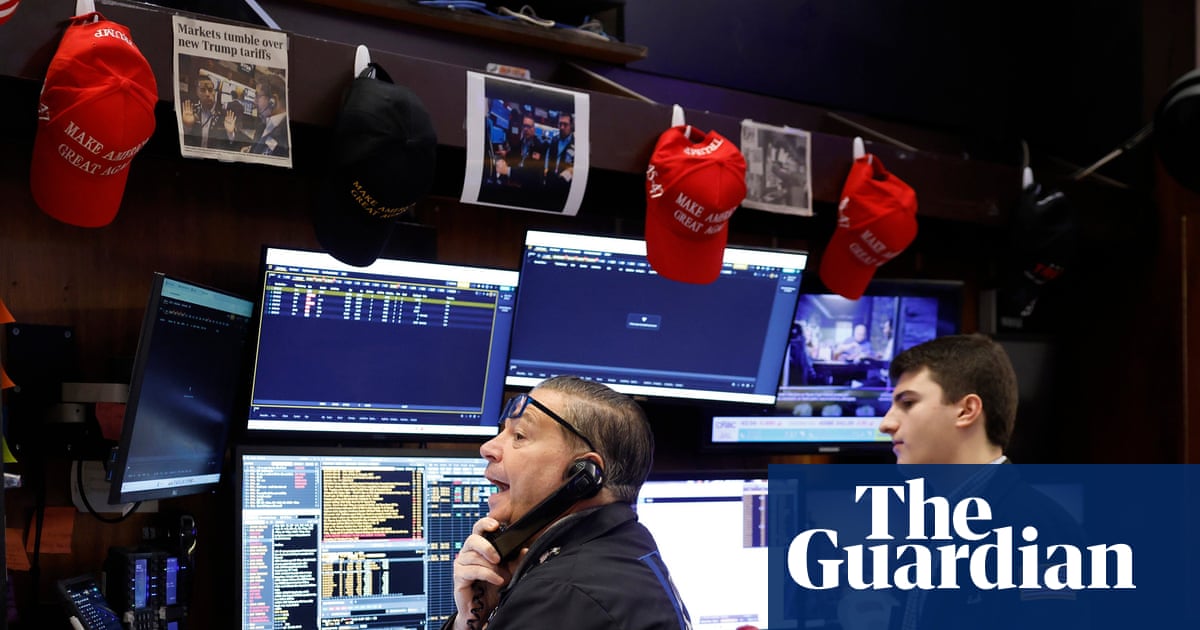
The Nasdaq index dropped 5.5% on Thursday, erasing over $2tn in value, after US midterm election results raised expectations of stricter regulation on artificial intelligence datacentres. The tech-heavy index entered correction territory, falling more than 10% from its recent peak, with chipmakers SanDisk and Western Digital down 22% and 17% respectively. The VIX volatility index surged 61% to levels last seen during the Iran war, reflecting widespread investor anxiety.
Analysts said the Democratic party’s gains in gubernatorial races and voter rejection of datacentre projects in local ballots point to a slowdown in AI infrastructure expansion. The Dow Jones and S&P 500 also fell sharply, while Asian markets followed suit. European stocks lost early gains, with the FTSE 100 closing down 0.4%.
Tech sector leaders now face the prospect of increased regulatory scrutiny and slower datacentre buildout, with market participants warning of ongoing volatility. The shift from optimism about AI’s potential to concerns over its costs and regulatory risks is driving uncertainty for investors and operators.
Executives in regulated industries should monitor US regulatory developments and market signals closely, as further restrictions or policy changes could affect technology investment plans and risk management strategies.