
South Korea's financial sector has been hit by another series of cyberattacks, affecting major investment companies including Mirae Asset Global Investments and Daishin Securities, according to the Financial Supervisory Service. Daishin Securities confirmed that personal and credit information for 38,490 customers was exposed after suspicious access was detected on a server used for remote account openings. The company said there was no evidence of further harm or unauthorised access to its main business systems. Mirae Asset Global, which manages $461 billion in assets, reported unauthorised access to some business web systems but said retail investor data was not affected and no financial losses occurred.
South Korea's Presidential Blue House has called an emergency meeting to address the breaches, which follow recent attacks on Japanese financial firms. Japan's Financial Services Agency has also urged financial institutions to review third-party risks and online identity checks. The incidents come as organisations globally race to patch vulnerabilities in PHP, an open-source programming language widely used on the internet.
The use of artificial intelligence in these attacks has raised concerns about the ease and scale of future breaches. For financial sector leaders, the events highlight the need for immediate review of cyber risk management and closer attention to regulatory expectations. The situation remains fluid as firms investigate the extent of the breaches and regulators consider further action.

French banks including BNP Paribas, Societe Generale and Credit Agricole are under closer investor scrutiny as they prepare to report third-quarter earnings. Investors are focused on the banks’ €54 billion in French sovereign debt holdings and the risks posed by recent political unrest, rising bond yields and a slowing economy. According to Bloomberg Intelligence, the banks’ exposure increases to €104 billion when including insurance operations, though much of this risk sits with policyholders.
The spread between French and German government bond yields has reached its highest level since 2011, reflecting market anxiety over France’s fiscal and political situation. While analysts note that direct risks to the banks from their sovereign bond holdings are limited—thanks to amortised-cost accounting and hedging—share prices for both banks and insurers such as AXA have fallen. French banks’ CET1 ratios remain above regulatory minimums, but political instability and higher borrowing costs are expected to affect loan demand and investment.
The French regulator ACPR has said there is no immediate stability risk, as international investors hold over half of French government debt. However, volatility is likely to persist until the presidential elections. Senior executives should monitor further market swings and any new regulatory guidance.

The US domestic cyber insurance market almost tripled in size since 2020, with direct premiums written reaching nearly $7.5 billion in 2025, up from $2.75 billion in 2020, according to a new NAIC report. Including surplus insurers outside the US, total premiums rose to $9.5 billion, a 3.5% increase over 2024. More than 60% of US cyber premium comes from primary policies, but most policies by count are endorsements to other commercial policies, which generate low premiums but are high in volume.
Domestic policies in force rose 33% over 2024 to about 5.8 million. Endorsement policies increased 53.8%, while primary policies grew 13.6%. Surplus policies dropped 45.3%. Endorsements made up 53% of policies in force but only 4% of premiums. Surplus lines carriers now hold nearly two-thirds of all cyber premium, with the market splitting into surplus lines for primary and excess cyber-specific policies and admitted markets focused on endorsements.
The NAIC noted a persistent protection gap: only about 1% of global economic cyber losses are insured, despite losses estimated between $1 billion and $10 billion. The loss ratio for cyber insurance worsened to 53 in 2025 from 48.7 in 2024, as claims severity increased for large and medium businesses, though frequency declined. The report suggests improved underwriting and controls may be reducing claim numbers but not the cost of major incidents.

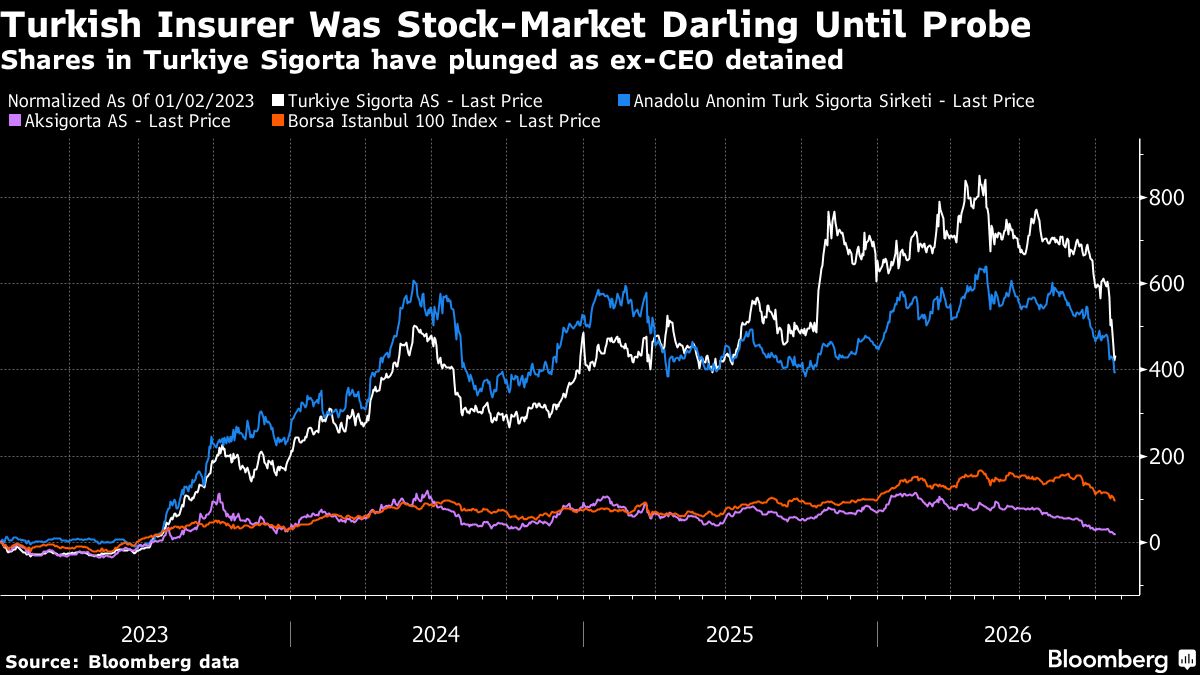
Turkiye Sigorta shares dropped 18% in two days after the arrest of CEO Taha Cakmak and deputy CEO Gurol Sami Ozer, according to Anadolu Agency. The arrests are part of a wider investigation into alleged market manipulation involving Turkish investment funds. Turkiye Sigorta, majority-owned by Turkey’s sovereign wealth fund, has seen its stock fall to a two-year low. The company postponed its third-quarter results and announced the firing of Ozer following Cakmak’s resignation.
Local media allege Turkiye Sigorta steered cash into funds run by Tera Portfoy Yonetimi, now at the centre of the scandal. Prosecutors say 88 suspects have been arrested so far as authorities try to contain the crisis, which has affected stock and bond markets. Cakmak’s lawyer has denied any wrongdoing and plans to appeal.
Turkiye Sigorta, formed in 2020 from state bank subsidiaries, quickly became the largest insurer in Turkey. Its shares had surged over 500% since Cakmak’s appointment in 2023 before the recent collapse. The scandal has raised concerns about oversight and transparency in Turkey’s financial sector, especially for firms with state backing.
Insurers and financial institutions should monitor developments, as further regulatory action or market volatility could follow.
Insurance software provider Guidewire plans to acquire London-based hyperexponential for $1.7 billion in cash, with an additional $400 million possible if revenue targets are achieved, according to Insurance Journal. The deal aims to broaden Guidewire’s reach into AI-driven tools for insurance risk assessment and pricing.
This move gives Guidewire access to hyperexponential’s technology, which is used by insurers to refine pricing and manage risk. For insurers and their technology partners, the acquisition could influence future procurement and integration decisions, especially around AI capabilities. Further details on how Guidewire will integrate hyperexponential’s products are expected to follow.

Assicurazioni Generali SpA will reduce about 9% of its German workforce and consolidate its operations into five regional centres in Munich, Cologne, Karlsruhe, Hamburg and Saarbrücken. The insurer said most reductions will come from voluntary retirement. The move is part of a broader simplification effort to reduce costs and improve collaboration across teams currently spread throughout Germany.
Generali will invest a "three-digit million euro amount" in IT, digitalisation and artificial intelligence, while also recruiting staff with future-oriented skills. The insurer is targeting a cost-income ratio of 52% by 2027, down from 57% in 2024. Last year, Generali’s German business generated over €15 billion in premium income and employed more than 9,000 people, according to the company.
This restructuring is part of CEO Philippe Donnet’s strategy to accelerate growth in profitable segments, simplify the operating model and increase automation. For regulated-industry leaders, the focus on digital skills and operational efficiency signals continued pressure to modernise and manage workforce transitions.
Executives should monitor the impact of these changes on service delivery, employee morale and the insurer’s ability to attract new talent in a competitive market.

The European Union will propose new rules requiring member states to create climate resilience plans for a scenario where global temperatures rise by 3C above pre-industrial levels. According to a draft seen by Bloomberg News, the EU's 27 countries must submit national adaptation plans by the end of 2030. The European Commission will also identify major risks, including climate tipping points, as part of the process.
Europe is warming faster than any other continent, with projections suggesting temperatures could increase by as much as 5C by 2100. The draft document notes that climate change threatens to undermine Europe's social and territorial cohesion. The proposal arrives ahead of the COP31 climate summit in Turkey, amid concerns that global temperatures will overshoot the 1.5C Paris Agreement target. Recent heat waves and wildfires have increased pressure on the EU to act.
The new rules will require assessment of climate impacts across sectors such as energy, water, communication systems and government budgets. For regulated sectors like insurance and banking, the move signals increased scrutiny of climate risk and adaptation measures. The final version of the proposal is expected to be adopted this week, with further details to follow on implementation and compliance.

Global companies and governments moved quickly to patch critical PHP vulnerabilities after cloud firms reported a surge in hacking attempts. Emergency shutdowns affected banking, airline, rail, tax and government services from Tokyo to Helsinki, according to Insurance Journal. The flaws, present in PHP for years and found using AI, prompted developers to urge immediate updates.
Cloudflare and Amazon reported millions of hacking attempts after details of the flaws became public. Some Japanese firms, including Tokio Marine Holdings and Mitsubishi UFJ Financial Group, suspended online services as a precaution. France's Orange and China’s Tencent Cloud also took steps to protect PHP-based systems. Finland’s Valtori said restoring services could take days or weeks, with no evidence of breaches so far.
The incident shows the deep reliance on ageing programming tools and the challenge of maintaining secure systems as complexity grows. Regulators and industry groups in Asia and Europe advised urgent updates, security reviews and enhanced monitoring. Smaller organisations face extra risk if they run outdated PHP versions without available security fixes.
Senior leaders in regulated sectors should review patch management processes and ensure that software dependencies are monitored and updated. The speed and scale of attempted exploits show the need for rapid response and regular system audits.

AM Best says commercial auto liability insurance in the US has seen claim costs rise by 6.4% annually over the past decade, outpacing average economic inflation of 2.8%. The ratings agency attributes this to social inflation, which it defines as the rising cost of claims above general inflation, driven by factors such as higher jury awards and broader definitions of liability.
Policy limits for commercial auto liability are typically $1 million, with claims above this threshold moving to umbrella policies. AM Best notes that, until 2018, umbrella pricing tracked closely with general liability pricing. As social inflation began to affect commercial auto claims, losses have increasingly spilled into umbrella coverages, pushing umbrella policy pricing higher and away from general liability trends.
This trend puts additional pressure on insurers’ underwriting strategies and risk models. Commercial policyholders may face higher premiums and stricter terms as insurers adjust to these cost increases. The report suggests continued monitoring of litigation trends and pricing responses across the sector.

Chubb CEO Evan Greenberg said the insurance sector should use its experience with past emerging risks to manage the growing issue of AI liability. Speaking on a third quarter earnings call, Greenberg described AI liability as a new and expanding exposure that has not yet been factored into casualty underwriting. He suggested the industry may need to develop a mix of coverage clarifications, exclusions and separate AI-related liability policies as the risk becomes clearer.
Greenberg noted that AI-related liability exposures will differ by business and sector, and that new underwriting and pricing methods will be needed to reflect this. He also raised the possibility of certification standards and best practices for AI use, which could help insurers assess and manage these risks. At Chubb, Greenberg said the company invests in governance and security for its own AI systems and data, using multiple layers of defence to protect against external threats.
For senior executives in regulated industries, the evolution of AI liability coverage will affect risk management, compliance and insurance costs. Insurers and clients should monitor developments in policy terms and industry standards as the market adapts to the risks posed by artificial intelligence.