


Many founders today feel compelled to raise large amounts of venture capital, yet some of the world's most valuable companies like Apple, Amazon, Microsoft, and Google built monumental success with relatively modest VC investments by today's standards. This article explores an alternative path to growth, one focused on capital efficiency and long-term value rather than chasing rapid scale with massive funding. Drawing on personal experiences from venture capital to entrepreneurship, the author highlights the pressures and burnout caused by the 'get big fast' model. Instead, he champions Evergreen companies—sustainable businesses that grow steadily without relying heavily on external funding, emphasizing cash generation, focus, and longevity. The Tugboat Institute embodies this approach, fostering a community of CEOs committed to building resilient, lasting enterprises that defy the high failure rates common in VC-backed ventures. This model invites founders to rethink success beyond quick growth and large capital rounds, aiming for enduring impact and stability.

Often, when forming relationships at work and beyond, people look for strong similarities, especially in values, which reflect what they consider important and good. However, limiting connections to only those who share your core values can isolate you from others pursuing different but equally valid values. Professional partnerships often benefit from diverse perspectives and complementary skills. Research into professional networks shows that shared values strongly influence the formation of connections, particularly when combined with physical proximity or teamwork. Shared values facilitate understanding and smooth communication, but relationships with differing values can also thrive if built on mutual understanding. Spending just ten minutes exchanging value perspectives can foster a strong connection regardless of value similarity. To cultivate these meaningful relationships, start by clarifying your own values through reflection on your best and worst work experiences. Once confident, engage in honest conversations about values with others. These interactions often lead to deeper connections, fostering rewarding and authentic professional relationships even amidst diverse values.

At a panel hosted by Stanford Graduate School of Business, Nvidia's CEO Jensen Huang shared his optimistic view on artificial intelligence's impact on employment. Contrary to popular fears, Huang argued that AI will not eliminate jobs but rather automate tasks, allowing workers who know how to leverage AI tools to excel. He highlighted that software engineers at Nvidia are busier than ever, benefiting from AI to perform tasks faster and on a larger scale. Huang emphasized the potential for AI to create new opportunities across industries—including manufacturing and construction—with rising salaries in these sectors. He stressed the importance of broad AI adoption, suggesting that job losses are more likely to happen to individuals who do not use AI effectively. Despite growing skepticism about AI, especially among younger generations, Huang sees a future rich in job creation and technological advancement, urging leaders to demystify AI and make it accessible to all.

"Founder mode" often highlights speed, control, and relentless activity. While this hands-on style is crucial during a startup's early days, experts warn that beyond initial growth phases, it becomes challenging to sustain without burning out. Industry leaders share twelve practical approaches to managing energy, delegating effectively, and staying aligned with core priorities. These include making space for strategic thinking, shifting gears deliberately to balance momentum with stability, toggling between founder and CEO modes, and cultivating an ownership culture. Successful founders learn to say no to unsustainable demands, evolve from bottlenecks to team builders, maintain close ties with product and market, and resist the trap of manufactured urgency. Moreover, they build systems to prevent burnout and know when to hand over leadership to managers as their companies mature. The consensus is clear: the intensity of founder mode must be balanced with pauses, structure, and empowerment to foster long-term business resilience and growth.

A congressional subcommittee recently convened a roundtable focused on the profound impact of artificial intelligence (AI), where lawmakers voiced significant concerns about the technology's rapid advancement and its potential threats. Representatives discussed issues such as AI chatbots handling sensitive government data, ethical dilemmas over AI-generated content, the possible restriction of military actions due to AI decision-making, and the environmental consequences tied to AI's energy consumption. While some highlighted AI's promise for economic growth and medical breakthroughs, there was widespread apprehension regarding the pace of AI development outstripping legislative oversight. Experts emphasized the critical need for informed and proactive policymaking to ensure safety, security, and competitive advantage. The dialogue underscored a balancing act between embracing innovation and mitigating risks, reflecting the urgency lawmakers feel as AI reshapes society.

Social media has dramatically accelerated the pace at which beauty trends influence real-world aesthetic treatments, often pushing consumers to make quick and sometimes uninformed decisions. This disconnect arises because aesthetic inspiration is collective and social, but the results are personal and vary greatly based on individual biology. AI is bridging this gap by providing precise, personalized consultations that predict actual outcomes and help patients align expectations with their unique facial characteristics. Technologies like AI Skin Analysis offer dermatologist-validated diagnostics that personalize skin health assessments, transforming patient education from a clinical luxury into a standard practice. AI visualization tools empower patients to see realistic simulations of treatments like Botox and filler, fostering confidence and trust. Practitioners report increased patient satisfaction, repeat visits, and higher spending when integrating these AI tools. Furthermore, democratized access to AI APIs allows brands and clinics of all sizes to provide personalized skin education, enhancing customer engagement and decision-making. This technological shift marks an inflection point where practitioners and brands can build lasting consumer trust through data-driven, personalized care rather than generic social media trends.

AI companies often make bold promises about revolutionizing healthcare, claiming breakthroughs in scientific discovery and medicine development. Yet, the true measure of success is whether these AI technologies have been proven to work in humans, creating life-saving treatments. Unfortunately, most have yet to meet this standard. Real progress in healthcare demands extensive clinical trials, rigorous testing, and years of effort. Leading AI healthcare companies like Insilico Medicine, Recursion, and Owkin are closing the gap by advancing AI-driven discoveries through clinical trials and training AI models on authentic patient data. This approach fosters a continuous improvement cycle where AI performance is refined through real-world feedback, ultimately benefiting patients. While the excitement around AI’s potential is justified, only the AI that withstands the challenges of clinical reality will truly transform medicine.

Most business leaders are deeply concerned about AI and its impact on jobs, especially with the wave of layoffs attributed to it. However, Indeed CEO Hisayuki “Deko” Idekoba pointed to a more immediate and significant challenge facing the workforce: demographic shifts, particularly an aging labor pool in developed countries like the U.S. and across Europe. He emphasized that the retirement of older workers will shrink the labor force by about 20 million over the next 15 years—a 5% reduction—of which only 20% is linked to AI-related job displacement. The remaining 80% results purely from aging out of the workforce. Countries like Japan are already encouraging greater female workforce participation to counteract this trend, while the U.S. faces additional pressure due to tightened immigration policies, potentially leaving critical sectors like construction, plumbing, healthcare, and electrical work with persistent labor shortages. Although some see automation, bolstered by AI, as a partial fix—especially in roles like legal secretarial or administrative positions dominated by older employees—many skilled trades are less amenable to quick technological replacement. Idekoba’s insights underscore that while AI remains important, the demographic challenge poses a more pressing concern for workforce sustainability in the near term.
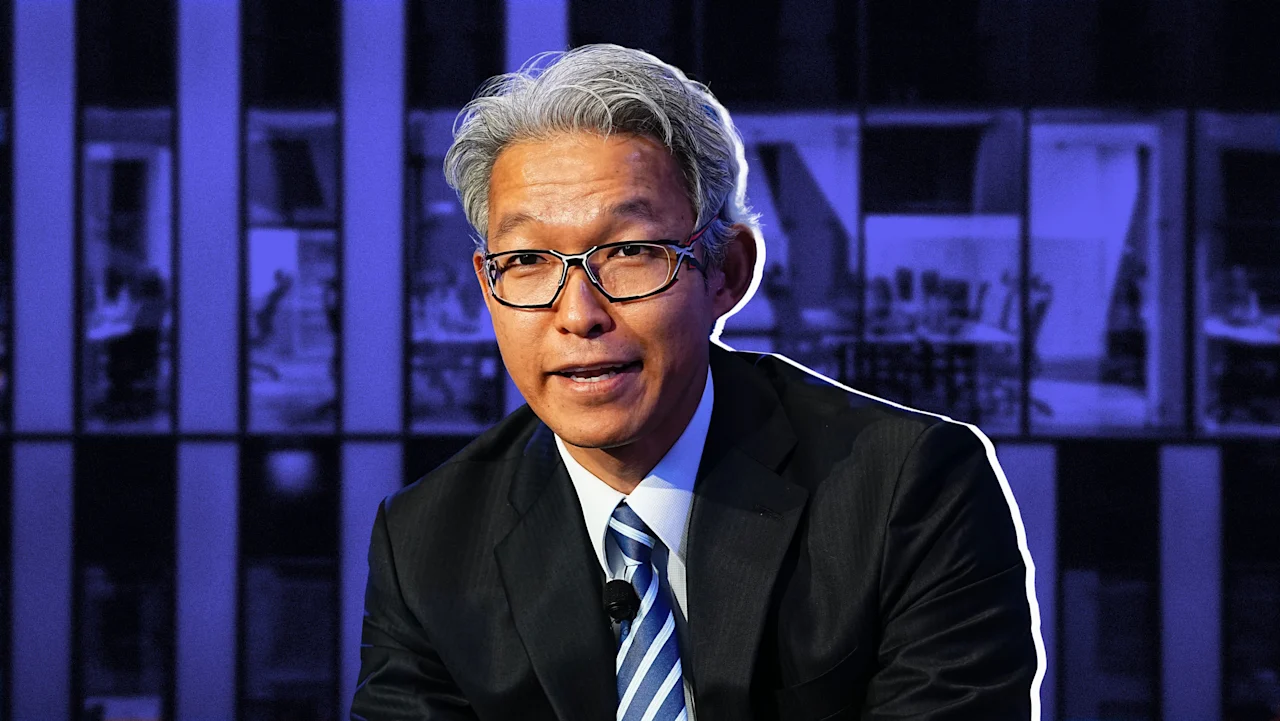
Since its founding in Silicon Valley in 2019, NTT Research has stood as a long-term science laboratory under the NTT Group umbrella, investing billions into global research. Traditionally focused on fundamental breakthroughs with timelines spanning five to fifteen years, NTT Research is now evolving with "NTT Research 2.0," an initiative to bridge deep technological discoveries and market readiness. This strategy centers on Scale Academy, an incubator designed to convert advanced research into viable startups without compromising scientific rigor. Under CEO Kazu Gomi, the organization balances patient foundational work with startup-like speed through separate yet collaborative teams—scientists driving discovery and business experts focusing on commercialization. A key example is SaltGrain, a zero-trust data security platform leveraging attribute-based encryption enhanced for modern AI demands. This innovation targets current challenges of securely managing sensitive data access by AI agents, embedding policy into data itself. While early-stage post-quantum cryptography solutions are in development, immediate deployment prioritizes practical market impact. NTT's dual focus seeks to synergize deep research excellence with the realities of enterprise needs and startup agility, aiming to establish a sustainable model for turning pioneering science into impactful businesses.

In today's discussions about artificial intelligence, the conversation often swings between extremes: total automation utopias and dystopias where human creativity is lost. Yet, a more balanced approach—pragmatic optimism—acknowledges that we are amid a human revolution, not just a technological one. Future-leading organizations will leverage AI not just for speed or volume, but as a powerful catalyst for creativity, freeing people to imagine, connect, and craft meaning. Rather than erasing human insight, AI should complement it, fostering a global intelligence surge and making way for productivity and wage growth.
To achieve this, workplaces must cultivate environments where creativity and psychological safety thrive, integrating the principles of Move, Think, and Rest. This means embracing friction as a productive learning space, protecting spontaneous, high-touch encounters that fuel innovation, and dedicating attention deliberately to what truly matters. AI should give us back time to focus on real experiences and thoughtful reflection, rather than simply increasing busyness.
Ultimately, by intentionally designing processes that blend human and machine intelligence, we become architects of a future where AI enhances what makes us uniquely human—creativity, resilience, and meaningful connection. This is the way to ensure that the promise of the Imagination Era is realized by design, not default.
