Anthropic's Chris Olah Highlights the Need for Broader Leadership in AI Development at Vatican Event
At the launch of Magnifica humanitas at the Vatican, Christopher Olah, co-founder and interpretability lead at Anthropic, shared his concerns about the limitations of AI labs in guiding AI's future. Sitting next to Pope Leo XIV, Olah noted that the incentive structures in frontier labs often deter researchers from prioritizing ethical considerations and the greater good in AI development.
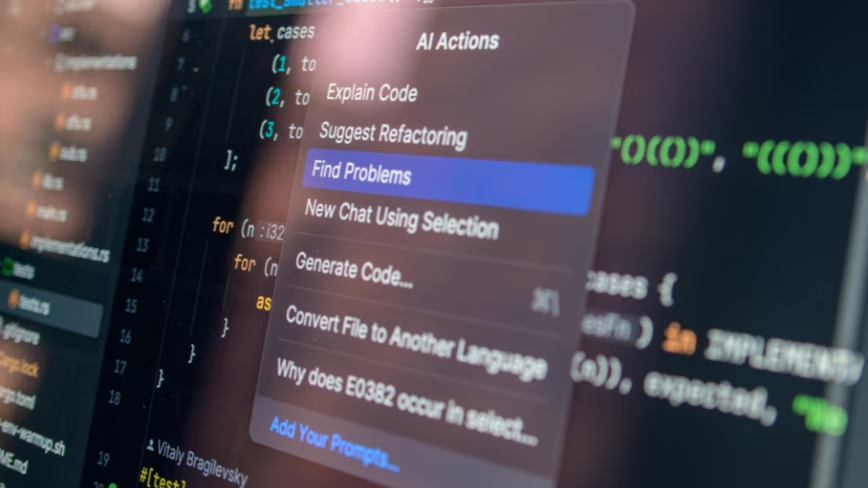
In December last year, Microsoft allowed thousands of its staff, including engineers and designers, to use Claude Code—a command-line coding assistant developed by Anthropic—at the company's expense. By spring, the tool's usage expanded beyond technical teams into non-technical roles, a shift that traditionally would have taken much longer during previous software adoption cycles in enterprise settings.
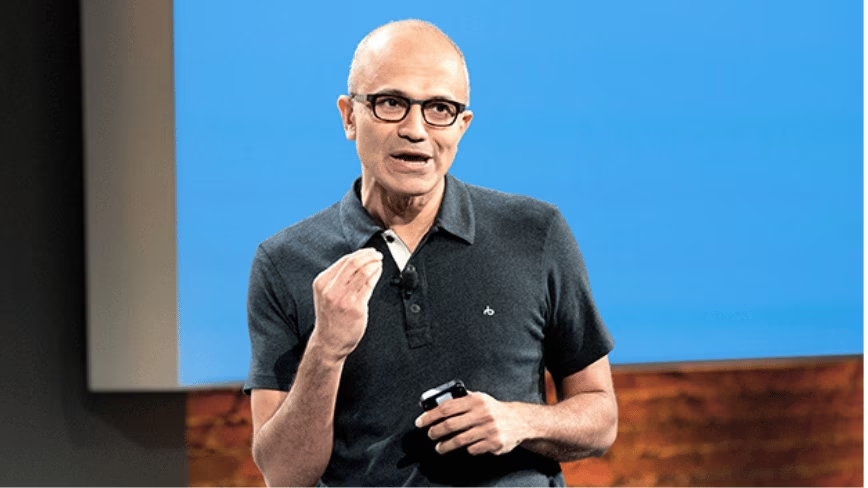
Eurostat released data last December highlighting that 20% of European Union businesses with at least ten employees now incorporate artificial intelligence in some aspect of their operations, up from 13.5% the previous year. This represents a significant increase but also indicates that the EU's AI uptake still trails behind other regions. The details of this trend shed light on both progress and challenges in embracing AI across European enterprises.

In its April 2026 Windows 11 update, Microsoft introduced an option to completely remove the Copilot app. This update is aimed at both IT administrators and regular users. Enterprise admins can now disable Copilot via a new Group Policy called “Remove Microsoft ...”, while everyday users have the convenience of uninstalling the app directly through the Settings menu, just like any other application.
Moment, a fintech startup founded by former Citadel Securities quantitative traders and researchers, has successfully raised $78 million in a new funding round. This round was led by Index Ventures with support from returning investors Andreessen Horowitz and Avra. Previously, the company secured $36 million in July 2025. Moment focuses on developing infrastructure that enables wealth management firms to effectively implement AI operating systems, addressing gaps previously unmet by Wall Street.

The US government faces a dilemma with Anthropic. While the Pentagon has officially designated Anthropic as a national security supply chain risk and blacklisted the company, the NSA persists in utilizing Anthropic's AI, known as Claude, due to a lack of viable alternatives. This continuation was authorized by White House Chief of Staff Susie Wiles, highlighting the complex balance between security concerns and operational necessity.

On March 31, 2026, Anthropic unintentionally published the full source code of Claude Code to the public npm registry. The leak involved roughly 512,000 lines of TypeScript across 1,906 files, including concealed feature flags and mentions of an unreleased AI model named Mythos. This sensitive data was left accessible on a Cloudflare storage bucket until a security researcher discovered it and brought it to light.
While SEO teams can track their rankings on Google with precision, there's a blind spot when it comes to ChatGPT. Unlike search engines, ChatGPT's recommendations and mentions of your brand aren't visible, leaving a significant gap in understanding your brand's presence in AI-driven conversations. Traditional rank-tracking tools haven't adapted to this new challenge yet, making it crucial for marketers to rethink their strategies in the age of AI assistants.

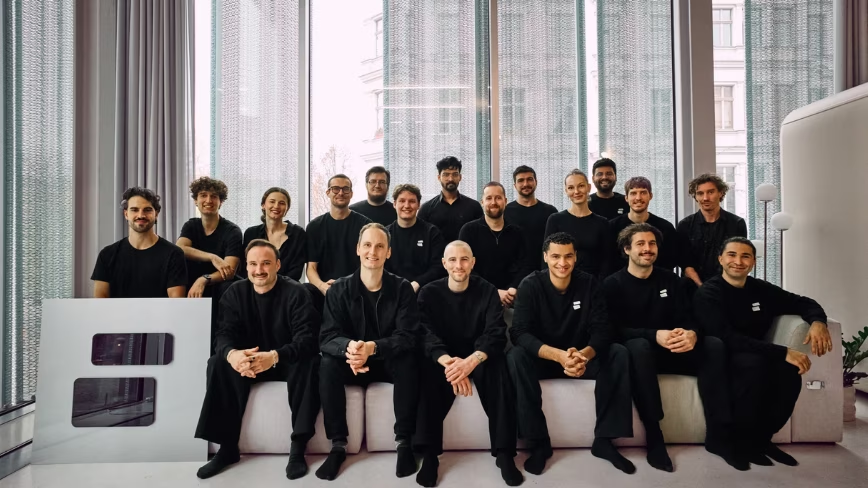
Berlin-based Peec AI, a startup specializing in enhancing brand visibility in AI-driven search results, has achieved over $10 million in annual recurring revenue (ARR). This milestone, verified by TechCrunch, follows a recent $21 million Series A funding round that valued the company above $100 million. Peec AI's platform helps brands appear prominently in AI-generated search interfaces such as ChatGPT, driving significant growth in a short period.
Anthropic revealed on Friday that its Project Glasswing cybersecurity effort has identified more than 10,000 potential high- and critical-severity vulnerabilities in some of the world's most pivotal software within a month of operation. Out of these, 1,726 have been confirmed as genuine threats, with 1,094 classified as high or critical severity. Despite the scale of these findings, the pace of patching these vulnerabilities remains behind the discovery rate.