Enveda has secured $311 million in funding, valuing the AI-driven biotech company at $2 billion. The company is advancing clinical trials for drugs targeting skin conditions and weight maintenance after discontinuing GLP-1 therapies.


The United States has taken a firm stance against the idea of a unified global governance model for advanced artificial intelligence. Speaking at the UN Security Council in New York, Michael Kratsios, director of the White House Office of Science and Technology Policy, emphasized that the regulation of AI technology should be handled individually by each nation. His statement came following briefings from experts in science and industry during the session.


When you ask who leads AI transformation in a company, many point to executives or specialized teams. However, this perspective misses a critical component: the individuals closest to daily workflows. While leadership sets the strategic direction, the true transformation happens when employees actively rethink and reshape how work gets done using AI. These individuals, whom we call builders, come from various roles and levels—not just engineers—and they possess curiosity, proximity to the work, and an initiative to improve processes independently.
Leaders should focus on creating an environment that sets clear guiding principles around security and privacy but allows room for experimentation and innovation. Providing training, tools, and opportunities for employees to showcase successful AI-driven improvements encourages a culture where innovation thrives organically.
Furthermore, AI transformation must benefit not just the organization but also employees' professional growth by equipping them with valuable new skills. Lastly, measuring the success of AI initiatives should prioritize meaningful outcomes like faster project completion, higher productivity, and improved client satisfaction—not just metrics like usage or logins.
Ultimately, while executives define strategy and technology teams maintain infrastructure, it's the builders within the workforce who truly own AI transformation by reimagining workflows to create real impact.


For years, social media giants faced criticism for promoting harmful content to drive engagement. However, a recent Los Angeles court ruling held Meta and Google accountable not just for content, but for the addictive design choices underlying their products. This highlights a critical issue: traditional user-centered design methods like design thinking, while popular and effective in meeting user needs, can inadvertently cause harm by overlooking ethical concerns.
Design thinking involves understanding user needs and iterative testing, but our research with 27 senior leaders from tech, pharma, and design firms reveals recurring blind spots. For example, addictive features and polarizing content can emerge despite following best practices. Juul's rise in e-cigarettes shows how design focused on user appeal without ethical foresight can lead to serious societal harm.
Four key challenges arise from a user-centered focus: ignoring environmental impacts, neglecting stakeholders beyond primary users including vulnerable or malicious users, sacrificing thoroughness for speed, and failing to anticipate harm at scale. Governing these challenges requires leadership to embed ethics alongside user needs by starting with clear purpose, accounting for broader systems influencing design, and pausing to assess risks before scaling.
Ethical innovation demands inclusive stakeholder consideration, alignment of incentives with societal good, encouraging designer voices, and leveraging tools like AI to simulate risks. While diligence may increase costs upfront, it is essential to prevent costly consequences such as legal liabilities and reputational damage. The question companies face today is not if they can afford to be ethical, but if they can afford not to be.


McDonald's is testing a new media network strategy aimed at creating a $1 billion advertising business, marking a significant evolution in its marketing approach.


Baselayer, an AI-driven startup specialized in helping financial institutions verify business identities and mitigate fraud, has raised $35 million in Series A funding led by M13. The San Francisco-based company has developed technology that integrates business identity, credit, and fraud data to assist banks and fintech firms in evaluating prospective customers. Over 2,000 financial institutions use Baselayer's platform, which has helped prevent more than $1 billion in fraud losses since its founding in early 2023.
With its new funding, Baselayer is expanding to address the challenge of verifying AI agents acting on behalf of individuals or businesses. Their newly launched Agentic Identity Suite aims to establish authorized credentials for AI agents to prove legitimacy, helping merchants and financial institutions make informed decisions on transactions involving such agents. Baselayer is collaborating with industry players like FIS, Prove, and Socure in this effort.
The rise of AI agents creates both opportunities and risks, as fraudsters can now exploit automation to scale fraudulent activities more rapidly. Baselayer's platform seeks to provide a framework to identify and trust AI agents, a necessary evolution in a world where AI increasingly performs economic and transactional roles.

The seven-year-old company has secured $350 million in Series E funding to accelerate its data-as-a-service model, responding to the growing market need for AI training data.

Cyera's CEO, Yotam Segev, highlighted the company's focus on building trust in AI agents' capabilities as a crucial step before scaling their use. On Tuesday, Cyera announced a $400 million investment from Growth Equity at Goldman Sachs Alternatives, part of their Series G funding round. This recent infusion brings Cyera's total funding to $1.4 billion over the year, reinforcing their commitment to improving AI security and monitoring for enterprise clients, particularly among the Global 2000 companies.

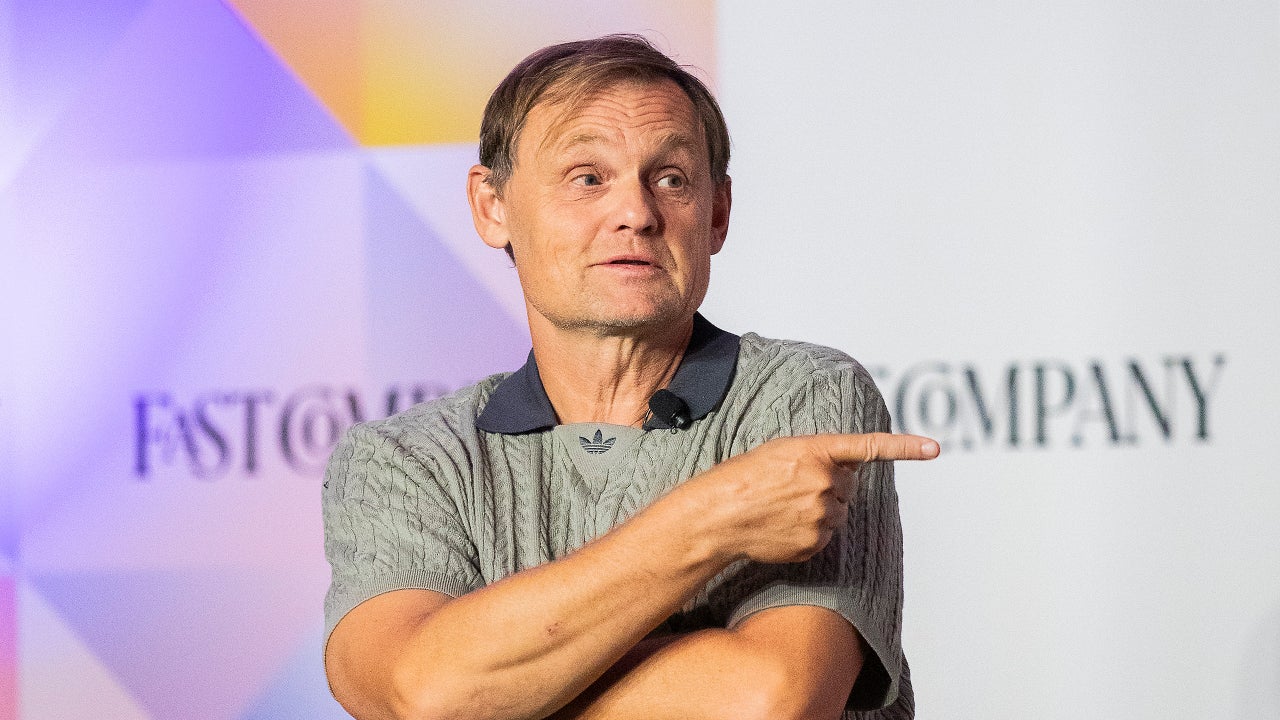
Adidas CEO Bjørn Gulden revealed that the key to the company’s resurgence was removing the "no-sayers"—those who hinder innovation with constant objections. Taking over in early 2023, Gulden inherited a company struggling after the demise of its Yeezy partnership and challenges in markets like China. By cutting bureaucratic layers and empowering energetic, innovative employees to lead decisions, Adidas regained momentum, posting growing sales and profits. Gulden's strategy also involved reducing headcount to streamline operations and focusing on creativity over rigid procedures, leading to milestones like the recent sub-two-hour marathon run in Adidas shoes. He emphasizes that success stems from trusting talented people and fostering a culture of action and agility.
Recent weeks have witnessed a surge in AI model and tool launches, showcasing capabilities far beyond what existed just six months ago. Despite these advances, the AI industry is facing increasing public backlash driven by environmental concerns, fears over diminishing creativity and critical thinking, and anxiety about AI’s potential to self-organize in harmful ways. Earlier hopes that mass adoption spurred by powerful AI would improve public perception have given way to a harsher reality. The release of GPT-6 Astra, which automates computer use through verbal commands, sparked controversy, particularly among creative communities such as Blender users who worry about AI enabling piracy and devaluing human-crafted art.
This backlash highlights a structural challenge: as AI tools improve and become more useful, opposition only grows stronger. Polling data confirms that greater knowledge about AI corresponds with increased skepticism. Industries adopting AI, especially those reliant on trust like media, are seeing a shift where consumers demand accountability over mere automation. Notable responses include media outlets emphasizing "human-made" content and adopting strict AI usage policies.
Though AI now delivers tangible productivity and cost-saving benefits—automating complex workflows and enhancing efficiency—its adoption carries higher costs in trust and audience confidence. Studies show audiences prefer transparency and human oversight over simple AI disclosure, underscoring the importance of accountability. As AI integration deepens, leaders must prioritize trust-building measures because the public’s fundamental concern centers on who is responsible and answerable, not just how AI is used. The industry faces a critical juncture where progress comes hand in hand with increased scrutiny and the need for clear accountability.