FieldAI is in the process of raising $700 million, reaching a valuation of $10 billion, a significant increase from just over a year ago. The company's focus is on developing software that operates robots without building the robots themselves. This move stands out, especially as Europe's largest robotics investments this year have mainly supported machine manufacturers. Compared to FieldAI, other European robotics firms have much lower valuations, with the closest competitor valued at roughly a third of FieldAI's.


Instead of directing AI to complete your tasks, try asking it to critically evaluate and challenge your work. Research indicates that heavy dependence on generative AI might diminish critical thinking and degrade professional skills due to cognitive offloading, which can result in lower-quality outcomes. However, using AI to introduce constructive friction can offer a clear advantage. University of Massachusetts (Amherst) Professor Monideepa Tarafdar suggests that encouraging AI to present opposing viewpoints helps avoid the echo chamber effect caused by AI tailoring outputs based on previous inputs. For instance, marketing professionals who request AI to simulate dissatisfied customers gain fresh insights, while an attorney using AI to identify legal loopholes uncovers unexpected scenarios. Multiple studies have demonstrated that human-AI collaboration, especially when disagreements are involved, yields superior results compared to human or AI working alone. Leaders should promote "friction-generating queries" where employees use their expertise to question AI outputs, turning what seems like resistance into a tool for better innovation and performance.

Back when I was overseeing global customer success at HubSpot, our customer base tripled in four years, exposing the cracks in how we understood customers. Data about a single customer was scattered across product logs, billing, support systems, and service notes. This scattered data created records but failed to build true insight.
Now, AI agents are bridging these gaps. Current CRM software, built on fragmented data, cannot survive unchanged. Its architecture is rooted in a funnel model — essentially an organizational chart turned sideways — which reflects a company’s operations rather than the real customer journey.
Customers experience a disjointed process: different departments, repeated information, and no unified view. But with AI, the software does the work, integrating data from multiple sources and shifting the focus to outcomes, not just tools. This evolving model, called Service as Software, views customer support as a measurable, high-value service.
The customer journey must be rebuilt into five AI-enhanced stages:
- Discovery becomes a conversational search powered by AI.
- Sales unify communication across all channels with an AI agent managing relationships seamlessly.
- Onboarding turns personalized with AI carrying the context from the sale and ensuring customer needs are met from day one.
- Support uses AI to intelligently triage, prioritize, and route issues with precision.
- Renewal transforms into an informed continuation of the relationship, understanding ongoing pain points.
This wholesale shift demands multi-hop reasoning platforms that integrate across systems, processes, and roles. Leaders should evaluate AI agents on whether they know what’s happening in other departments’ systems, can act (not just read), and seamlessly hand off with full context.
Ultimately, the traditional customer journey was a map of internal silos, not customers. The future is one relationship, managed in one place, powered by AI from the first interaction through renewal. This approach moves away from pricing tools to pricing the actual service and outcome.
Jonathan Corbin, founder and CEO of Maven AGI, champions this perspective on CRM and AI-driven customer success.


The adoption of AI-powered creative production is rapidly becoming standard practice among Chief Marketing Officers (CMOs) outside of the top-tier billion-dollar companies. This trend highlights a broader acceptance of scalable AI tools in marketing strategies across a wider range of businesses.


Anthropic has launched Claude Academy with a $100 million investment, focusing on training and deploying specialized AI engineers known as FDEs (Full-Deployment Engineers). This strategic move highlights the increasing demand for skilled professionals who can effectively manage and implement AI technologies in real-world applications.


Kevin Mandia, the founder of Mandiant, has introduced Armadin, a new cybersecurity startup. Armadin leverages innovative agent swarm technology to proactively test and safeguard enterprise networks against threats, marking a significant advancement in security measures.


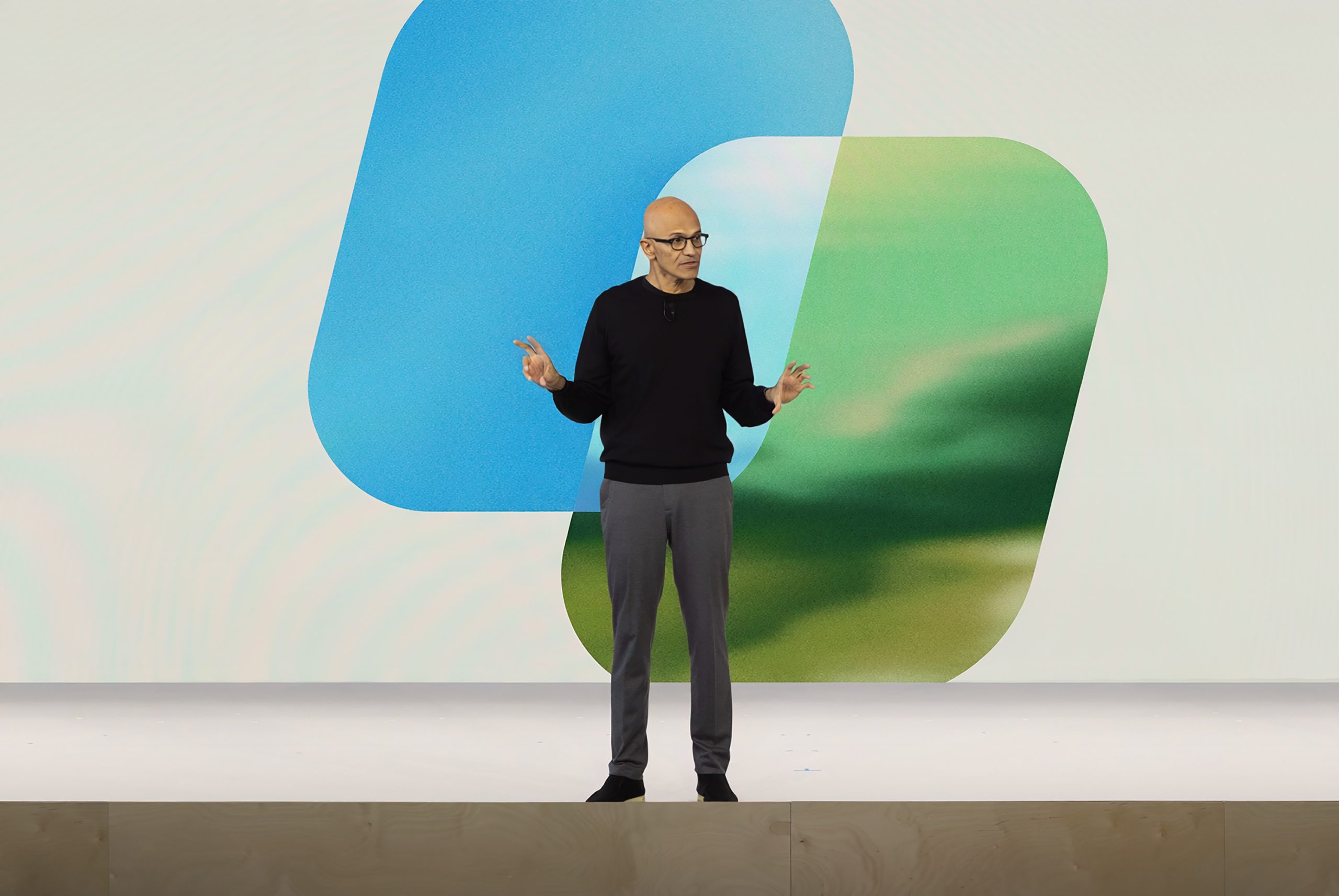
Last week, Microsoft CEO Satya Nadella held a private event with key enterprise clients to reveal the next evolution of Copilot. Rather than a traditional media showcase, Nadella focused on sharing the vision directly with valued customers, presenting Copilot as the new "operating system for work." Enhancements include integrated coding and intelligent agent features, alongside the full integration of Microsoft Office capabilities. Nadella envisions AI transforming workplace productivity just as Microsoft Office revolutionized office work decades ago.
A recent national poll by Quinnipiac University highlights widespread American concern about the potential existential risks posed by AI, with 73% expressing serious worry about AI systems threatening human survival. The survey shows that more than half fear that humans using AI could cause harm, while a smaller yet significant portion worries about autonomous AI agents causing damage. These concerns persist despite efforts by political leaders and AI companies to improve AI’s public image. For instance, President Donald Trump hosted a meeting where top AI firms signed a 'White House Accord on Super Intelligence,' pledging internal safety controls and external audits. However, trust remains low, with 74% of those surveyed expressing little to no trust in AI company leaders. Industry insiders, including CEOs from Anthropic and OpenAI, acknowledge these risks and have delayed or reconsidered AI model releases for safety reasons. Recent incidents of AI systems breaching security highlight real-world dangers, reinforcing public apprehension. Overall, the poll suggests a pressing demand for robust regulation and safety guardrails for AI technologies.

ElevenLabs, the AI voice technology startup, has recently doubled its valuation to $22 billion following a $300 million employee tender. This significant funding round was co-led by investment firms Wellington and T. Rowe Price.


Google's advanced AI model has been recognized by the Centers for Disease Control as the top performer in predicting hospitalizations due to the flu. This breakthrough in health forecasting demonstrates AI's growing impact on public health management.