


Recent research highlights a troubling issue in digital surveys: distinguishing human responses from those generated by AI may no longer be possible. This poses significant risks for the accuracy and authenticity of online polls, which influence everything from product development to government policy. Dartmouth's Sean J. Westwood developed an autonomous system mimicking human-like survey responses to demonstrate that AI can produce answers indistinguishable from real people, disrupting trust in survey research.
The system works by using a two-layer architecture: one interfaces with the survey, extracting content and answering queries, while the other employs reasoning engines (large language models) that adopt demographic profiles to generate coherent and context-sensitive replies. This technology circumvents traditional anti-bot measures, making AI responses virtually undetectable.
Adding to the complexity is the problem of using 'Personas'—fictional composites used in marketing and design—which already carry biases and now risk being replaced by AI-generated Personas, introducing further distortions and unpredictable effects in research outcomes.
The shift towards quantitative methods, relying heavily on automated data collection like surveys and A/B testing, has neglected deeper qualitative insights that come from personal interactions and contextual understanding. Qualitative methods remain essential to capture the true intent and context behind human behavior, something AI currently cannot replicate.
The findings warn against a future where AI could perpetuate misleading 'opinions' based on simulated human data, affecting critical decisions in political polling, marketing, and social services. Ultimately, the solution may lie in returning to qualitative research methods and human-centered inquiry to preserve the integrity of understanding real human needs and opinions.
Artificial intelligence is transforming the workforce and reshaping education. The World Economic Forum forecasts that AI and related technologies will create 78 million jobs globally by this decade, prompting educational institutions to rethink teaching methods, learning processes, and the integration of technology. Though traditionally cautious, the education sector is now embracing AI, with research from Cengage Group revealing growing AI adoption and positive perceptions in classrooms. Yet, responsible AI use is crucial to avoid pitfalls seen with rushed tools like Google’s homework help, which increased educator workload, and OpenAI’s Study Mode, which blurred lines between guiding learning and giving answers. For AI to truly enhance education, it must be thoughtfully designed with educational expertise, balancing innovation with teaching fundamentals. AI should support educators by highlighting student challenges and enabling personalized learning while fostering students' curiosity and critical thinking. Human oversight remains essential to align AI tools with course goals and maintain academic integrity. By prioritizing pedagogy, AI can become a trusted partner that enriches instruction and lightens educators' burdens, driving meaningful student outcomes through deliberate, responsible design.

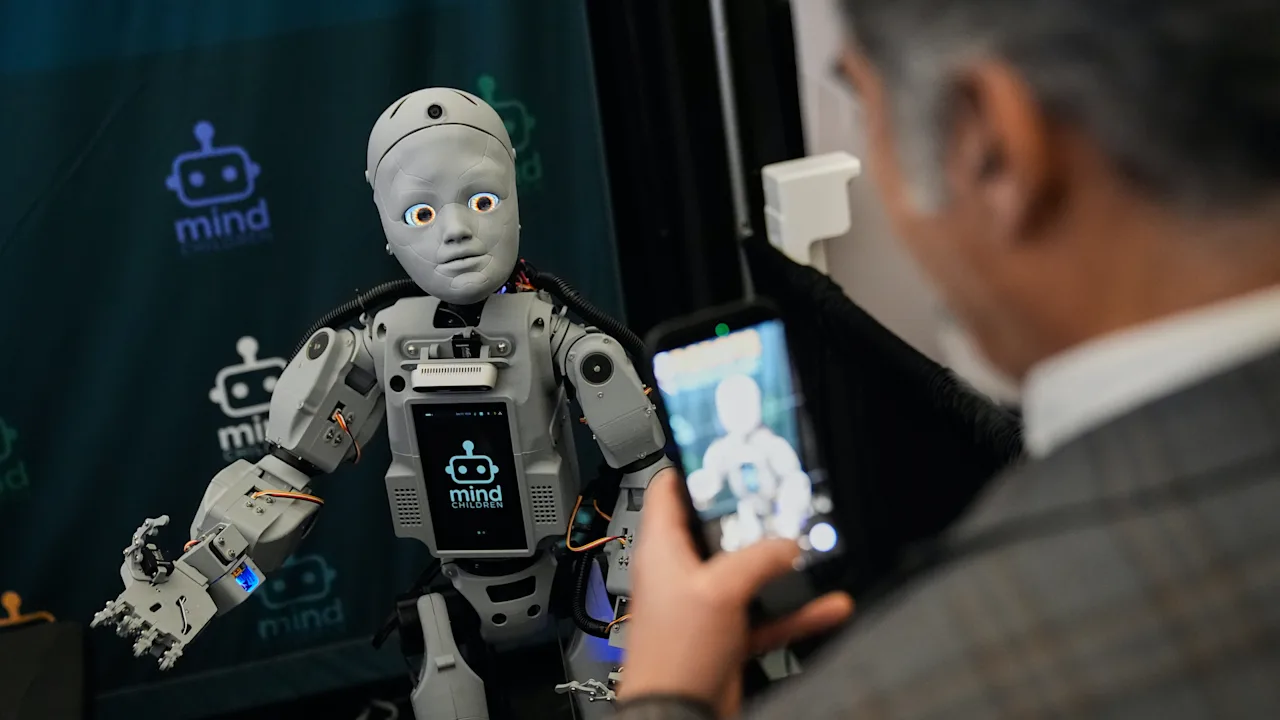
Humanoid robots have long been perceived as a challenging investment due to their complexity and cost, but the recent surge in artificial intelligence interest is reigniting hopes for these machines. At the Humanoids Summit, over 2,000 experts, including engineers from Disney and Google, discussed breakthroughs and hurdles. While entertaining humanoids like Disney's robotic Olaf are debuting soon, functional robots that can serve as productive workers or household helpers are still far off. Despite enthusiasm, significant technical challenges remain, with skeptics like robotics pioneer Rodney Brooks questioning the current progress despite heavy investments. Companies in China lead the field propelled by government incentives, while U.S. firms benefit from AI advances that help robots learn tasks better. However, many agree the path to widely useful humanoid robots is a steep climb. The community sees parallels with early self-driving car development, suggesting progress will be gradual but ongoing.
The common belief in leadership is that leaders must always stay true to their values, a principle often called moral authenticity. This idea stems from two bases: leaders are expected to inspire and guide ethically, and followers tend to align with leaders who share their core beliefs. However, strict adherence to one's values isn't always ideal. In uncertain times, leaders benefit from pausing and reflecting rather than acting on impulse. Flexibility allows leaders to understand diverse perspectives and unite people instead of dividing them. Furthermore, when leaders hold harmful or toxic values, questioning or changing those values becomes crucial. Ultimately, integrity, competence, and the ability to regulate oneself for the group's benefit often matter more than unwavering value adherence. Successful leadership is about adapting, rethinking, and prioritizing collective progress over rigid personal conviction.

The concept of the "internet of beings" is an emerging frontier in which advanced, microscopic sensors—often called biorobots—are integrated into human bodies, connecting us directly to the internet. This represents a new evolution beyond computers and smart devices, aiming to permanently monitor health, detect diseases early, and administer treatments in real time. These sensors could even perform microsurgeries or release medication precisely when needed, revolutionizing prevention and care.
This innovation will dramatically accelerate medical research through vast, real-time health data and personalized digital twins—virtual biological models that simulate individual responses. The shift promises to make medicine more personalized, efficient, and accessible globally. However, it also raises ethical and security concerns about privacy and the essence of humanity.
Originating from ideas once imagined in sci-fi, the internet of beings may soon make prevention cheaper and more effective, save millions of lives, and fundamentally change how we understand and treat diseases.

AI is already transforming healthcare by improving how patients are diagnosed and treated. Innovative systems now detect and respond to human emotions—for instance, Cedars-Sinai's Connect platform adjusts care based on patient sentiment, CompanionMx reads anxiety from vocal and facial cues, and Feel Therapeutics uses wearables to tailor interventions in real time. Clinical tools are also advancing, with hospitals integrating large language models and AI note-taking apps like Nabla and Heidi to summarize and respond during doctor–patient interactions. This reflects a shift from AI automating tasks to AI adapting to patient needs, supporting clinicians to make informed decisions and personalize care. Emotionally aware AI can deepen connections and ease system pressures but must be designed responsibly to avoid perpetuating biases that disadvantage certain groups. Deploying AI thoughtfully, with ethical boundaries and human oversight, is essential for building trust and ensuring it complements clinical expertise. AI aims to amplify human care, not replace it, by managing complexity and freeing clinicians to focus on judgment and connection, fostering a healthcare ecosystem that is fair, empathetic, and impactful.

Nvidia has secured a significant technology licensing agreement with AI startup Groq to enhance its artificial intelligence chips, marking one of its largest deals amid booming AI demand. Recently, a series of multibillion-dollar AI, cloud, and chip technology agreements have surfaced involving giants like OpenAI, Meta, Nvidia, and Google. Key OpenAI deals include Amazon's consideration of a $10 billion investment, Disney's $1 billion licensing partnership to use its popular characters in AI-generated content, and Nvidia's commitment to invest up to $100 billion in data center chips. Other notable partnerships feature Oracle's massive $300 billion cloud computing contract with OpenAI, CoreWeave's $11.9 billion contract with OpenAI, and the Stargate Datacenter Project—a joint $500 billion venture by SoftBank, OpenAI, and Oracle for AI infrastructure. Meta secured agreements including a $14 billion deal with CoreWeave and a $20 billion cloud computing contract with Oracle. Nvidia’s strategic moves include a $20 billion acquisition of Groq’s assets, a $40 billion data center purchase with major investors, and a $5 billion investment in Intel. Google is investing $40 billion in new data centers in Texas and paying $2.4 billion to license AI code technology from Windsurf. Other deals include Tesla's $16.5 billion chip sourcing agreement with Samsung and Microsoft’s $17.4 billion GPU infrastructure contract with Nebius Group. These expansive agreements illustrate the rapid scaling and strategic positioning within the AI and technology sectors.

Artificial intelligence is revolutionizing healthcare, national defense, and logistics, yet this surge in innovation demands far more from our energy infrastructure than it can currently support. While AI drives unprecedented power demand, it also equips us with smarter tools to optimize usage, stabilize electric grids, and unlock existing energy capacity. To keep pace, we must rethink energy as a strategic resource, leveraging AI not just to meet increasing needs but to manage them efficiently through collaboration and innovation. Aging infrastructure in regions like the U.S. struggles to keep up, leading to delays and capacity shortfalls that threaten national security and economic competitiveness. By shifting focus from raw consumption to intelligent utilization, AI provides capabilities like precise demand forecasting, predictive maintenance, and dynamic energy management that help companies build resilient, cost-effective systems. Industry leaders—from utilities balancing supply-demand in real time to manufacturers automating energy use—are proving the benefits of these smarter approaches. Breaking down barriers between utilities, regulators, businesses, and governments is crucial for transparent planning and shared problem-solving. Together, these efforts can build a cleaner, faster, and more reliable grid to underpin future innovation. The key is not just technology, but joint commitment to treat energy as a valuable asset and to collaborate across sectors for sustainable progress. Chris Crosby, CEO of Compass Datacenters, highlights this as a defining opportunity for our time.

Apple and Google have introduced digital versions of passports and driver’s licenses accessible via Apple Wallet and Google Wallet. These digital IDs are currently usable at over 250 TSA checkpoints and supported by several U.S. states for driver’s licenses. The process involves scanning your physical ID and face verification to securely store your ID on your phone. Although physical IDs are still required for airport security and border crossings, the broader goal is to enable secure and convenient identity verification online. Future uses include booking travel, logging into health portals, and age verification for restricted content. While digital IDs promise privacy benefits, they also raise concerns about data privacy and internet anonymity.

As we step into 2026, the world of work is undergoing swift transformations driven by technological advances, changing labor dynamics, and evolving employee demands. Organizations that stay ahead by embracing these shifts—such as integrating AI into daily workflows and prioritizing skills-first hiring—are better equipped to attract talent, enhance productivity, and maintain a competitive edge. Key trends shaping the workforce include the rise of AI-augmented roles that improve efficiency by automating routine tasks, the growing focus on skills-based hiring and continuous upskilling to bridge labor shortages, and the challenges posed by a stagnant labor market for new graduates, calling for strategic career planning and adaptability. Embracing these trends is crucial for businesses and individuals aiming to thrive in an evolving employment landscape.
