Moonshot AI recently released Kimi K2.5, touted as the most powerful open-source AI model at 595GB, designed to work with up to 100 coordinating sub-agents in what it calls 'Agent Swarm.' Despite its open availability, developers on Reddit's r/LocalLLaMA forum expressed concerns about its size and accessibility, requesting smaller, more feasible models for local deployment. Moonshot acknowledged this demand but highlighted the engineering complexities between small and large models, suggesting future models around 200 to 300 billion parameters to strike a balance.
The team also discussed how traditional scaling of models faces diminishing returns due to data quality and compute limits and presented Agent Swarm as a new paradigm of inference-time scaling, enabling coordinated, parallel processing agents with separated memory to improve efficiency.
Additionally, reinforcement learning is expected to play an increasing role, particularly for training reasoning-capable agent models. The AMA revealed the challenges in maintaining model 'personality' and the importance of managing prompt control to avoid identity drift.
Debugging was emphasized as the core of AI research progress, with the team candid about failures and continuous tuning. Looking ahead, Moonshot hinted at integrating linear attention techniques and continual learning for more stable and long-duration agent performance, aiming to make their orchestration system available soon.
This session highlighted the practical struggles and evolving focus in open AI: shifting from sheer size to structured orchestration, from benchmarks to reliability, and from idealistic openness to usable deployment.

AI agents currently can exchange messages and identify tools to perform tasks, but they lack the ability to truly understand each other's intents and contexts. Cisco's Outshift is addressing this gap with a new concept called the Internet of Cognition, which introduces a semantic layer to enable agents to share goals and reasoning, not just data. This approach involves cognition state protocols for shared intent, a cognition fabric as distributed memory to maintain context, and cognition engines to pool insights and enforce rules. Without this shared understanding, multi-agent systems operate in silos, leading to inefficiencies and coordination struggles. Outshift emphasizes that achieving seamless semantic collaboration among AI agents will require industry-wide standards and cooperation, and they are actively developing protocols and demonstrations to advance this vision.
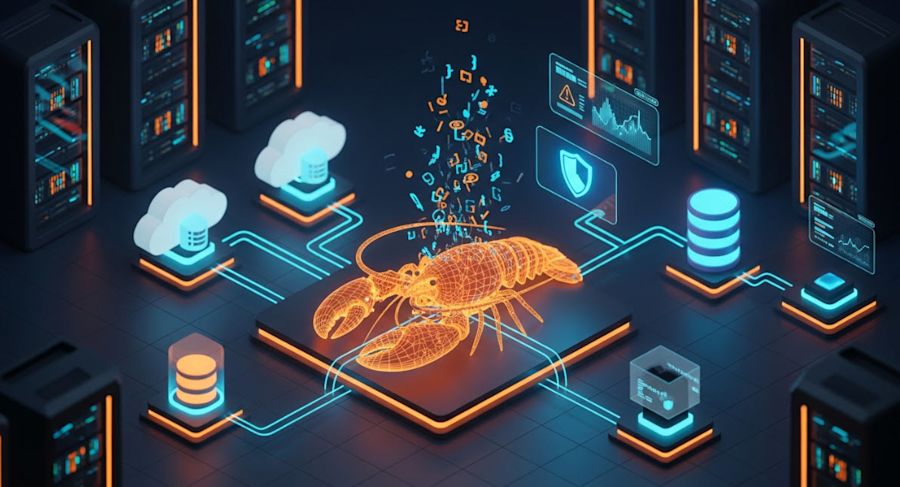
Clawdbot, an open-source AI agent that automates tasks across email, files, calendar, and development tools, has quickly become a prime target for infostealers. Its MCP implementation lacks mandatory authentication, allowing for prompt injection and shell access by design, exposing hundreds of instances to the public internet. Infostealers like RedLine, Lumma, and Vidar exploited these vulnerabilities before security teams could respond. The malware not only steals credentials but also psychological profiles, aiding sophisticated social engineering attacks. Despite quick patches, fundamental architectural issues remain, such as plaintext storage of sensitive data and no supply chain vetting. Security experts urge treating AI agents as critical infrastructure, emphasizing inventory, access controls, runtime monitoring, and provenance verification. The rapid weaponization underscores the need for immediate and comprehensive security measures as AI agent integration in enterprise applications surges.
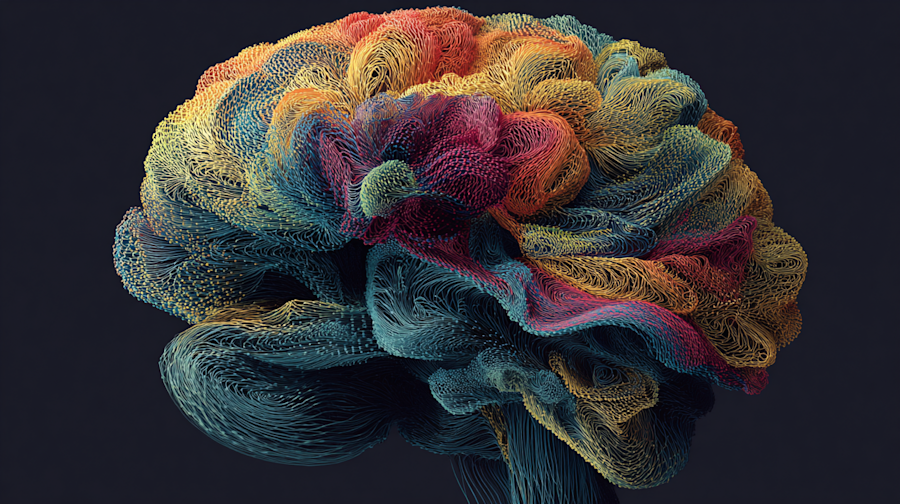
A fresh study by Google reveals that advanced AI reasoning models significantly boost accuracy on complex tasks by simulating internal debates among varied perspectives and expert personas—a process termed "society of thought." Models like DeepSeek-R1 and QwQ-32B, trained with reinforcement learning, naturally develop this multi-agent dialogue, enhancing their problem-solving capability without explicit instructions. This approach mimics human cognitive diversity, where differing opinions and personality traits trigger thorough checks and refinements, preventing errors and bias.
For example, in a chemistry synthesis challenge, DeepSeek-R1’s internal 'Planner' clashed with a 'Critical Verifier,' helping identify and amend a flawed reaction path. In creative tasks, the model balanced creativity and accuracy through an internal negotiation. These insights suggest developers can design AI prompts to foster constructive conflicts, driving better decisions and richer reasoning. Enterprises should embrace "messy" conversational data for training, as exploring errors and debates accelerates learning. Moreover, exposing these internal AI debates can increase transparency and trust, marking a shift toward organizational psychology in AI development.

Airtable recently introduced Superagent, a standalone AI research agent that orchestrates teams of specialized AI models working in parallel to complete complex research tasks. Unlike previous systems that relied on simple model routing, Superagent’s central orchestrator keeps full visibility over every step—from initial planning to execution and results aggregation—creating a seamless and coherent workflow. This approach allows it to manage context windows effectively and adapt dynamically during task execution, improving accuracy and preventing redundant mistakes. Airtable’s co-founder Howie Liu emphasizes that the success of such agent systems hinges largely on well-structured data rather than just the choice of AI models. Enterprises looking to implement multi-agent AI should prioritize data architecture, reliable context management, and sophisticated orchestration to maximize performance. Superagent builds on technology Airtable acquired from DeepSky and leverages multiple leading AI models for different subtasks, positioning itself as a powerful complement to Airtable’s structured data platform.

Tel Aviv-based startup Factify has emerged from stealth with an impressive $73 million seed round to transform digital documents beyond PDFs, DOCX files, and collaborative cloud apps like Google Docs. Founded by AI and machine learning expert Matan Gavish, Factify aims to give documents their own 'brain,' enabling them to carry unique identities, live permission controls, and immutable audit logs. The company sees traditional files as liabilities—static, prone to loss, and difficult to manage—whereas a Factify document acts like an interactive asset, capable of answering questions about its history, ownership, and status.
Since their inception, digital documents evolved from isolated files like Word to immutable PDFs and collaborative cloud documents. However, enterprises continue to rely on a fragmented ecosystem lacking control once files leave their systems. Factify’s innovation is to create a new document standard blending backward compatibility with PDF-like interfaces but adding rich, intelligent infrastructure designed for the AI era.
The startup’s goal is nothing less than the establishment of a new global standard for digital truth—one that balances ease of adoption with revolutionary underlying architecture. The funds will enable deep engineering efforts and expansions in the U.S., as Factify reimagines how documents function in business and beyond.

Anthropic recently embedded nine workplace apps into its AI chatbot, Claude, including Asana. This integration transforms Claude into a workplace command center, allowing users to manage Asana projects using natural language conversations. Arnab Bose, Asana’s Chief Product Officer, explained that Asana aims to provide essential business context to AI models, which are otherwise 'context-starved' without enterprise-specific data. The powerful Work Graph data model grounds AI outputs in the reality of each company's operations, making AI more effective. This integration requires human approval for any project changes and respects user permissions via OAuth authentication. Additionally, Asana is working on multi-AI provider compatibility, including ChatGPT and Google Gemini, to avoid vendor lock-in and improve flexibility. Amidst leadership changes, Asana envisions AI handling task orchestration while humans retain strategic control, promoting a balanced human-in-the-loop approach. The Claude integration is available now to Asana customers with a paid Claude subscription.

Anthropic Integrates Slack, Figma, and Asana into Claude, Revolutionizing AI Chat as a Workplace Hub
Anthropic has launched new integrations that embed popular business apps directly into Claude, its AI assistant, turning it into an all-in-one workplace platform. Users can now manage project timelines, draft Slack messages, design presentations, and analyze data without leaving Claude. The update includes apps like Amplitude, Asana, Box, Canva, Clay, Figma, Hex, Monday.com, and Slack, with Salesforce support soon to come. This move transforms Claude from a simple chatbot into an interactive workspace driven by Anthropic's open-source MCP Apps technology, enabling seamless control over workflows and tools within a single interface. Pricing strategies bundle these integrations under existing subscription plans for increased adoption in corporate settings. Anthropic addresses security and consent carefully, balancing powerful AI capabilities with user and IT admin controls. This expansion marks a significant step in Anthropic's ambition to embed AI deeply into enterprise workflows, positioning Claude as a critical layer that orchestrates daily work and potentially locking in customers through integrated workflows.

The industry agrees 2026 will mark the rise of "agentic AI," where autonomous agents do much more than text summarization—they'll handle tasks like booking flights and managing infrastructure. However, these agents are fragile. Despite the hype around AI model improvements, the real failure often lies in data quality. Unlike the older analytics era where data issues were caught by humans before causing wide problems, autonomous agents take actions based on flawed data, leading to costly mistakes. Traditional data cleaning isn’t enough; instead, a "data constitution" enforcing strict automated rules before data hits AI models is necessary. This "Creed" framework acts as a gatekeeper, featuring mandatory quarantine of faulty data, strict schema enforcement, and vector consistency checks to prevent disastrous outputs. Implementing such controls also involves overcoming cultural resistance from engineers, yet these efforts ultimately accelerate development by reducing debugging time and improving data trustworthiness. For those building AI strategies, focusing on robust data governance rather than just hardware or model benchmarking is crucial to prevent agents from making rogue decisions that damage trust and revenue.

Voice AI has moved beyond basic request-response interactions in a major leap forward. Recent releases from Nvidia, Inworld, FlashLabs, Alibaba's Qwen, and strategic moves by Google DeepMind and Hume AI have addressed key challenges: latency, conversational fluidity, efficiency, and emotional intelligence. Now, voice AI can respond in under 200 milliseconds, handle interruptions like humans, compress data for cost-effective streaming, and interpret emotional nuances to create empathetic interfaces. This new voice technology stack combines powerful LLMs, efficient responsive models, and emotion-aware platforms to enable next-generation enterprise applications across customer service, healthcare, finance, and more. The era of "chatbots that speak" is ending, making way for AI systems that truly understand and respond to users’ emotions and intentions, offering a competitive edge to early adopters.