


When AI agents browse websites, they usually struggle to understand the page structure, relying on inefficient methods like screen scraping and HTML parsing. This week, Google Chrome unveiled WebMCP (Web Model Context Protocol) in an early preview on Chrome 146 Canary. Developed collaboratively with Microsoft and supported by the W3C's Web Machine Learning community, WebMCP is a new web standard that allows websites to expose structured tools directly to AI agents through the browser API navigator.modelContext.
WebMCP helps enterprise IT by enabling teams to turn existing client-side JavaScript into agent-readable tools without overhauling their pages. The protocol offers two APIs: a Declarative API for standard form actions and an Imperative API for more complex interactions defined in JavaScript. This makes AI interactions more reliable, less costly, and faster by replacing many imprecise scraping steps with single, structured calls.
Designed with a human-in-the-loop approach, WebMCP encourages collaboration between users and AI agents rather than fully autonomous automation. While not replacing traditional Model Context Protocol (MCP) used on backends, WebMCP complements it by operating client-side, in the browser where users actively engage.
Currently available behind an experimental flag in Chrome Canary, WebMCP is expected to become a widely supported standard by mid-to-late 2026, potentially supported soon in Microsoft Edge as well. Its goal is to provide a universal, standardized way for AI agents to interact seamlessly with the web, much like USB-C unified device connectivity.

OpenClaw, the open-source AI assistant developed by Peter Steinberger, has rapidly gained attention for its powerful autonomous task execution across devices. However, its permissionless design raised significant security concerns. Enter NanoClaw, created by Gavriel Cohen, which offers a streamlined, secure alternative by isolating AI agents within Linux containers and Apple Containers, preventing potential security breaches. NanoClaw’s lightweight codebase of about 500 lines contrasts sharply with OpenClaw’s massive 400,000-line system, making it more auditable and maintainable. Its design favors modular "Skills" over traditional feature bloat, enabling users to customize their AI with specific capabilities without unnecessary vulnerabilities. Cohen’s AI-first agency Qwibit already uses NanoClaw to automate sales and administrative tasks seamlessly. With its container-first architecture and integration with Claude Agent SDK, NanoClaw offers enterprises a simpler, safer, and more efficient foundation to harness advanced AI models and manage risks related to prompt injection and data leaks. This framework underscores an emerging philosophy: as AI grows more powerful, the software managing it should be leaner, transparent, and secure.

Enterprises often face challenges when fine-tuning large language models (LLMs) for new tasks, risking the loss of existing knowledge and forcing the maintenance of multiple models for different skills. Researchers from MIT, the Improbable AI Lab, and ETH Zurich have introduced a groundbreaking technique called self-distillation fine-tuning (SDFT). This method allows LLMs to learn new capabilities and knowledge without forgetting previously acquired skills, effectively overcoming a major limitation in AI development.
SDFT leverages the model’s in-context learning ability by setting up a self-teaching loop: a frozen "teacher" model uses expert demonstrations to generate correct answers, while a "student" model attempts the same tasks and learns from the teacher’s feedback. This method combines strengths from supervised fine-tuning and reinforcement learning to create an on-policy learning environment without requiring explicit reward functions, which are often hard to define in complex enterprise scenarios.
Tests using the Qwen 2.5 model on tasks including science Q&A, software tool use, and medical reasoning showed that SDFT not only improved learning outcomes but also preserved the model’s prior knowledge. For example, while standard fine-tuning caused performance drops on previously acquired skills, SDFT maintained consistent accuracy across all tasks. This approach can reduce the need to juggle numerous specialized models, lowering inference costs and simplifying deployment.
Though SDFT demands more computational power and depends on sufficiently large models to function optimally, the technique represents a promising advance toward adaptive AI that grows more capable over time. The research team is working with Hugging Face to integrate SDFT into popular libraries, enabling broader adoption. Ultimately, this innovation paves the way for AI systems that continuously learn and evolve without losing their foundational knowledge.

Anthropic has made its Claude Cowork AI agent available for Windows users, bridging a significant gap that previously limited the tool to macOS. This launch delivers full features found on the Mac version, including file access, multi-step task execution, plugins, and Model Context Protocol connectors for external integrations. Users can also set global and folder-specific guidelines, greatly improving context retention across projects.
This release marks an important milestone in enterprise AI adoption, aligning with Microsoft's evolving partnership with Anthropic. Microsoft is encouraging internal use of Claude Cowork alongside its own GitHub Copilot, signaling a broader strategy to integrate diverse AI solutions.
Despite concerns around data security and prompt injection vulnerabilities, major firms like Adobe and Dentons are already deploying Claude technology to enhance their workflows. Available via subscription starting at $20 per month, the software targets premium users looking for advanced automation tools.
The arrival of Claude Cowork on Windows extends its reach to 70% of desktop users, intensifying the competition in AI-powered productivity software and challenging traditional enterprise tools.

OpenAI's standalone Codex application for Mac has rapidly amassed over 1 million downloads within a week of its launch, mirroring the viral growth pattern of ChatGPT. Powered by the advanced GPT-5.3-Codex model, the app serves as a powerful coding command center, enabling developers to run multiple AI agents in parallel, delegate tedious tasks, and manage complex projects efficiently. However, OpenAI CEO Sam Altman has announced that while Codex will remain accessible to Free and Go tier users beyond the promotional period, usage limits may become more restrictive to manage the high operational costs. This move comes as competition heats up with other AI coding tools like Anthropic's Claude Code and Kilo CLI gaining traction. For enterprise leaders, the milestone underscores the burgeoning demand for agentic AI systems capable of autonomous code management, urging a shift towards platform-agnostic and governance-centric strategies to safely scale development.
Observational Memory Revolutionizes AI Agent Efficiency with Superior Performance and Cost Reduction
RAG systems, though widely used, often fall short in speed and intelligence for advanced AI workflows, especially in prolonged, tool-intensive environments. To address these challenges, developers are turning to novel memory architectures such as observational memory, pioneered by Mastra, which focuses on persistence and stability instead of dynamic retrieval. This approach uses two background agents to compress and log conversation history, offering remarkable text compression rates and eliminating the need for context retrieval. The technique sacrifices some dynamic search flexibility but excels in maintaining coherent context over long periods, which is crucial for applications like ongoing chatbot interactions in CMS platforms or AI SRE systems. Observational memory's design promotes stable context windows that facilitate prompt caching, drastically cutting token processing costs up to tenfold while surpassing RAG's benchmark performance. This makes it a compelling choice for enterprises requiring consistent, long-duration conversational memory embedded within their products. Mastra's open-source system also integrates readily with popular frameworks, inviting broader development applications. The approach underscores the importance of memory design in AI, pointing towards more robust, cost-effective agent architectures that enhance user experience by retaining context and decision history efficiently.
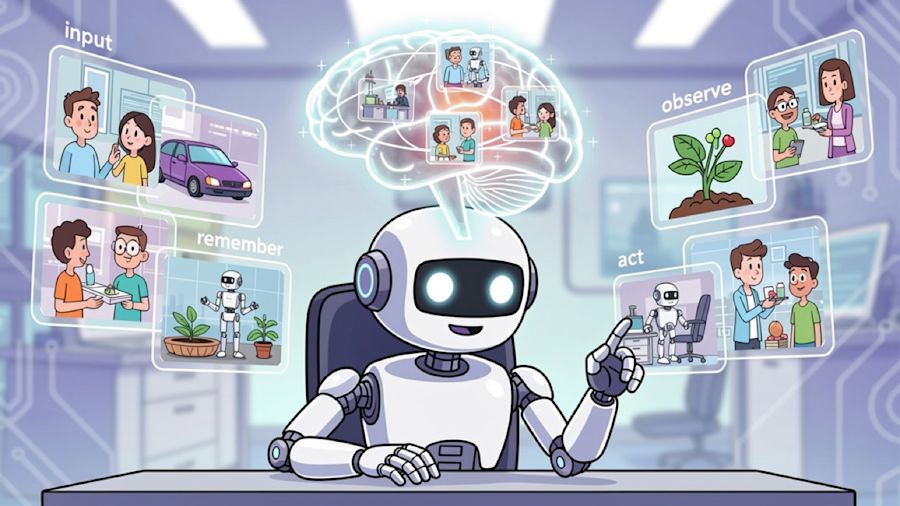
Historically, AI agents struggled with retaining context during extended interactions, leading to frequent lapses and errors. OpenAI's latest enhancements to its Responses API address these challenges by introducing Server-side Compaction, Hosted Shell Containers, and a new Skills framework for agents. Server-side Compaction allows agents to summarize and compress past interactions to maintain essential context over long sessions, significantly improving stability. The Hosted Shell provides agents with dedicated Debian 12 environments featuring native execution for multiple programming languages, persistent storage, and internet connectivity for installing libraries or accessing APIs. Meanwhile, the Skills standard offers a modular, reusable framework that boosts developer productivity by packaging specialized knowledge and functionality. These updates mark a shift from ephemeral, forgetful AI tools to reliable, long-term digital workers. The article also contrasts OpenAI’s tightly integrated Skills system with Anthropic’s portable, open standard approach, outlining implications for enterprises regarding deployment speed, security, and interoperability.

Nvidia, along with partners from leading universities like UC Berkeley and Stanford, has unveiled DreamDojo, an innovative AI platform that teaches robots to understand and interact with the physical world by analyzing 44,000 hours of human egocentric video. This vast dataset, DreamDojo-HV, greatly surpasses previous world model training collections in duration, diversity, and the variety of skills captured. The training process involves two phases: initial pre-training on human activities to acquire broad physical understanding, followed by fine-tuning specific to robot hardware. This approach dramatically cuts down the time and expense typically required to train humanoid robots. Additionally, DreamDojo supports real-time robot interaction, demonstrated across several robot models, making it practical for teleoperation and complex planning tasks. Nvidia's CEO Jensen Huang highlights the strategic significance of AI robotics amid unprecedented industry infrastructure investment, aiming to transform manufacturing and beyond. DreamDojo also offers enterprises a powerful simulation tool for testing robots before real-world deployment, helping bridge the gap between lab success and factory-floor realities. While commercial applications are still emerging, Nvidia’s pivot from gaming to robotics signals a new chapter in AI-driven hardware innovation.

Fraud detection is a race against massive transaction volumes. Mastercard processes about 160 billion transactions yearly, with surges up to 70,000 per second during peak times like the holidays. Their fraud platform, Decision Intelligence Pro (DI Pro), uses advanced AI to analyze each transaction in under 300 milliseconds. At its core is a recurrent neural network that assesses transaction patterns to determine fraud risk, treating it as a recommendation problem. Mastercard also addresses data sovereignty by using anonymized global data to make local decisions quickly.
Fraudsters continuously evolve, but Mastercard fights back using "honeypots," artificial traps that help reveal illicit networks through AI and graph analysis. This approach enables the mapping of complex fraud webs to block scammers before they succeed.
The podcast accompanying this article explores how Mastercard builds these AI tools, emphasizing engineering alignment, prioritization, and phased AI deployment, as well as innovations like malware sandboxes and global yet privacy-conscious data strategies.

A developer receives a LinkedIn message from a recruiter about a legitimate-looking role. The required coding assessment involves installing a package that secretly steals all cloud credentials from the developer’s machine—including GitHub tokens and AWS, Azure keys. The attacker gains access to the cloud environment within minutes without triggering email security or dependency scanners. This escalating threat, known as the IAM pivot, exploits a major blind spot in enterprise identity monitoring. Organizations see the package but miss credential theft during installation. Attackers then use stolen credentials to assume cloud IAM roles undetected, often bypassing traditional perimeter defenses entirely. A recent CrowdStrike case revealed attackers compromised a European FinTech firm, diverting cryptocurrency through this method. Industry reports confirm these widespread campaigns use social messaging platforms like WhatsApp to deliver Trojanized packages, circumventing corporate email defenses. To combat this, experts recommend deploying runtime behavioral monitoring on developer workstations, implementing Identity Threat Detection and Response (ITDR) for cloud identities, and introducing AI-based access controls to detect suspicious usage patterns beyond simple authentication. This sophisticated attack chain underscores the urgent need for enterprises to evolve beyond conventional security tools and build identity-focused defenses that operate at machine speed.
