


Presented by Atlassian
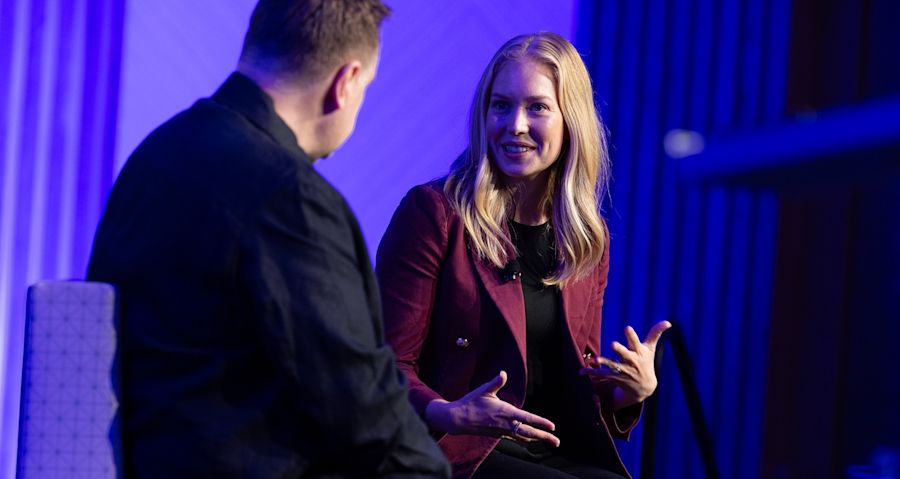
Many companies are approaching AI adoption incorrectly by focusing on individual use rather than how teams collaborate, explains Dr. Molly Sands, head of Atlassian's Teamwork Lab, in a discussion at VB Transform 2026. Sands' team of behavioral scientists studies how AI reshapes teamwork and assists organizations in redesigning their workflows.
Atlassian’s State of Teams Report, surveying 12,000 knowledge workers and Fortune 1000 executives, reveals a gap between AI activity and tangible value. While 89% of executives noted increased individual AI use, only 6% could identify clear ROI. In contrast, 14% of teams successfully turned AI usage into real value by focusing on context, workflows, and culture.
Successful teams create a "context graph" capturing shared goals and decisions, redesign entire workflows rather than speeding isolated tasks, and foster a culture of experimentation and learning. Sands encourages leaders to implement AI working agreements to align team AI use and avoid fragmented knowledge. Ultimately, AI exposes longstanding teamwork challenges, emphasizing the need for shared context and explicit workflows.
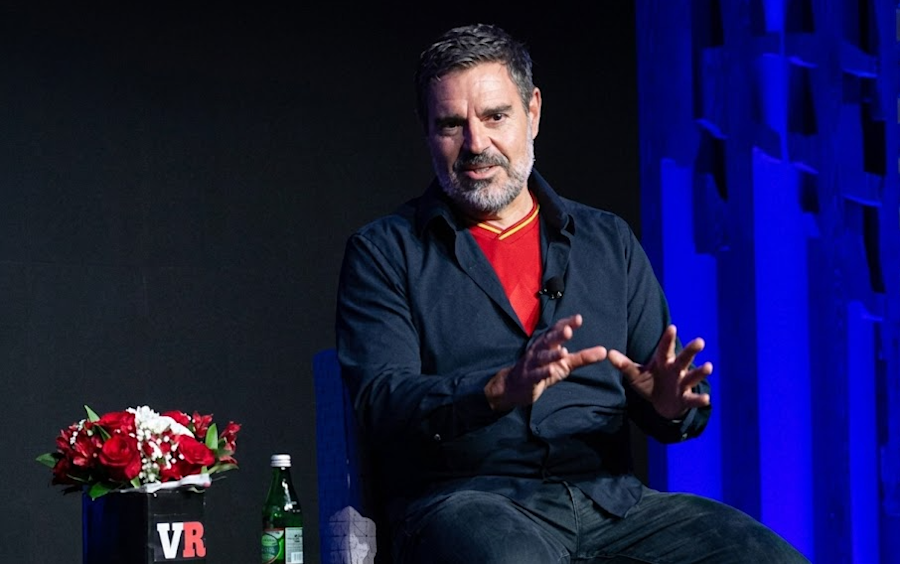
Xavi Amatriain, Expedia Group’s chief AI and data officer, shared insights at VB Transform 2026 about how evaluation metrics ('evals') are becoming the new product requirement documents (PRDs). He explained that evals, which include red teaming and security checks, are embedded into product design from the start, simplifying the development process especially with AI-assisted code. Drawing from his experience at Google, Amatriain emphasized the importance of specialized AI agents over monolithic models, advocating for a system composed of narrowly scoped components to improve security and functionality.
Amatriain also discussed Expedia’s risk-calibrated governance framework, which involves layered principles, tools, and automated checkpoints tailored to the level of risk each AI agent poses. He stressed minimizing guardrails to avoid biasing user feedback, while maintaining essential safeguards based on risk. Expedia’s AI agents blend real-time data and user context to provide timely, trustworthy recommendations without taking final actions like bookings, ensuring user control remains paramount.
On security, Amatriain highlighted the growing threat from other AI systems and the necessity of embedding security considerations early in design. He underscored the critical role of continuous monitoring and rapid incident response, noting that many companies have already faced AI agent security incidents. These insights illustrate the evolving challenges and strategies in deploying AI responsibly at scale.
Google DeepMind has launched three new AI models—Gemini 3.6 Flash, Gemini 3.5 Flash-Lite, and Gemini 3.5 Flash Cyber—designed for greater token efficiency, speed, and cost-effectiveness. Gemini 3.6 Flash is priced at $1.50 per million input tokens and $7.50 per million output tokens, with Gemini 3.5 Flash-Lite even more affordable at $0.30/$2.50. These models significantly reduce token consumption, with Gemini 3.6 Flash cutting up to 65% of token use on complex engineering tasks compared to previous versions, enhancing speed and reducing costs for enterprises. The models support up to 1 million tokens in input and 64,000 tokens in output, improving benchmarking scores in long-horizon engineering, machine learning, and knowledge work efforts. The new Flash Cyber model is fine-tuned for cybersecurity, targeting vulnerabilities and integrating with Google's CodeMender platform, though it's available only to governments and trusted partners. Google is still testing the more powerful Gemini 3.5 Pro, expected to be announced soon. These AI advancements emphasize efficient, autonomous agent systems for enterprise applications, though all models remain proprietary and accessible solely through Google's API services on a commercial licensing basis.


Last year marked a significant milestone as the global billionaire count surpassed 3,000 for the first time. One billionaire CEO recently highlighted that artificial intelligence could multiply his wealth by 20 times, raising concerns about the societal impact of such concentrated financial power.

As more consumers rely on AI agents over traditional retailers, brands that don't align with machine-readable technologies risk missing out on a major market transformation worth trillions.


With Andy Burnham stepping into his role as the UK's prime minister, the spotlight is on his groundbreaking cabinet formation, featuring AI as a dedicated cabinet member for the very first time.

Samsung is launching a new robotics division, spearheaded by Dongkun Lee, former lead at Boston Dynamics. The company aims to create robotics research centers in the US, China, and Japan, unifying these efforts under Lee's leadership to advance innovation in robotics technology.

UK-based fintech Revolut is advancing its global ambitions by launching a new banking entity in Australia following regulatory approval. This move supports its vision of becoming the world's first truly global bank.


Nvidia's Vera Rubin platform integrates CPUs and GPUs into one system, showcasing the company's expanding goal to support all levels of AI infrastructure.


A federal judge has approved a $1.5 billion class action settlement between Anthropic and a group of authors who claimed the company trained its AI on their copyrighted books without permission. The settlement will provide approximately $3,000 to each author for every book alleged to have been unlawfully used. Representing the largest copyright recovery to date, the case highlights growing legal scrutiny over AI training data. The authors include Andrea Bartz, Charles Graeber, and Kirk Wallace Johnson, who initially filed the lawsuit.
