


Meta has announced the appointment of Assaf Keren as its new chief information security officer, following the departure of Guy Rosen in June after 13 years with the company. Keren brings extensive experience from his recent role as chief security officer at Qualtrics, where he worked for two years, as well as his prior position in the same role at PayPal.


Glow is focusing on addressing emerging endpoint security threats driven by the widespread integration of AI agents and developer tools within enterprise environments.

Security experts widely agree that negotiating with cyber extortionists is futile since attackers have no real incentive to stop once they've received payment.

OpenAI plans to invest an amount equivalent to the GDP of Sweden in building out its infrastructure through the year 2030, signaling a massive financial commitment to advancing artificial intelligence capabilities.

Substack has launched a new feature that lets readers see how much of a newsletter may have been generated with AI assistance. This initiative highlights a growing trend toward greater transparency in the creation of AI-supported content, aiming to build trust and clarity between writers and their audiences.

Uber is investing in Atoms, Travis Kalanick's robotics company, which promotes the use of industrial AI to revolutionize global industries.


The water industry has raised serious concerns about the UK’s capacity to support future datacentres, highlighting potential water shortages that could impede AI development plans. Datacentres require substantial water usage to cool their server equipment, utilizing systems like cooling towers and chillers. This demand is compounded by the high electricity consumption that indirectly drives water usage. Industry experts warn that without government intervention to address these cooling water needs, the ambitious plans for AI growth may face critical obstacles.

Tech employees are increasingly turning to unions, challenging the long-standing notion that Silicon Valley workers are immune to unionization. Traditionally, tech jobs came with top-tier pay, excellent benefits, and a casual culture that gave engineers a sense of equality with their managers. However, recent AI-driven layoffs and concerns over job security have changed the landscape. Workers at companies like Google DeepMind and Meta are now pushing back against not only job risks but also ethical concerns about AI's military use and workplace monitoring. These developments have sparked a growing wave of union efforts among tech professionals.
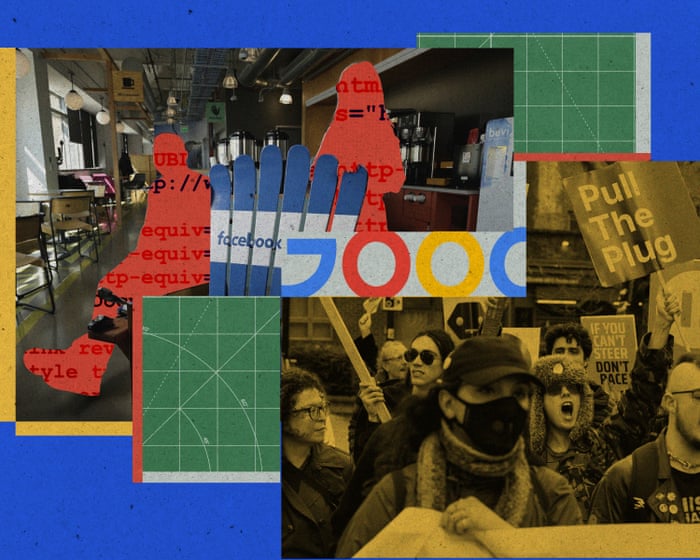
Google’s recent AI difficulties highlight growing concerns as new Chinese AI models challenge US technology leadership. Blake Montgomery shares insights following a cultural-filled Sunday featuring Christopher Nolan's The Odyssey and the World Cup final. The focus today is on China's advance in the AI race and Silicon Valley workers' efforts to safeguard their roles against AI automation. Notable developments include New York's unprecedented one-year halt on new AI data centers, sparking political debate and parallels in Australia where calls for regulatory pauses grow. Other tech news covers IBM's shares tumbling, teenagers' mixed reactions to the UK’s social media curfew, and a massive billing glitch affecting Amazon Web Services customers worldwide. For further reading, visit the original article on the tech rivalry between China and the US.


Erik Brynjolfsson challenges the common question about AI's impact by urging us to focus on how we use AI rather than what AI will do to us. In a conversation on "Me, Myself, and AI," Brynjolfsson, a leading economist at Stanford, discusses the critical role human choices, institutions, and organizations play in shaping AI's economic and social impact. He reflects on his earlier predictions about AI progress, the complexities behind AI adoption, and the importance of investment in complementary assets like new skills and business models. Brynjolfsson highlights recent research showing that AI's impact on jobs varies significantly by age and occupation, emphasizing the need to think beyond job automation to the creation of new opportunities. He advocates for mindful optimism, stressing human agency and values in directing AI's development toward economic growth and shared prosperity. The conversation covers the challenges of measuring AI's benefits, the J-curve effect in productivity adoption, and the balance between academic and industry roles in AI innovation. Brynjolfsson calls for active engagement from all stakeholders to navigate AI's transformative potential responsibly.
