


Hugging Face CEO Clem Delangue highlights a growing trend where enterprises are favoring open AI models over frontier models. This preference is driven by considerations of cost efficiency, easier accessibility, and the advantages of ownership. The key question remains whether frontier models retain their importance when most production AI applications operate on open-source alternatives.


In an effort to differentiate itself in a crowded insurance market, Farmers Insurance has overhauled its classic jingle and adopted a bold all-pink rebrand. Eleanor Solomon, the brand's head of creative, explained that this change aims to break through the "sea of sameness" that characterizes the industry.

While the adoption of third-party generative AI tools in customer service has surged over the past year, usage of company-provided chatbots has remained stagnant since 2022, showing no significant growth.


Model routing, a crucial part of enterprise AI, optimizes task assignments to AI models for better speed and cost efficiency. Traditional routing relies on static rules or trained classifiers, which can’t adapt to real-world changes or learn from outcomes. A novel open-source framework called Agent-as-a-Router overcomes these limits by using a dynamic, memory-driven agent. It employs a Context-Action-Feedback (C-A-F) loop to learn from each task's success or failure, improving routing decisions on the fly.
ACRouter is the practical implementation of this dynamic routing approach. It features three key components—Orchestrator, Verifier, and Memory—working together to select the best AI model for each task based on past performance and real-time feedback. The system integrates with actual execution environments to verify outcomes and update its strategy continuously.
Benchmark tests on coding and agentic tasks showed ACRouter outperforms static routing methods and expensive default-to-premium strategies. It balances cost and performance effectively, achieving a 2.6x cost reduction compared to always using the costly Opus model. This makes ACRouter a powerful tool for enterprises to harness diverse AI models smartly without blindly paying for top-tier models every time.
While ideal for verifiable tasks like coding or data retrieval, the framework is less suited for subjective or low-volume tasks. The code and models are openly available on GitHub and Hugging Face, supporting compatibility with popular AI models like Claude Code and Codex.
This advancement offers enterprises a self-optimizing AI routing system that adapts to user behavior, foundation model evolution, and shifting workloads, pushing the boundaries of cost-effective AI operations.


With job growth slowing and summer layoffs looming, a new behavior called "job scrolling" is gaining attention among Gen Z workers. Rather than actively applying for new positions during work hours, many are browsing LinkedIn and Indeed to keep their career options open amid economic uncertainty. This habit, identified by Careerminds, acts as a coping mechanism to reduce anxiety about job security, offering reassurance that opportunities still exist even if no immediate job changes are planned. Similar to "doomscrolling" but focused on jobs, this trend is especially common among younger employees facing an unpredictable market and quieter summer offices. Managers should note subtle signs like refreshed LinkedIn profiles, decreased engagement, and increased attention to benefits policies, which may signal job scrolling. Experts recommend that employers proactively discuss career paths and increase employee ownership to foster job security and reduce anxiety.


Microsoft CEO Satya Nadella warns that companies using AI face a double cost: the obvious financial expense and the hidden price of sharing valuable data to make AI effective. He terms this dilemma the Reverse Information Paradox, noting that Microsoft itself played a role in creating these challenges.

Intel is investing 5 billion euros (approximately $5.7 billion) to enlarge its Leixlip campus in Ireland. This funding targets the development of advanced data-center processors tailored for artificial intelligence and high-performance computing, as reported by Bloomberg. This allocation constitutes about 30% of Intel's planned $17 billion capital expenditure for 2026, highlighting the company's strong commitment to EUV fabrication on the continent.

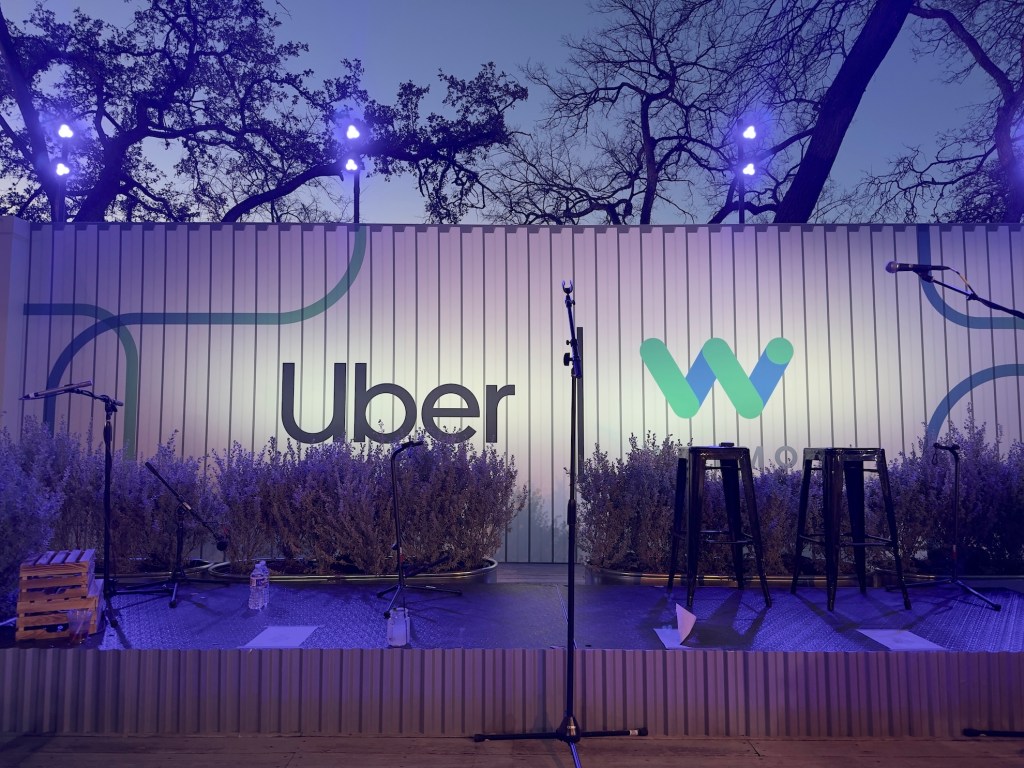
Washington, D.C. has emerged as the center of a fierce debate between Uber and Waymo, as both companies push conflicting agendas regarding robotaxi regulations.
DeepSeek recently cut prices on its V4-Pro model by 75%, a move that initially appeared to be a major win for enterprise AI vendors and developers. However, this price reduction has not guaranteed improved margins because agent workflows consume tokens far faster than the rate at which inference costs are declining. Unlike traditional chatbots that process one user query with one model call, AI agents involve multiple costly operations such as planning, retrieval, tool use, and verification, leading to a significant increase in token consumption — often 100 times more per user query.
This token amplification creates a challenge for the current AI business model, which relies on seat-based SaaS pricing. Heavy users of agentic workflows can incur infrastructure costs that exceed their subscription fees, resulting in negative gross margins. Enterprises adopting these AI agents face mounting expenses, forcing a rethinking of cost structures and product architectures.
To manage this, companies must adopt strategies like cost-aware routing, prompt caching, context trimming, and speculative decoding to control inference expenses. Treating inference cost as a first-class metric, budgeting carefully, and negotiating volume commits are essential steps to sustain margins. The future success of AI-native companies hinges not on the cheapest models but on intelligent agent orchestration that balances capability with cost awareness.
The 100x problem highlights a critical turning point where architecture decisions directly impact financial outcomes, marking a new phase in enterprise AI economics.

What was once a radical concept has gained widespread support. Nearly 70% of Americans now favor a policy that would require AI companies to allocate half of their stock to a public sovereign wealth fund, according to a June survey of 1,690 U.S. adults by Verasight. This shift highlights growing public interest in shared ownership and oversight of powerful AI companies.
