


Focusing on just a few economic indicators can leave companies blind to important shifts that influence growth and strategy. We consulted 15 leaders from the Fast Company Impact Council to highlight some of the most critical and overlooked economic signals businesses should monitor. These range from regulatory changes and healthcare costs to labor-market shifts, AI-driven innovation timelines, liquidity flows, and trust in institutions. Understanding these diverse data points can provide early warnings and deeper insights that traditional financial reports and common headlines might miss, helping businesses better navigate complexity and plan for the future.

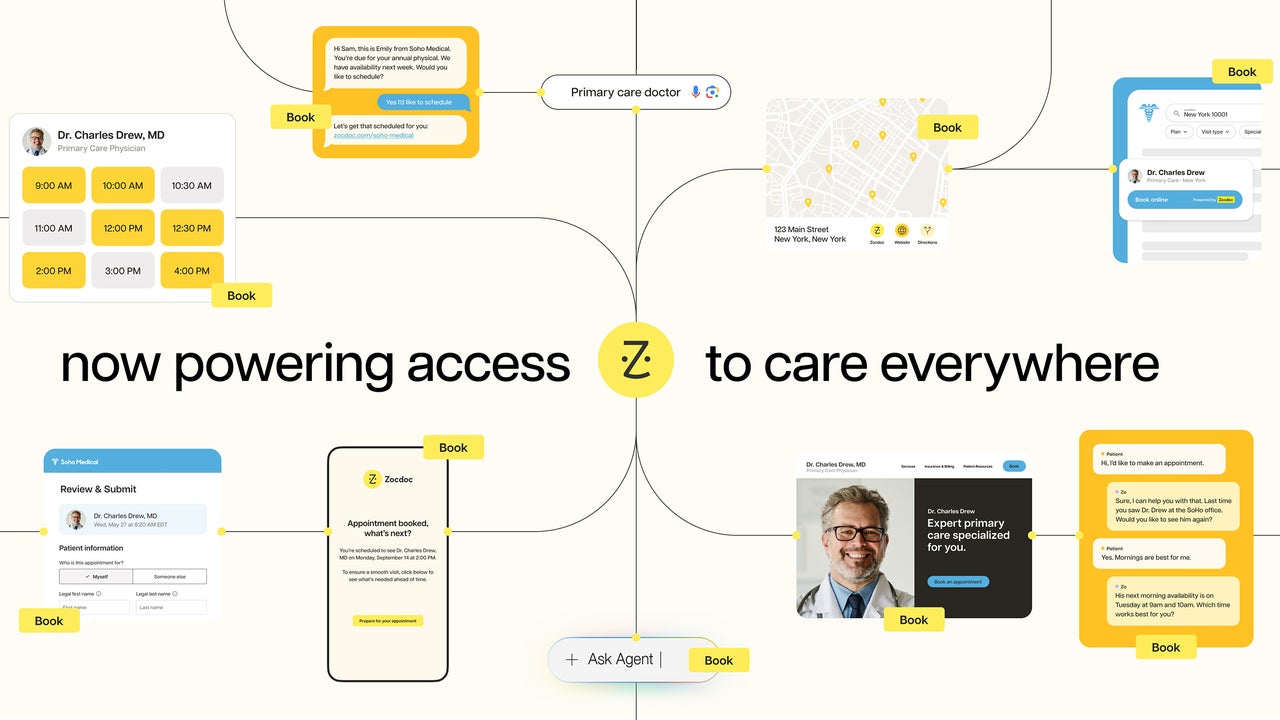
Zocdoc, the online appointment scheduler, is broadening its reach by expanding the Care Access Network. This move enables other platforms—such as Yelp, Healthgrades, and Amazon Health AI—to offer Zocdoc's technology for booking medical appointments nationwide. The tool helps patients find doctors organized by insurance acceptance and available appointment times, addressing the long waits that average 31 days to see a physician. CEO Oliver Kharraz highlights healthcare’s lag in having a universal access layer for bookings, unlike travel or retail. With a network of 200,000 providers and partnerships including the Veterans Health Administration and Blue Shield of California, Zocdoc has improved direct booking options, reduced wait times to six days on average, and drastically decreased no-show rates. As Zocdoc enters a new growth phase, profitability and strategic hires underline its ambition to become a household name and streamline healthcare access for millions.

Safran leverages Loopr AI to enhance the inspection process for airplane parts. By generating synthetic data, the software significantly improves the training and accuracy of AI algorithms used for defect detection.


By SC Moatti
Leading with “we use AI” no longer sets a product apart; AI is now basic infrastructure. According to data from 576 venture-backed AI B2B companies raising over $50 million since 2025, true competitive moats today are those that AI models alone cannot replicate. Using Hamilton Helmer’s 7 Powers framework and insights from Products That Count, two moats stand out:
-
Counter-positioning: Building a business model so distinct that incumbents won’t copy it because doing so would undermine their own business economics. Examples include AI insurers who bypass traditional brokers and AI-native revenue management that competes against consulting revenue. Only 5% of companies employ this, commanding the highest valuation multiples. Key question: Would it cost an incumbent more to copy you than it would cost you to build?
-
Network economies: Value grows as more users or companies join, creating a powerful self-reinforcing cycle. Seen in platforms connecting brands, factories, advertisers, and audiences, where data accumulates and becomes harder to replicate. Also used by 5% of companies, offering strong capital efficiency.
Other assumed moats like proprietary data and switching costs are often weaker than they appear due to model erosion and high capital needs. Scale economies aren’t achievable for most startups outside major players like OpenAI.
Ultimately, the moat is structural—embedded in business model or network design—not just AI tech. Founders must define what aspect of their business would survive a better-funded competitor launching tomorrow. Those who can't answer are merely building products, not enduring powers.
SC Moatti is Founding Managing Partner at Mighty Capital and Chair at Products That Count. She is recognized for pioneering investments and product leadership, with deep experience building award-winning products at Meta and Siebel Systems.


Pony.ai and Verne have initiated Europe's first fully driverless passenger rides in Zagreb, with no driver present and Uber managing bookings. Their goal is to deploy over 2,000 robotaxis across Europe, although current EU regulations limit annual approvals for fully automated vehicles to 1,500 units. This marks a significant milestone in autonomous transportation on the continent.

Enflame Technology, an AI chipmaker supported by Tencent, saw its shares close 179% above the IPO price on the first day of trading on Shanghai’s Star Market. The company raised approximately 6.12 billion yuan ($911 million) during its initial public offering. Shares opened at 410 yuan, significantly higher than the initial offering price of 142.18 yuan.

Andreessen Horowitz is appointing a marketing executive to its executive team, underscoring a shifting perspective on the value and influence of marketing leadership in today’s corporate world.

In August, 29 companies joined The Crunchbase Unicorn Board, collectively adding approximately $63 billion in valuation. Remarkably, over a third are startups under three years old, highlighting rapid growth in the tech space. Leading the newcomers are China's XPeng Robotics, valued at $6.3 billion, California's Lumilens at $5.5 billion, and AI platform River AI alongside semiconductor startup Source Foundry, each valued at $5 billion. AI software dominates the new entries across various applications including model training, assistants, and enterprise automation, while semiconductors rank second with five new unicorns. The U.S. contributed the most new unicorns (16), followed by China with four. This surge illustrates a dynamic landscape where sectors like robotics, financial services, data centers, security, and energy are also gaining momentum. Notably, nine companies exited the Unicorn Board through public offerings or acquisitions, reflecting a healthy ecosystem of growth and maturation.

TAR has successfully raised $120 million in a Series A funding round led by Spark Capital, valuing the company at $1 billion post-money. The Austin-based firm specializes in developing off-grid power solutions tailored for AI data centers. This latest investment round also saw participation from prior backers Buckley Ventures and Align Fund, as reported by Bloomberg. Notably, Spark Capital also invests in AI company Anthropic, highlighting confidence in this emerging tech sector.

WeRide, Uber, and AVOMO have collectively secured the first national permit in Spain to operate Level 4 autonomous passenger vehicles on public roads. This milestone permit was issued by Spain's Directorate General of Traffic (DGT) under the ES-AV framework, marking a significant step forward for self-driving technology in the country. AVOMO represents the autonomous vehicle division of Moove Cars, contributing to this pioneering achievement.
