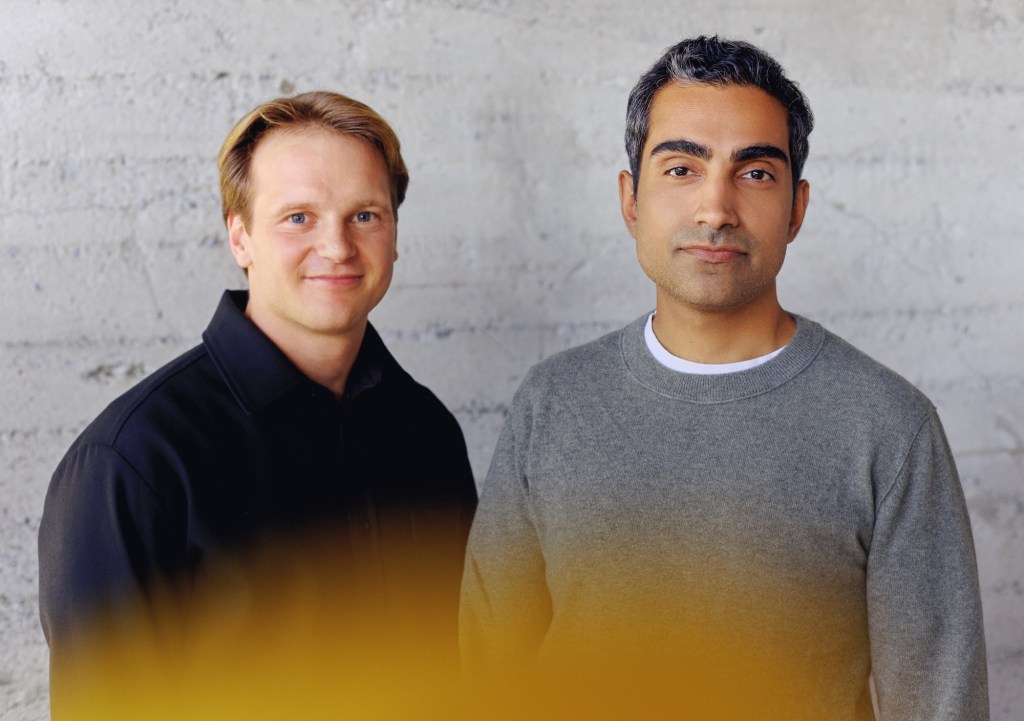
Artificial Intelligence Underwriting Company (AIUC), founded by an early hire from Anthropic and a former METR COO, has successfully raised $40 million in a Series A funding round. The round was led by Ribbit Capital with additional investment from First Harmonic. AIUC aims to develop innovative solutions to manage and control autonomous AI systems.

Lidl has introduced Einride’s cab-less Level 4 electric truck into regular service between one of its logistics centers and a nearby store in Germany. This operation is enabled by a unique permit from the federal transport authority, marking a significant milestone for autonomous vehicle deployment. The route is under a mile long and the permit is valid nationwide but does not cover cross-border travel within Europe.


The Italian cybersecurity startup, Exein, has raised $270 million in a funding round, reaching unicorn status. The company is focused on combating cyber threats by leveraging advanced AI-powered technologies to counteract AI-driven hackers.


Featuring Adeela Johnson, CEO of Béis, and Khozema Shipchandler, CEO of Twilio, this discussion challenges the traditional approach of waiting out uncertainty. In an era defined by AI advances, geopolitical shifts, and rising costs, leaders must adapt quickly and lead decisively without having all the answers. How do they decide when to pursue opportunities or pause? How can teams stay motivated amidst continuous change? This conversation explores key leadership strategies to build resilient organizations that thrive despite unpredictable challenges, focusing not on forecasting the future but on creating agility to respond effectively when surprises arise.

The complex 3D models used in building projects today are powerful but often difficult to navigate, leading to costly mistakes when engineers, consultants, and contractors handle them. Autodesk, a leading software company in architecture and construction modeling, has introduced Autodesk Assistant, an AI-powered tool designed to simplify this process. Announced at Autodesk University, this assistant automates and streamlines building design workflows, allowing multiple stakeholders to collaborate effortlessly without needing to master complex software. Using a geometry-based AI model called Neural CAD, Autodesk Assistant can answer queries, adjust designs in real-time, track construction progress, and manage operations—all in a single dynamic application. For example, it can instantly reshape floor plans, flag issues like the need for new hardware, and communicate project updates to the team, enabling quicker decision-making and reducing dependency on specialized software. This tool aims to allow architects, engineers, and builders to focus more on solving design problems rather than struggling with software intricacies, fostering greater collaboration and higher precision in project outcomes.


In Montana, investors aligned with libertarian ideals in the biotech sector are pioneering a new approach to healthcare by enabling broader access to experimental medications. This legislative shift hands significant control to venture capitalists, aiming to accelerate innovation and availability in drug development.


In 2026, U.S. venture-backed tech companies have raised nearly $90 billion through public offerings, ranking as one of the highest on record. However, the vast majority of this capital was secured by just two heavyweights: SpaceX, capturing 83% of the funds, and Cerebras Systems, with 6%. The rest of the tech IPO landscape remains modest, with only 21 other sizable offerings including a mix of traditional IPOs and SPACs totaling less than $10 billion. Notably absent this year are enterprise software IPOs—a sector traditionally represented among tech offerings—which may be shifting focus towards AI-driven innovations instead. Meanwhile, sectors like energy, defense, aerospace, medical devices, and consumer products have seen relatively strong activity. This year saw energy startups, especially in geothermal and nuclear technologies, leading the IPO count, quantum computing and defense tech making solid entries, and consumer mobility platforms like Lime debuting despite valuation challenges. The uneven distribution highlights a winner-takes-almost-all dynamic in tech IPOs, with big players dominating returns and smaller companies holding back. Pipeline IPOs similarly are dominated by giants like Anthropic and OpenAI, leaving enterprise software offerings largely absent from the immediate horizon.

Mark McQuade, co-founder and CEO of Arcee AI, emphasized that organizations shouldn't have to compromise between using cutting-edge AI models and maintaining control over the technology critical to their operations. San Francisco-based Arcee AI specializes in creating open-weight AI models and has recently completed a Series B funding round that has pushed its valuation over the $1 billion mark.

Mike Doustdar, president and CEO of Novo, expressed enthusiasm about the collaboration with Anthropic, highlighting how this partnership will enhance their R&D capabilities and advance their mission to develop innovative treatments for chronic diseases. The Danish pharmaceutical company, previously known as Novo Nordisk, officially announced the alliance on September 16, aiming to leverage Anthropic's Claude Science technology to boost drug discovery processes.


The idea behind the 'SaaSpocalypse' is that companies will abandon traditional software purchases, opting instead to use agents to create needed solutions. However, this perspective misses important factors that suggest software will continue to play a vital role in enterprise operations.