In the first quarter of 2026, North American startups secured a historic $252.6 billion in funding across all stages, shattering previous records. The surge was overwhelmingly driven by artificial intelligence companies, which attracted $221 billion — about 87% of total investment. This quarter's funding dwarfs the prior record of $95.7 billion set in Q3 2021. Notable investments include OpenAI's unprecedented $122 billion raise, and major rounds for Anthropic, xAI, and Waymo. While late-stage and technology growth rounds made up 88% of the total investment, early-stage funding also saw a healthy increase. Seed-stage investment remained steady at $5.1 billion, though with fewer deals. Exit activity was modest, featuring IPOs like EquipmentShare and significant acquisitions such as Brex by Capital One. This quarter marks a paradigm shift indicating private markets now rival public ones in capital and valuation appetite, particularly for AI ventures.


In this episode of the Me, Myself, and AI podcast, Jacqui Canney, Chief People and AI Enablement Officer at ServiceNow, discusses how AI is fundamentally transforming workflows and employee experiences. ServiceNow, with its massive scale of 80 billion active AI-powered workflows, integrates AI to automate routine processes like employee onboarding, enabling staff to focus on more valuable tasks. Canney emphasizes that AI adoption is not just about technology but heavily relies on effective change management, workforce training, and talent development, including personalized AI skills assessments. She reflects on emerging roles, the importance of blending soft skills with technical expertise, and how AI blurs traditional organizational boundaries, pointing to a future where AI and human collaboration reshape leadership and work. The conversation explores practical AI use cases, challenges in scaling AI across large organizations, and the critical role of culture and people in realizing AI's full potential.


AI-RAN, or artificial intelligence radio area networks, represents a revolutionary approach to wireless infrastructure. It transforms the network from a simple data pipeline into a computational powerhouse—acting as a sensor, computing fabric, and control center all at once. This innovation holds transformative potential for sectors such as manufacturing, logistics, healthcare, and smart infrastructure.
Key insights come from industry leaders Chris Christou of Booz Allen and Shervin Gerami of Cerberus Operations Supply Chain Fund, who emphasize that AI-RAN enables enterprises to shift from mere digital processes to autonomous operations by integrating AI at the network level. Beyond traditional wireless evolution, AI-RAN combines sensing and communications (ISAC) to create intelligent networks capable of real-time environmental awareness, reducing the need for multiple discrete sensors.
AI-RAN also dramatically reduces latency for edge AI computations vital in real-time applications like robotics and quality control, enabling split inference across devices, edge networks, and the cloud. With 5G deployments nearing maturity and 6G standards still in development, now is a pivotal moment for enterprises to influence and adopt this technology. The open software-based architecture lowers barriers to entry, inviting broad innovation and positioning AI-RAN as foundational to future autonomous and AI-driven industrial applications.

AI agents traditionally rely on file system tools to browse directories and read file paths, but a major hurdle has been the extensive enterprise data stored in object storage like Amazon S3, which is accessed via APIs rather than file paths. Bridging this divide has meant maintaining a separate file system layer with duplicated data, complicating workflows especially for multi-agent AI systems.
Amazon’s new solution, S3 Files, seamlessly mounts any S3 bucket directly into an AI agent’s local workspace with a simple command, avoiding data migration. It leverages AWS Elastic File System (EFS) technology to provide genuine file system semantics while keeping S3 as the source of truth. This allows simultaneous access to the data through both file system and object APIs.
This innovative integration dramatically improves agent workflows by eliminating the need for downloading and tracking local copies of data, thus preserving session state and context in AI tasks such as log analysis. Multiple agents can concurrently access the same mounted bucket, supporting shared states through familiar file system features like directories and notes.
Analysts highlight that S3 Files overcomes limitations of previous FUSE-based solutions by removing data synchronization issues and reducing failure rates. This convergence of object and file storage access sets the stage for faster, more autonomous AI operations and broader enterprise use cases, removing the final barrier between massive data lakes and AI.
For enterprises, this means no more maintaining separate file systems for agent workflows on S3. Instead, S3 itself becomes the native environment for AI tasks, simplifying infrastructure and accelerating productivity.


Despite facing setbacks and uncertainty, many CEOs remain committed to integrating AI technology, driven by its potential impact and future opportunities in the workplace.


Kyle Kosic, co-founder of xAI, is set to contribute to AI infrastructure initiatives at Jeff Bezos's Project Prometheus, according to insider sources.


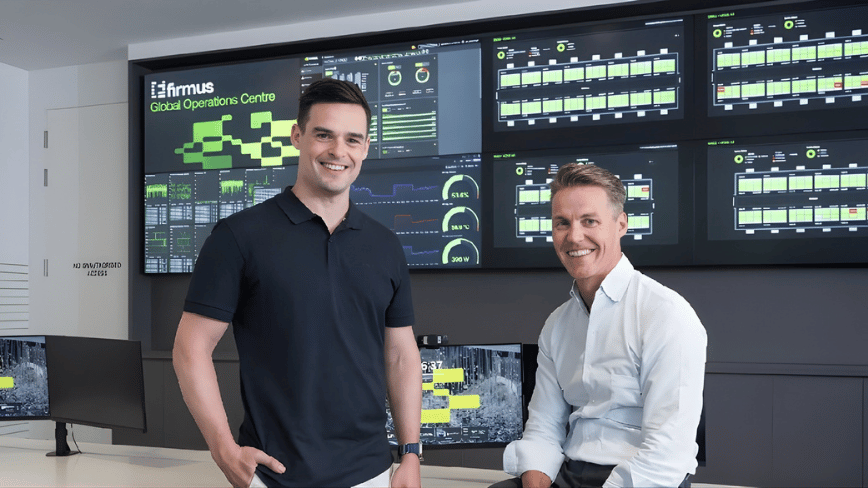
Firmus, an Australian AI data center company supported by Nvidia, has successfully raised $505 million at a $5.5 billion valuation in its last pre-IPO funding round. The firm is now preparing for a $2 billion initial public offering on the Australian Securities Exchange expected in June or July. This move is supported by a $10 billion debt facility led by Blackstone, arranged in February, and aims to power a deployment of 1.6 gigawatts across its AI factory network.
Natter, a London-based startup founded by former BBC and Uber leaders, uses AI-driven video conversations to gather deep insights from large groups of employees simultaneously. These seven-minute sessions generate over 1,000 words of valuable data, far surpassing the brief responses typical in traditional surveys. Recently, Natter closed a $23 million Series A funding round to expand its innovative approach to enterprise insights.

Berkeley-based HexemBio is pioneering a groundbreaking therapy that replicates the embryonic conditions where blood stem cells first develop, offering an alternative to traditional chemical or genetic reprogramming of aged cells. Their flagship program focuses on improving outcomes for bone marrow transplants in blood cancer patients and has earned FDA Orphan Drug Designation. The company’s public debut comes with a $10.4 million seed funding led by prominent investors.


In a recent episode of Equity, we spoke with Arena Private Wealth about a notable shift among family offices. Instead of relying on venture capital firms, these private wealth holders are choosing to invest directly in AI startups, moving from passive roles to active involvement in early-stage innovation.