Innovation drives progress across industries, from launching new offerings to streamlining workflows. Yet, common errors can derail efforts. Leaders from the Fast Company Impact Council shared 18 pitfalls companies must avoid for effective innovation. Key missteps include overburdening teams by tacking innovation onto daily tasks, relying solely on new technologies without foundational insights, neglecting clear management and guardrails, and the failure to allocate dedicated time for innovation. Additionally, jumping to solutions without deeply understanding customer needs, pursuing only moonshot ideas, and lacking diverse perspectives can stifle success. The best approach blends incremental improvements with visionary thinking, managed strategically as a portfolio, fostering a culture where innovation permeates the whole organization—not just a special project. This holistic view unlocks sustainable, impactful innovation.


Moonbounce has secured $12 million in funding to expand its AI control engine, which translates content moderation policies into reliable and consistent AI actions. This technology aims to enhance the predictability and fairness of automated content moderation.


Your constant declarations of AI expertise? They're more of a hindrance than a help. For those genuinely invested in entrepreneurship, there's so much more to consider than just knowing AI. Let others grow and learn without unsolicited criticism or condescension. This message comes from a place of wanting real progress and respect in conversations about technology and business.


Carolyn Geason-Beissel of MIT Sloan Management Review and Minneapolis Institute of Art explores how generative AI is shifting organizational priorities from merely increasing production speed to mastering systematic learning from AI outputs. AI now dramatically lowers the cost of initial drafts, code, and prototypes, but the real value lies in how organizations evaluate and learn from these outputs to improve future iterations. Companies that establish feedback systems to verify, evaluate, and capture insights from AI outputs experience substantial financial benefits and improved organizational learning. This process, termed “return on iteration,” relies on creating infrastructure to support ongoing improvement. By employing specialists as evaluators rather than just producers, and embedding mechanisms for verification and learning capture into workflows, firms can transform AI interactions into compounding assets. Examples include practices like automated self-verification in AI coding and evolving marketing strategies based on feedback loops that refine brand messages continuously. Leaders are urged to measure the learning cycle itself, not just output metrics, to fully realize AI's potential for organizational growth. The central message: AI's promise is best fulfilled not through consumption but through persistent learning and iteration, making expert judgment and infrastructure investment critical to gaining a competitive edge.


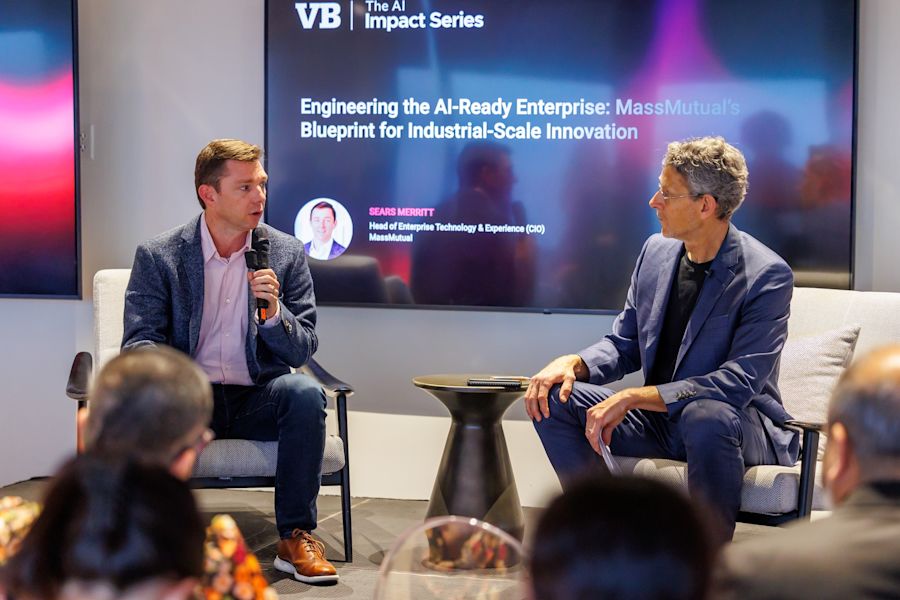
Large-scale AI initiatives often struggle not due to flawed concepts but because they linger in pilot phases without clear governance, stalling progress to production. Leaders from MassMutual and Mass General Brigham shared insights on moving beyond this challenge through structured approaches and disciplined execution.
MassMutual reported tangible gains like a 30% boost in developer productivity, faster IT help desk resolutions, and drastically shorter customer service calls. Their approach centers on defining clear success metrics and rigorous feedback loops, ensuring every AI application delivers measurable business value. They emphasize flexibility, avoiding commitment to any single model and enabling seamless upgrading of AI components.
Conversely, Mass General Brigham initially allowed widespread experimentation but later ended non-governed pilots to focus resources more strategically. By collaborating with primary platform providers and embedding AI champions within teams, they foster controlled innovation with real-time monitoring to manage risks and maintain safety standards, especially in clinical environments. Their experience highlights the importance of governance, adaptability, and embedding AI thoughtfully into workflows to achieve sustainable impact.
The advent of nuclear technology, genomics, and now artificial intelligence presents dilemmas that challenge society’s capacity to govern powerful innovations responsibly. In 1945, the nuclear explosion at New Mexico changed the world irreversibly, with figures like J. Robert Oppenheimer invoking profound caution. Despite this history, today's tech sector often pushes forward rapidly, with some dismissing AI regulation as detrimental. The story of nuclear weapons—from the foresight of Leo Szilard and Albert Einstein’s warnings to the Nobel-recognized diplomatic efforts to control proliferation—demonstrates how science and governance have previously collaborated to mitigate global risks.
Similarly, breakthroughs in genetics, from Watson and Crick’s discovery to Paul Berg’s groundwork for responsible recombinant DNA research, illustrate how ethical guidelines can steer advancing technologies safely. Contrasting with these examples, recent revelations about social media platforms’ role in spreading harmful content highlight a failure to prioritize safety over profit. Visionaries like Vannevar Bush envisioned both the promise and risks of networked information decades ago, emphasizing the need for robust institutional frameworks.
Ultimately, the governance of AI and emerging technologies demands strong institutions that balance innovation with societal protection. Historical insights and contemporary challenges converge on one point: it is the institutions—their design and commitment to the public good—that will determine whether these technologies serve humanity or dominate it.


On March 31, 2026, Salesforce introduced more than 30 cutting-edge AI enhancements for Slackbot, marking the platform's most comprehensive upgrade since its $27.7 billion acquisition in 2021. This update elevates Slackbot from a simple chat assistant to a proactive agent capable of transcribing meetings from any video platform, tracking desktop activity, and automating various tasks, reflecting a strategy similar to Microsoft's.

Xoople, a geospatial data startup based in Madrid and founded in 2019, has successfully raised $130 million in a Series B funding round led by Nazca Capital. This latest investment pushes the company’s total funding to $225 million and elevates its valuation to unicorn status. Additional participants in the round include MCH Private Equity, the Spanish government’s CDTI fund, Buenavista Equity Partners, and Endeavor. Xoople aims to build advanced data infrastructure that enables AI to better understand and analyze Earth-related data.

Submit your startup or nominate a deserving venture before the May 27 deadline. Those selected for Startup Battlefield 200 will gain valuable VC exposure, receive coverage from TechCrunch, and compete for a $100,000 prize.

Zero Shot, a newly established venture capital fund with strong connections to OpenAI, is targeting a $100 million raise for its inaugural fund and has already begun making investments.