


Volkswagen is implementing significant workforce reductions and closing multiple manufacturing plants as part of a strategy to prevent a financial downturn. Despite these cuts, the company's CEO remains optimistic about the future.


Comcast announced a spinoff of NBCUniversal, a move that boosted its stock by 23%. This decision follows the company's realization that its previous strategy with NBCUniversal was underperforming. The spinoff could also position NBCUniversal as a potential takeover candidate.


The EY Ireland CEO Outlook survey reveals that despite challenges from global instability and geopolitical tensions, Irish CEOs maintain strong optimism about business growth in the coming year. They also foresee significant workforce reskilling needs prompted by advances in AI technology.
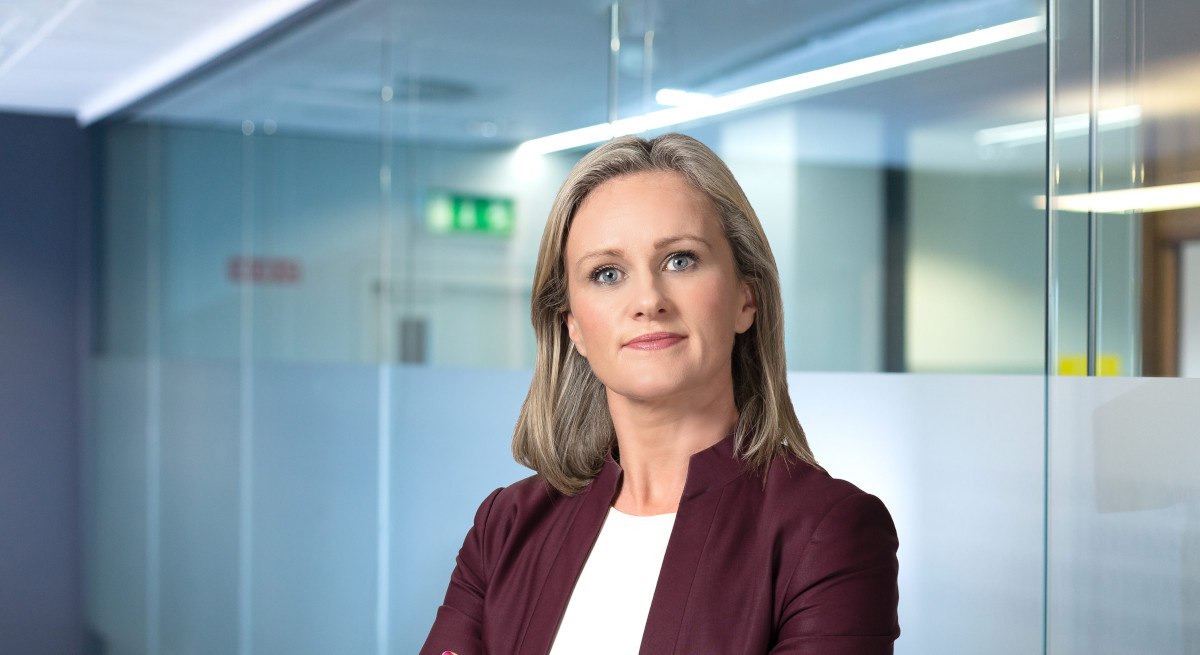

For years, executive hiring prioritized visibility, experience, and momentum, but the landscape has shifted dramatically. Currently, many seasoned leaders face slower recruiter outreach, stalled interviews, and vanished opportunities. This change reflects a move from a search-driven market to one focused on precise selection, where companies carefully choose candidates based on alignment, industry experience, and immediate impact amidst economic uncertainty and AI disruption. Candidates often experience silence or ghosting due to internal misalignments and exploratory searches. To succeed, executives must stay visible before roles open, speak the business language, and leverage their networks proactively. The market has evolved; those adapting to the new rules of selection—not just effort—stand out as the best fit for available roles.


Ford initially believed that simply implementing artificial intelligence would automatically result in a superior product. However, this expectation proved mistaken, leading the company to rehire experienced, senior engineers—referred to as 'gray beards'—to ensure quality and reliability in their work.


Anthropic's growth team was recently advised to hire more product managers to keep pace with a significant shift caused by Claude Code, which has essentially tripled engineering productivity. The bottleneck in software development has shifted from coding speed to deciding what to build, necessitating a deeper product focus within engineering teams.
Historically, engineers followed a linear process: learning deeply about technology, writing code, and escalating issues as needed, while product managers managed the project funnel. This traditional division is now outdated as recent innovations compressed and transformed the engineering workflow through several eras—from relying on Stack Overflow to AI-enabled IDEs and spec-driven development.
Today, engineers produce code faster than ever, but the need for clear product direction and decision-making has intensified. Companies like LinkedIn and Anthropic are adapting by blending product management skills with engineering roles.
Fundamental technical skills remain critical in verifying and reviewing AI-generated code to prevent costly mistakes. Furthermore, successful engineers now engage directly with product funnels—interacting with customers, understanding use cases firsthand, and proactively contributing to idea generation and prioritization.
The future rewards engineers who can identify valuable projects, validate them, and manage rapid delivery through AI-assisted workflows. Those who rely solely on traditional tickets risk being left behind.

You landed what seemed like your dream job, yet doubts begin to surface: “Is this the right path?” “Can I continue this for life?” “I crave something more fulfilling.” These questions often arise amidst major life changes — from parenting and mortgage payments to caring for aging parents. This crossroads leads many mid-career women to reconsider their paths: stay in corporate roles or create their own ventures.
Interviews with 13 New Jersey women entrepreneurs from diverse fields like finance, food, consulting, and health reveal a shared trend: they sought careers that accommodate life rather than life accommodating work. Most shifted to entrepreneurship in their 30s or 40s, after years in leadership or on leadership tracks, prompted by workplace environments that clashed with their values and caregiving needs.
Corporate life often means juggling caregiving — children, elderly parents, ill family members — without the flexibility to balance both work and home effectively. This caregiving strain pushes many towards entrepreneurship, where they gain control over schedules despite sometimes working even harder. This freedom offers reduced stress, better health, and fulfillment. For example, Melissa Jenkins left a demanding marketing career to build a bakery while managing caregiving responsibilities, valuing the flexibility entrepreneurship offers despite financial instability risks.
Entrepreneurship brings challenges — no steady salary, benefits, or safety nets — yet women still choose it over traditional roles due to inflexible corporate structures and environments causing burnout. This trend also signals a generational shift, with younger women pursuing entrepreneurship earlier than before. To retain experienced women, workplaces must rethink caregiving support, flexibility norms, paid leave, and leadership pathways to align with real-life demands.


OpenAI has appointed Prabhjeet Singh, the outgoing president of Uber India and South Asia, as its first managing director for India. Singh, who will start in September, will report to Kiran Mani, OpenAI's managing director for Asia Pacific. He will be responsible for driving consumer growth, enterprise adoption, partnerships, regulatory affairs, and operations in India, OpenAI's biggest market outside the United States.

After reducing its total staff by 1,100 jobs in May, Cloudflare’s engineering team experienced a significant growth of 45 percent, increasing from 1,308 to 1,894 members. This trend was identified through BNP Paribas data based on LinkedIn profiles and confirmed by CEO Matthew Prince. Despite an overall workforce reduction of 20 percent, the company’s focus on strengthening its engineering capabilities suggests a strategic shift. The CEO also indicated that this pattern of downsizing combined with targeted engineering growth is likely to occur across the industry.

An endpoint security agent is unable to detect its own absence, creating significant visibility gaps. The 2026 Axonius Actionability Report, surveying 662 IT and security experts, reveals that 12.7% of devices in a median inventory of nearly 300,000 lack their expected security agent. This invisible margin leaves autonomous security systems and SOC teams working with incomplete threat coverage, which poses risks as these agents operate at machine speed without human oversight. Several studies confirm widespread gaps: 88% of companies report AI-related security issues, and only a small fraction approve live AI agent deployment fully. Industry leaders emphasize that unknown assets in the network — often termed 'dark matter' — significantly undermine security efforts, with many organizations seeing only half of their actual environment. Tackling these gaps requires combining three approaches: a dedicated integration layer for real-time inventory, native EDR/XDR platform intelligence, and continuous CMDB reconciliation. A practical five-gate checklist helps determine if EDR and asset data is ready for autonomous remediation, focusing on inventory accuracy, AI service management, ownership mapping, and coverage verification. For organizations aiming to deploy autonomous agents safely, running out-of-band discovery, applying consistent ownership tags, and killing reliance on self-reported metrics are critical steps to closing these blind spots. Without addressing these data gaps, autonomous security actions could proceed blindly, risking operational failures and increased attack surfaces.
