Presented by Atlassian
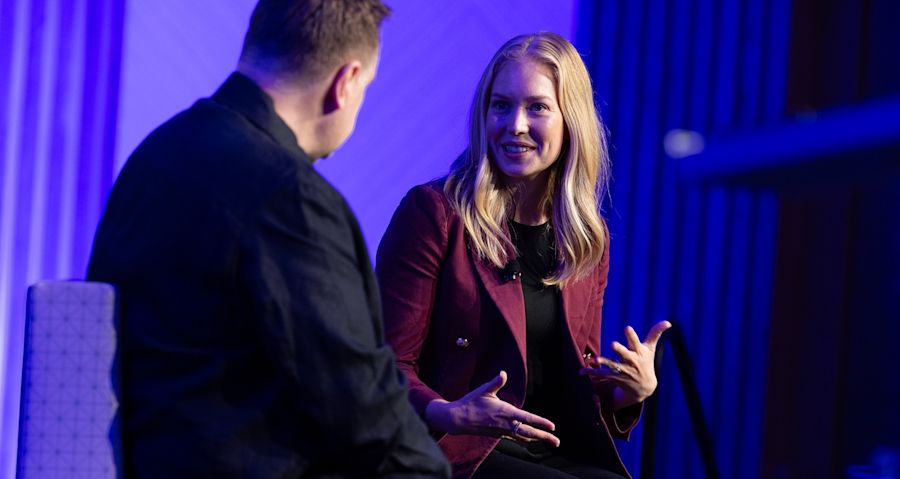
Many companies are approaching AI adoption incorrectly by focusing on individual use rather than how teams collaborate, explains Dr. Molly Sands, head of Atlassian's Teamwork Lab, in a discussion at VB Transform 2026. Sands' team of behavioral scientists studies how AI reshapes teamwork and assists organizations in redesigning their workflows.
Atlassian’s State of Teams Report, surveying 12,000 knowledge workers and Fortune 1000 executives, reveals a gap between AI activity and tangible value. While 89% of executives noted increased individual AI use, only 6% could identify clear ROI. In contrast, 14% of teams successfully turned AI usage into real value by focusing on context, workflows, and culture.
Successful teams create a "context graph" capturing shared goals and decisions, redesign entire workflows rather than speeding isolated tasks, and foster a culture of experimentation and learning. Sands encourages leaders to implement AI working agreements to align team AI use and avoid fragmented knowledge. Ultimately, AI exposes longstanding teamwork challenges, emphasizing the need for shared context and explicit workflows.

AI is transforming media roles, prompting Omnicom Media Group to rethink how agencies operate. Rather than AI eliminating agencies, it compels them to transform by focusing on strategy, data, and specialized capabilities over mere scale. Omnicom Media bets the future success of agencies lies in these areas as AI automates traditional tasks.


Intel revealed on Tuesday that it will reduce its workforce in the data center division, which focuses on Xeon server chips and AI hardware, as part of a larger restructuring effort led by CEO Lip-Bu Tan. Despite the layoffs, Intel's shares climbed up to 8 percent in early trading, continuing a rally fueled by optimism about the company's strategic turnaround.


Balancing day-to-day operational demands with fostering innovation is a key challenge for managers. Front-line employees, despite immense pressures like regulations and staffing shortages, are eager to contribute ideas but often lack the opportunities or support to do so. This creates a cycle where stress limits creativity and quality issues escalate workloads. Our research in hospital nursing departments reveals that successful innovation depends on aligning top and middle management to build employees' confidence and identity as innovators.
Middle managers, positioned close to front-line workers, play an essential yet often overlooked role. They translate organizational vision into practice, encourage idea generation, and support experimentation. When middle management is diminished, organizations risk losing this critical catalyst for innovation. Senior leaders must empower middle managers by providing resources, training, and structural support, and by visibly endorsing innovation as vital to the organization's mission.
Practical steps for leaders include allowing small-scale experiments, protecting time for creative thinking, providing prompt feedback on ideas, modeling learning from failure, and recognizing contributions. Top management’s consistent support helps create a culture where innovation is expected, valued, and integrated into everyday work. When aligned in purpose and practice, leadership at all levels can unlock the inventive potential of front-line employees, transforming routine operations into opportunities for meaningful improvement.

Presented by JumpCloud
IT leaders are recalibrating their confidence in AI maturity—not due to failure, but because of the real-world challenges they face as AI moves from pilot to production.
Six months ago, 40% of IT leaders said their AI deployments were mature. Now, just 23% feel that way. This shift reflects a more accurate self-assessment as organizations confront governance, accountability, and scaling issues that emerge with full production environments.
Pilot programs are controlled and limited, but production deployment requires ongoing oversight: understanding agent access, visibility, and unexpected behaviors. Many organizations find gaps here, especially in managing non-human AI identities, which now outnumber humans but often lack proper governance.
Those facing these challenges openly are the ones building the necessary infrastructure—consolidating IT environments, establishing clear AI agent governance, and focusing on outcomes rather than just deployments. This honest approach lays the foundation for confident, responsible AI expansion.
JumpCloud’s Q3 2026 AI Readiness Research report highlights that 84% of organizations plan to expand AI use, with maturity coming from raising standards and accountability rather than blind optimism.
Rajat Bhargava, CEO and Co-founder of JumpCloud, emphasizes that this honest reassessment is a sign of progress, not retreat.


Pursuing cost-cutting during rapid expansion might seem wise, but it often exhausts the very team driving growth, risking burnout and stalled progress.

Many believe AI algorithms automatically reject resumes, causing candidates to vanish from hiring processes. However, the real issue is more complex and entirely fixable by employers. As hiring becomes more efficient, candidates often feel invisible due to practices that overlook the human side of recruitment, creating a disconnect that companies can address with thoughtful changes.


More than 4,500 Google employees have signed a petition addressed to CEO Sundar Pichai, urging the company to offer protections against layoffs and introduce buyout options. This action comes as major tech firms reduce staff even while investing heavily in artificial intelligence. Parul Koul, a Google software engineer and leader of the Alphabet Workers Union, highlighted Google's soaring $4 trillion valuation and criticized the layoffs as prioritizing profits over employees. The petition was delivered at Google's California headquarters.


Since 1965, Harvard Business Review has surveyed men and women executives on perceptions of women in leadership. Early results showed strong negative views of women in management by many men. Sixty years later, while attitudes improved, a significant gap remains. In 2006, men and women largely agreed on the critical judgment faced by women leaders. Today, 90% of women see higher scrutiny versus 35% of men. Women are more likely to feel they must outperform men to succeed and view promotion criteria as unequal. Men tend to see senior roles as limited by family demands, while women experience pre-emptive assumptions against them. Despite progress, recent political shifts have rolled back diversity initiatives. Studies show women are sponsored and promoted less often, remain underrepresented in leadership, and face higher burnout rates.


Organizations must find ways to effectively develop new hires with little experience into reliable decision-makers amid the rise of AI technologies.