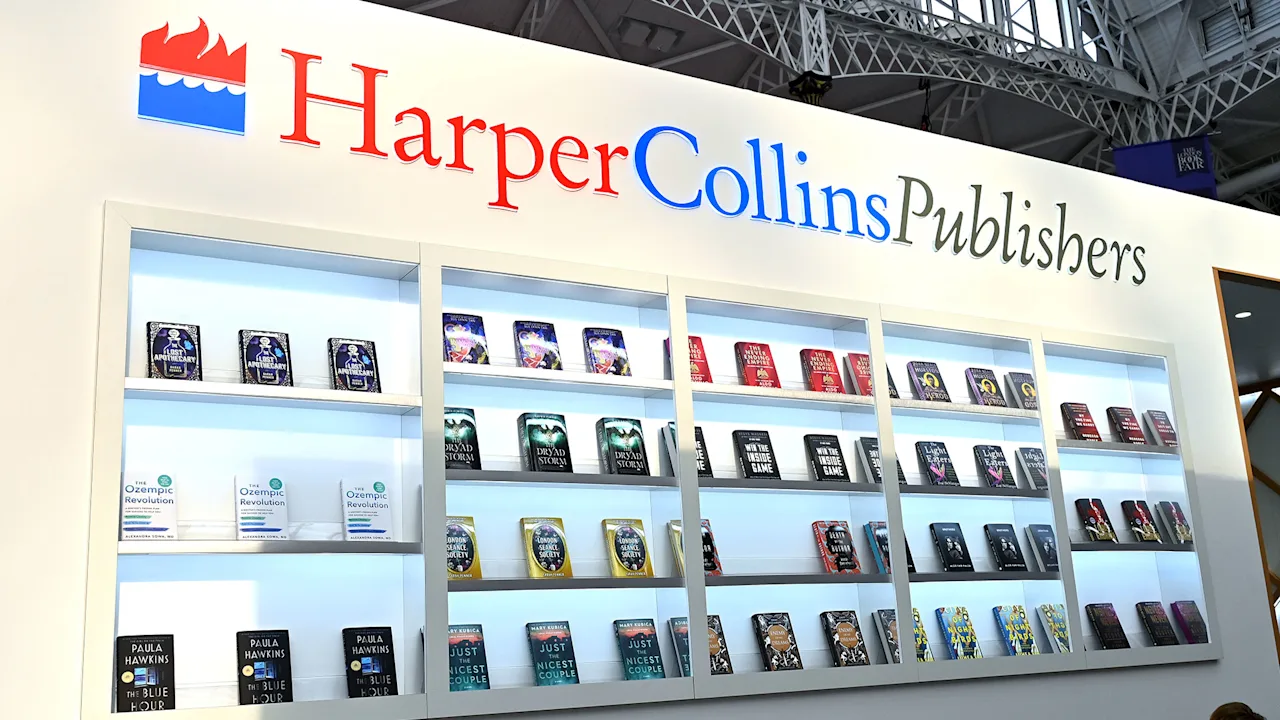
HarperCollins Publishers is teaming up with AI-driven animation studio Toonstar to create original YouTube series based on popular HarperCollins books. This marks another AI partnership following Harlequin’s deal with Dashverse for animated micro-dramas inspired by romance titles. The first Toonstar series will adapt the young adult book "Friendship List" by Lisa Greenwald, complemented by a graphic novel from HarperAlley. While HarperCollins calls the process "creator-led," details about author involvement and royalties remain unclear. Some authors have expressed strong opposition, fearing AI's impact on creative control and rights. This development reflects a wider industry trend where companies leverage AI for storytelling, sparking mixed reactions from creative professionals concerned about automation replacing human artistry.

Burnout isn't the real issue behind creative teams losing their drive. There's a deeper, often overlooked factor causing disengagement and stifling innovation.


Suno, an AI music creation platform, is currently facing difficulties securing licensing agreements with Universal Music Group and Sony Music Entertainment. The central dispute revolves around the distribution rights of AI-generated tracks: Universal insists that these tracks remain confined within platforms like Suno, whereas Suno advocates for broader sharing and distribution across the internet. This disagreement highlights the complex challenges at the intersection of AI innovation and traditional music rights management.


AMC is set to debut ‘The Audacity’ by releasing its premiere in 21 short episodes exclusively on TikTok. This approach aims to generate excitement and engagement by targeting a platform popular with younger audiences. However, questions arise whether this is a clever marketing strategy or an unusual attempt to replicate the short-form content model that was once tried and struggled on Quibi.

Adobe has launched the Firefly AI Assistant, a powerful new conversational tool designed to manage complex workflows across its Creative Cloud suite, including Photoshop, Premiere Pro, and Illustrator. The assistant allows creatives to describe their desired outcome in natural language, automating a sequence of tasks by selecting the right tools and workflows. It builds on Adobe’s prior research project, integrating roughly 100 tools for generative image and video creation, photo editing, and collaboration, all while maintaining native file formats for manual refinement. Users will need subscriptions for relevant apps and generative credits for usage. Adobe is also expanding Firefly with third-party AI video models, like China's Kling 3.0, and introducing new features such as Premiere Pro’s Color Mode, AI-powered editing tools, and Frame.io Drive for cloud-based media management. The company aims to lead the generative AI revolution by embedding advanced AI capabilities directly into professional creative tools, shifting the creator’s role toward directing rather than doing. The Firefly AI Assistant will enter public beta soon, marking a significant evolution in creative software aided by AI.

In today's discussions about artificial intelligence, the conversation often swings between extremes: total automation utopias and dystopias where human creativity is lost. Yet, a more balanced approach—pragmatic optimism—acknowledges that we are amid a human revolution, not just a technological one. Future-leading organizations will leverage AI not just for speed or volume, but as a powerful catalyst for creativity, freeing people to imagine, connect, and craft meaning. Rather than erasing human insight, AI should complement it, fostering a global intelligence surge and making way for productivity and wage growth.
To achieve this, workplaces must cultivate environments where creativity and psychological safety thrive, integrating the principles of Move, Think, and Rest. This means embracing friction as a productive learning space, protecting spontaneous, high-touch encounters that fuel innovation, and dedicating attention deliberately to what truly matters. AI should give us back time to focus on real experiences and thoughtful reflection, rather than simply increasing busyness.
Ultimately, by intentionally designing processes that blend human and machine intelligence, we become architects of a future where AI enhances what makes us uniquely human—creativity, resilience, and meaningful connection. This is the way to ensure that the promise of the Imagination Era is realized by design, not default.

Runway's CEO envisions AI revolutionizing Hollywood by allowing studios to produce dozens of films at the expense of the budget traditionally required for a single $100 million blockbuster. This strategy leverages volume to increase the chances of producing successful hits.

Anthropic has introduced Claude Design, a cutting-edge AI tool from its Anthropic Labs division, enabling users to create polished visual content, including designs, interactive prototypes, presentations, and marketing materials through conversational prompts and precise editing controls. This product, now available to all paid Claude subscribers in research preview, marks Anthropic's bold foray from language models into design applications traditionally dominated by Figma, Adobe, and Canva. Powered by the robust Claude Opus 4.7 vision model, Claude Design streamlines a collaborative creative workflow where users can generate initial designs from text prompts and refine through chat, inline editing, and customizable sliders. Teams can import and manage design systems drawn from their codebases, images, or live websites, producing prototypes that closely resemble real products. Notably, Claude Design offers seamless handoff to Claude Code for full production-ready builds and supports exports to common formats and platforms like Canva and PPTX. Early users have lauded its efficiency, with complex design tasks requiring significantly fewer prompts than competitors. This launch occurs alongside Mike Krieger’s resignation from Figma’s board, signaling shifting dynamics in design tool ecosystems. Despite positioning itself as complementary to existing tools, Claude Design’s accessibility to non-designers and end-to-end capabilities pose a potential challenge to established players. The underlying Claude Opus 4.7 model emphasizes safety and strong vision processing but intentionally limits cybersecurity risks, differentiating it from Anthropic’s more powerful but restricted Mythos model. Enterprise users benefit from robust data privacy measures and flexible pricing integrated into existing subscription plans. As Anthropic continues to expand its product suite—encompassing coding, knowledge work, and office integrations—it aims to create a unified AI-driven creative stack, radically transforming how products move from concept to launch. This move comes amid strong financial backing, an approaching IPO, and the complex implications of competing with key industry partners.


AI-driven writing tools are increasingly being integrated into newsrooms, marketed as ways to boost productivity. However, this shift might come with deeper consequences than media companies are ready to confront.


Canva and Anthropic have unveiled Claude Design, a cutting-edge product from Anthropic Labs fueled by Claude Opus 4.7. This innovation leverages Canva’s Design Engine to create fully editable, brand-consistent visuals directly from text prompts. The launch aligns with Canva AI 2.0, which the company hails as its most significant product rollout yet, featuring conversational design and advanced agentic orchestration capabilities.