The observability landscape for AI agents is rapidly evolving, raising important questions for enterprises about the right tools and strategies to use. Observability startup Groundcover recently raised $100 million in funding, signaling growing momentum in this competitive market. The firm highlights a shift in how telemetry data from AI systems is managed — advocating that this data should reside within the customer's own cloud infrastructure rather than being processed by vendor-managed systems.
Traditional observability platforms, long dominated by incumbents like Datadog and Splunk, are challenged by the scale and complexity AI introduces. As autonomous AI agents generate increasing telemetry data, the old model of sampling or limiting data is no longer sufficient. Groundcover's approach is to offer a bring-your-own-cloud (BYOC) model, where telemetry storage and processing happen inside AWS, Azure, or Google Cloud environments owned by the customer, avoiding data ingestion pricing and granting full control over telemetry.
Central to Groundcover’s technology is eBPF, which enables deep monitoring of system behavior without requiring manual application instrumentation. This, combined with BYOC and a host-based pricing model, aims to provide predictable costs and extensive observability coverage.
Groundcover also foresees observability platforms serving AI agents directly, using data to inform autonomous software development and operational decision-making. While the market remains crowded and competitive, the company positions itself as an innovator designing observability for an AI-driven future, betting on a fundamental architectural change rather than incremental AI feature additions.
Summary: Groundcover is reshaping the observability market by keeping AI telemetry within enterprises' own cloud environments. Their BYOC model, paired with eBPF technology, addresses the growing telemetry demands of AI systems while offering cost predictability and full data control. As AI increasingly influences software operations, Groundcover’s approach signals a shift toward observability designed specifically for autonomous AI-driven workflows.

Security teams evaluating open-source AI models often rely on unverified metadata tags to determine model lineage, leaving verification gaps. A recent report from Interconnects AI tracked 1,500 open models and found that 69% of derivatives stem from Alibaba’s Qwen family, with Chinese labs contributing 70%. Cisco's newly launched AI Supply Chain Provenance Explorer addresses these gaps by fingerprinting nearly 900 open models using sophisticated similarity scores and weight-level analysis. This public tool allows users to verify model parentage, license restrictions, scan coverage, and provider details without needing a Cisco product or extensive local computation. The Explorer improves risk management by replacing self-reported tags with data-driven lineage, enabling security teams to assess vulnerabilities, malware scanning completeness, jurisdiction, and licensing obligations more accurately. It also supports compliance with the upcoming EU AI Act by providing transparent provenance data. Although the tool currently covers a subset of models on Hugging Face, it marks a significant advancement in securing open AI model supply chains and assisting organizations to adopt safer AI practices.

Less than a year after revealing itself to tackle the challenge of non-human identity security, Israeli cybersecurity startup Hush Security asserts the AI security landscape has shifted significantly. The company recently secured a $30 million Series A funding round, led by Battery Ventures and YL Ventures, with Akamai Technologies joining as a strategic investor. Hush points out that enterprises are moving beyond simple generative AI tools, deploying autonomous software agents that demand new security models focused on identity management rather than model protection. CEO Micha Rave explains that as AI agents increasingly act across multiple systems with broad permissions often tied to human credentials, the core issue is securing these non-human identities. Hush has developed an "Identity Gateway" platform that assigns unique identities to AI agents, enforces least-privilege access, and offers centralized control and audit capabilities. The platform enables organizations to govern AI agents’ access in real-time, mitigating risks associated with broad or inherited permissions. With autonomous agents projected to balloon in enterprise environments, Hush emphasizes that securing identity is becoming the essential control point, marking a notable shift in AI security strategies from focusing on model vulnerabilities to managing identity governance for autonomous software.

Every Mastercard transaction undergoes a split-second fraud assessment, with 175 billion transactions analyzed last year. Chief AI and Data Officer Greg Ulrich revealed at VB Transform 2026 that Mastercard’s risk system, once designed to block bots, is now evolving to accommodate them. This shift requires a new framework that balances security with enabling bot transactions. Mastercard’s Safety Net has already prevented over 70 billion fraudulent transactions, leveraging AI to identify 300-400% more fraud without disrupting genuine purchases. Beyond consumer fraud, AI powers a third of Mastercard’s services, driving faster growth in marketing, security, and business intelligence. Ulrich detailed five security layers—identity verification, verifiable intent, controls, execution via Mastercard Agent Pay, and intelligence monitoring—that ensure trust in agent-driven commerce. As AI agents gain autonomy in complex transactions, especially in B2B procurement, Mastercard is building scalable trust infrastructures that link multiple agents across organizations. Learning from initial models, Mastercard prioritizes embedded security and continuous monitoring to prevent vulnerabilities. Identity verification, including emerging standards for agentic identity, remains pivotal. The company is already re-engineering its AI systems to handle the new reality where bots do the buying, not just the stealing.

OpenAI has drastically cut the prices of its GPT-5.6 Luna and Terra models, with Luna's cost dropping by 80% and Terra's by 20%. Luna now costs $1.40 per million tokens, making it one of the lowest-cost commercial AI models and directly competing with Google's lower-priced Gemini models. Terra's pricing aligns with Google's Gemini 3.1 Pro Preview, while OpenAI introduces a premium Fast mode for its Sol model, priced at double the standard rate. These price cuts come shortly after Google's launch of cost-efficient Gemini 3.6 Flash and 3.5 Flash-Lite models and Anthropic's release of Claude Opus 5, highlighting a shift in the AI market focus towards cost-efficiency alongside performance. OpenAI's Luna targets high-throughput, low-latency applications, while Terra balances capability and cost for general use. The move signals that AI competition is no longer just about access to powerful models but also about making them economically viable for high-volume production workloads.

Visa deployed Anthropic's Claude Mythos AI to rigorously test its vast payment network that processes billions of daily transactions across over 200 countries and handles nearly 5 billion payment credentials. This AI-driven approach uncovered deep, complex vulnerabilities by linking minor system weaknesses into exploit chains typically found only late in penetration testing. Visa's president of technology, Rajat Taneja, highlighted how the company open-sourced the Visa Vulnerability Agentic Harness—an AI governance pipeline that runs multi-phase, multi-model security evaluations with human oversight. This tool helps ensure fixes are effective and measurable through a new metric, Mean Time to Adapt (MTTA), which tracks how quickly vulnerabilities are verified, fixed, and validated in production. Beyond security, Visa is preparing for an AI-driven future where agents transact autonomously, emphasizing the need for stringent identity and trust frameworks. Their work also extends to supply chain security through initiatives like Project Lightwell—partnering with IBM, Red Hat, and major banks to strengthen open-source components using AI. Visa’s strategy focuses on proactive security, rapid adaptation to threats, and autonomous defenses at scale, with the AI harness and best practices available openly to help other security teams.

Bright Machines aims to tackle a critical challenge in AI infrastructure production: preserving quality data integrity when manual assembly is necessary. Their new Hybrid BRC (Bright Robotic Cell) integrates human operators into a sensor-monitored robotic system, maintaining a continuous digital record for every component during assembly. This innovation addresses a key weakness in current electronics manufacturing, where manual steps disrupt production data or halt lines entirely, leading to lower first-pass yields—which can be as low as 20% initially, versus over 98% through robotic assembly. By allowing human intervention without breaking data flow, the Hybrid BRC improves yield, traceability, and speeds up server deployment for hyperscalers. Bright Machines currently operates hybrid lines in the US, building thousands of compute nodes, and foresees significant growth driven by AI infrastructure demands and onshoring trends. Their approach combines automation with human flexibility, backed by robust data orchestration, setting them apart from competitors that only offer software or manual processes. The system also respects data ownership and worker privacy, emphasizing security for high-IP electronic manufacturing. Ultimately, Bright Machines is betting that the future of AI hardware manufacturing relies on seamlessly integrating humans and robots to boost yield and agility in response to rapidly evolving hardware needs.

Siobhán Mc Feeney, Target's Senior Vice President, highlights that the true competitive advantage in AI comes not from the models themselves, but from the robust frameworks and systems built around them. At VB Transform 2026, she explained that while AI models are crucial, they aren't sufficient alone to deliver value. Target carefully evaluates whether an AI agent is needed, what kind of agent to deploy, and ensures each agent earns its autonomy gradually. These agents are deeply integrated into Target’s infrastructure, enhancing supply chain efficiency, demand forecasting, and product availability.
Mc Feeney detailed how their approach involves comprehensive governance layers, continuous monitoring, and evaluation of AI agents’ performance and autonomy. This systematic architecture enables scalability and cost-efficient use of frontier AI models suited for complex tasks. Agents operate within clearly defined guardrails and can lose their autonomy if they underperform, ensuring transparency and reliability.
The process also requires a cultural shift where builders and engineers adapt to managing AI alongside human workers, developing new skills to maintain accountability as AI adoption accelerates. This layered approach to AI adoption exemplifies how Target maximizes value in its AI initiatives by focusing on the entire ecosystem around the models, not just the models themselves.
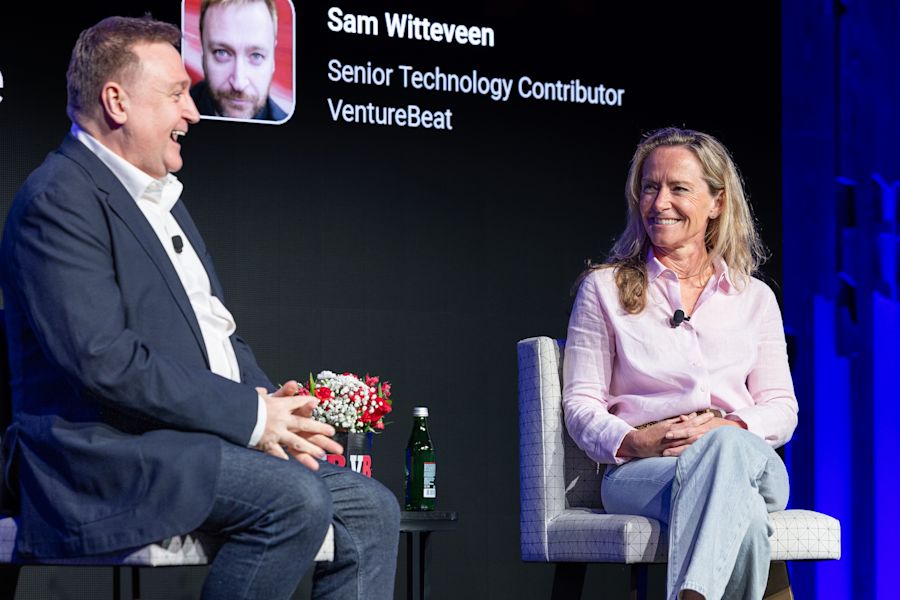
Nimble, a New York-based tech startup, has announced its Web Search Agents, a new retrieval system aimed at improving the efficiency and accuracy of AI-driven web research. These agents specialize in domain-specific knowledge, leading to 21% more accurate results and a 51% reduction in token usage compared to other AI search solutions. Unlike generic search engines, Nimble's technology adapts to the unique needs of each enterprise, optimizing retrieval strategies through self-learning algorithms and proprietary web indexes. This approach reduces unnecessary data processing, shortens research paths, and enhances overall operational efficiency for tasks such as competitive intelligence, lead generation, and compliance. The platform is accessible via API, SDK, and Model Context Protocol, enabling seamless integration into existing workflows. Supported by partnerships with major firms like Microsoft and Oracle, Nimble's solution addresses the growing demand for specialized, cost-effective search capabilities in enterprise AI applications.

Enterprise AI agents are capable of performing tasks independently, but the infrastructure enabling them to communicate, ensure trustworthiness, and be audited effectively is still emerging. Five innovative startups are addressing this crucial gap by focusing on orchestration, observability, secure connectivity, and governance, as showcased at VB Transform 2026.
BAND is developing a coordination system that allows multiple AI agents to interact seamlessly and collaborate in real time, solving the challenge of digital isolation among agents. This allows human users to monitor live tasks and workflows conducted by agents.
Conifers empowers cybersecurity defenders to operate at machine speed against increasingly sophisticated attacks by integrating various defense components into a unified, agent-driven system that drastically reduces response times.
Raindrop AI tackles the complexity and critical failure risks of long-running AI agents by creating an audit log platform that detects issues, simulates fixes before deployment, and provides transparent notifications to users.
Arcade.dev ensures AI agents operate within strict security frameworks by providing an authorization and observability layer that meets enterprise-grade security standards, enabling safe execution of tasks with minimal privileges.
Omilia enhances enterprise customer experience by merging control and speed in its AI platform, offering a self-learning, agent-based system that continuously improves through real customer interaction data, significantly boosting efficiency and revenue.
Together, these startups are laying the foundation for enterprise AI agents to work more effectively, securely, and transparently across industries.