AI agents traditionally rely on file system tools to browse directories and read file paths, but a major hurdle has been the extensive enterprise data stored in object storage like Amazon S3, which is accessed via APIs rather than file paths. Bridging this divide has meant maintaining a separate file system layer with duplicated data, complicating workflows especially for multi-agent AI systems.
Amazon’s new solution, S3 Files, seamlessly mounts any S3 bucket directly into an AI agent’s local workspace with a simple command, avoiding data migration. It leverages AWS Elastic File System (EFS) technology to provide genuine file system semantics while keeping S3 as the source of truth. This allows simultaneous access to the data through both file system and object APIs.
This innovative integration dramatically improves agent workflows by eliminating the need for downloading and tracking local copies of data, thus preserving session state and context in AI tasks such as log analysis. Multiple agents can concurrently access the same mounted bucket, supporting shared states through familiar file system features like directories and notes.
Analysts highlight that S3 Files overcomes limitations of previous FUSE-based solutions by removing data synchronization issues and reducing failure rates. This convergence of object and file storage access sets the stage for faster, more autonomous AI operations and broader enterprise use cases, removing the final barrier between massive data lakes and AI.
For enterprises, this means no more maintaining separate file systems for agent workflows on S3. Instead, S3 itself becomes the native environment for AI tasks, simplifying infrastructure and accelerating productivity.

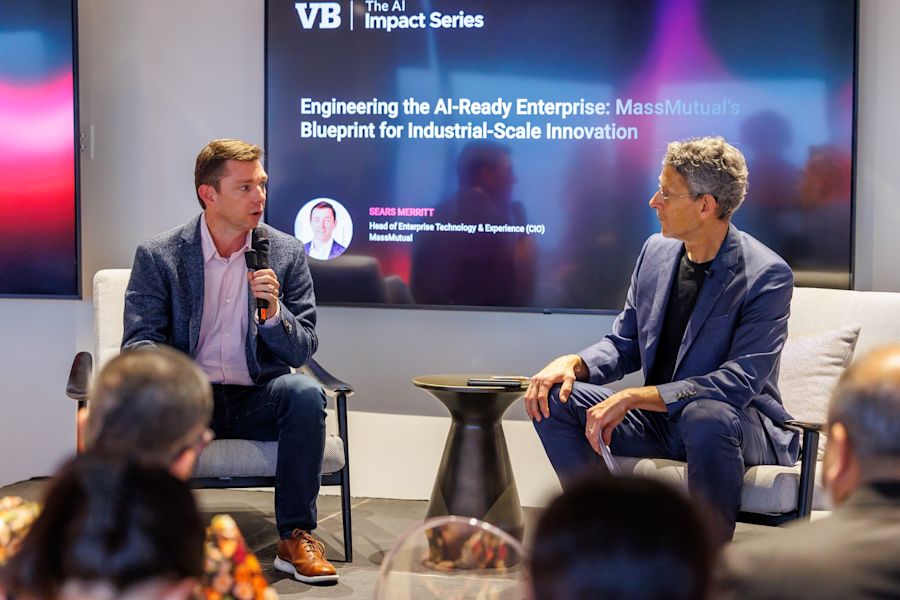
Large-scale AI initiatives often struggle not due to flawed concepts but because they linger in pilot phases without clear governance, stalling progress to production. Leaders from MassMutual and Mass General Brigham shared insights on moving beyond this challenge through structured approaches and disciplined execution.
MassMutual reported tangible gains like a 30% boost in developer productivity, faster IT help desk resolutions, and drastically shorter customer service calls. Their approach centers on defining clear success metrics and rigorous feedback loops, ensuring every AI application delivers measurable business value. They emphasize flexibility, avoiding commitment to any single model and enabling seamless upgrading of AI components.
Conversely, Mass General Brigham initially allowed widespread experimentation but later ended non-governed pilots to focus resources more strategically. By collaborating with primary platform providers and embedding AI champions within teams, they foster controlled innovation with real-time monitoring to manage risks and maintain safety standards, especially in clinical environments. Their experience highlights the importance of governance, adaptability, and embedding AI thoughtfully into workflows to achieve sustainable impact.
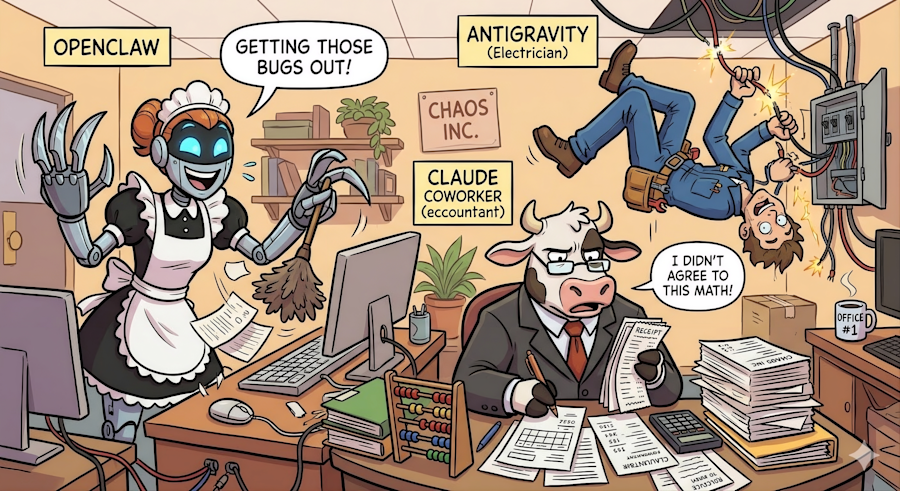
The era of autonomous AI agents has arrived, reshaping the landscape of work and technology. What began as casual interactions with ChatGPT in 2022 has evolved into serious discussions about job security and machine autonomy. Recent developments feature powerful agents like OpenClaw, Claude Cowork, and Google’s Antigravity, each offering distinct capabilities—from household task automation to specialized legal and financial services, and coding assistance. These tools require varying levels of access and trust, raising concerns about misuse and data security. While OpenClaw operates openly without central oversight, solutions like Claude and Antigravity come from established providers with safeguards. The real challenge lies in balancing empowerment with control, ensuring agents act with accountability, transparency, and adherence to ethical AI principles. Implementing strict monitoring, shared ontologies, and trust frameworks are essential to harness agent potential without chaos. Done properly, agentic AI can reduce human workload by handling routine tasks, allowing people to focus on high-value activities, marking a transformative step in the evolving AI ecosystem.
At the GTC 2026 conference, Nvidia CEO Jensen Huang introduced the Agent Toolkit, an open-source platform designed to build autonomous AI agents for enterprise use. This platform is already backed by 17 leading software companies, including Adobe, Salesforce, and SAP, covering diverse industries and Fortune 500 firms. The toolkit integrates models, runtime, security frameworks, and optimization libraries optimized for Nvidia hardware, enabling AI agents to autonomously handle tasks such as customer service, semiconductor design, and clinical trial management. Key components like the Nemotron model series and OpenShell runtime address cost and security challenges while fostering broad industry adoption. Nvidia's strategy involves offering open-source software fine-tuned for Nvidia GPUs, securing a vital role in the burgeoning AI agent ecosystem. Partners are developing AI solutions spanning creativity, sales, healthcare, and cybersecurity. Although these initiatives are largely exploratory at this stage, Nvidia's platform aims to become the standard foundation for enterprise AI, with the potential to transform how businesses operate with intelligent autonomous systems.

Anthropic recently announced that starting April 4, 2026, subscribers to Claude Pro and Max plans will no longer be able to use their subscriptions to run third-party AI agents such as OpenClaw. This move is driven by the heavy strain these external tools place on Anthropic's compute and engineering resources. While users can still utilize Claude models via a pay-as-you-go "extra usage" billing system or API, the unlimited usage under current subscription tiers will end. Anthropic cites technical inefficiencies with third-party services bypassing optimized prompt caching. To mitigate the impact, existing customers receive a credit equal to their monthly fee and discounts on additional usage bundles. The shift has sparked mixed reactions, with some developers frustrated by increased costs and constraints, while others see it as a necessary step for sustainable service. Concurrently, OpenAI is positioning itself as a more flexible alternative, especially for power users relying on agentic tools.

Arcee, a San Francisco-based AI startup, has introduced Trinity-Large-Thinking, a 399-billion parameter AI model released under the Apache 2.0 license for full commercial use and customization. This model uses an advanced sparse Mixture-of-Experts architecture, activating just 1.56% of its parameters per token, achieving high reasoning capabilities and operational efficiency. Backed by a $24 million Series A round and a $20 million investment in training, Arcee embodies "engineering through constraint" with a compact 30-person team. Trinity-Large-Thinking shifts from "instruct" to "reasoning" models, making it adept at complex agentic and multi-step tasks with faster, more coherent outcomes. Its data training leverages 20 trillion tokens combining curated web and synthetic rewritten content to promote reasoning rather than rote memorization, ensuring regulatory compliance critical for enterprise use. Arcee aims to fill growing demand for U.S.-based open AI models, as global competitors shift toward proprietary platforms. Benchmark scores show Trinity competing strongly against other top open and closed-source models, offering a cost-effective and sovereign option for enterprises building autonomous agents. Apache 2.0 licensing empowers enterprises with true ownership, crucial for regulated industries; Arcee also offers a raw pre-trained checkpoint for transparency and customization.

Microsoft introduced three advanced AI models developed entirely in-house: a speech transcription system, a voice generation engine, and an enhanced image creator. These models—MAI-Transcribe-1, MAI-Voice-1, and MAI-Image-2—are accessible via Microsoft Foundry and MAI Playground, targeting key enterprise AI needs such as speech-to-text, realistic voice synthesis, and rapid image creation. This launch marks a strategic pivot toward AI self-sufficiency following a contract renegotiation with OpenAI, enabling Microsoft to independently develop frontier AI technologies. Notably, these models demonstrate best-in-class performance, including superior transcription accuracy across 25 languages, and are priced aggressively to undercut competitors like Amazon and Google. Small, agile teams achieved state-of-the-art results using efficient architectures, reducing infrastructure costs. Microsoft aims to continue scaling AI capabilities toward a full-fledged large language model, emphasizing human-centered AI aligned with enterprise needs and governance. This marks a new chapter in Microsoft's AI strategy focused on innovation, efficiency, and market leadership.

As generative AI becomes essential in workplaces, enterprises face the 'shadow AI' issue—unsanctioned autonomous AI agents on personal infrastructure disrupting governance and security. Kilo, innovator in multi-model cloud AI coding environments, has introduced KiloClaw for Organizations and KiloClaw Chat, enabling enterprises to gain robust control, visibility, and governance over AI agents used by employees.
The rise of KiloClaw comes amid concerns of unmanaged AI workflows running on personal servers without audit logs or credential management, sparking security risks and blanket bans. KiloClaw aims to bring these autonomous agents under centralized organizational control, with features like identity and secrets management, centralized billing, and admin controls enforcing policies on AI model use.
Technologically, Kilo uses a 'Swiss cheese' reliability approach for mission-critical task completion despite operational interruptions, while also enhancing user experience through KiloClaw Chat — eliminating complexities of setting up communication channels for agents.
A novel governance model introduces employee 'bot accounts' that limit agent permissions to scoped, read-only access, reducing risks of data leaks. Kilo's open-source codebase alleviates fears of black-box algorithms and proprietary data exploitation.
Available now under a usage-based pricing model, KiloClaw invites organizations to adopt scalable AI agent adoption safely and efficiently, marking an important step toward secure enterprise AI deployments.

Microsoft announced the launch of three new foundational AI models developed entirely in-house: MAI-Transcribe-1, MAI-Voice-1, and MAI-Image-2. These models cover speech transcription, natural-sounding voice generation, and advanced image creation, aiming to directly challenge major AI labs like OpenAI and Google. Available now through Microsoft Foundry and the MAI Playground, the models boast cutting-edge performance, with MAI-Transcribe-1 leading in transcription accuracy across 25 languages. The announcement follows a recent contract renegotiation freeing Microsoft to independently pursue superintelligence research. Emphasizing efficiency, the small teams behind these models achieved top-tier results with fewer resources. Microsoft's pricing strategy is aggressive, positioning the company to compete cost-effectively in the AI market. Looking ahead, Microsoft plans to develop large language models for a broader AI offering, reinforcing its commitment to AI independence and enterprise-oriented “humanist AI.”

As generative AI becomes integral to workplaces, enterprises face a challenge with 'shadow AI' or 'Bring Your Own AI (BYOAI),' where employees use personal AI agents unsanctioned by IT. Kilo addresses this issue with the launch of KiloClaw for Organizations and KiloClaw Chat, providing enterprise-grade controls and governance over autonomous AI agents. These tools enable companies to securely manage AI agents with visibility into usage, identity management, billing, and strict admin controls. KiloClaw shifts AI agents from unmanaged environments to compliant, controlled platforms, employing reliability methods and native chat interfaces for ease of use. By introducing bot accounts—separate identities for human employees and their AI agents—Kilo ensures strict permission scopes, reducing risks of data leaks. The platform supports open source transparency, emphasizing security without compromising enterprise data privacy. Available now with usage-based pricing, KiloClaw aims to move enterprises from fragmented, risky AI setups to scalable, secure AI integration for the workforce.