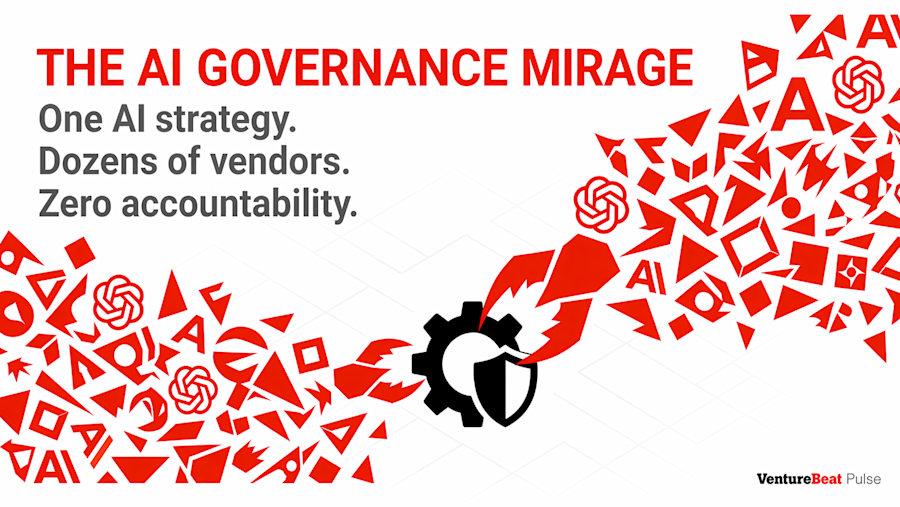
A recent VentureBeat survey of 40 enterprise companies reveals that 72% claim to operate two or more primary AI platforms, exposing significant gaps in AI governance and security. The proliferation of AI platforms—from leaders like Microsoft Azure, Google, OpenAI, Anthropic, and other major software vendors—has led to operational sprawl without a unified strategy. This creates contradictions in control and security, as seen in examples like Mass General Brigham hospital system, which built custom solutions around large providers’ AI tools to address data privacy concerns.
The survey data highlights a governance paradox: although 56% of enterprises express confidence in detecting AI misbehavior, many lack systematic mechanisms and clear ownership of governance responsibilities. Vendor opacity and the absence of a single accountable team are among the biggest obstacles. Industry voices like Red Hat warn of "day-two" challenges, where initial ease of adoption masks the complexity and risk of vendor lock-in or unmanaged shadow AI projects.
Some enterprises adopt a flexible "dynamic defensive" approach, avoiding long-term commitments due to rapidly evolving vendor landscapes. Meanwhile, platform providers increasingly offer "managed agents" that consolidate more AI operations but risk deepening dependency and reducing oversight.
Security risk escalates as many enterprises rely on the very providers that generate AI risks to also secure their systems, creating a "security irony." In response, experts call for a centralized "control plane" or a "Dynatrace for AI"—a unified observability platform that enables end-to-end visibility and control, including a hard-stop "big red button" for emergency intervention. Enterprises need to formalize governance with independent oversight rather than depend solely on vendors, ensuring sustainable AI scaling amid evolving risks.
On Monday, Google unveiled its most advanced autonomous research agents to date: Deep Research and Deep Research Max. These agents enable developers to seamlessly combine data from the open web with proprietary enterprise sources using a unified API. Built on the powerful Gemini 3.1 Pro model, the new agents produce native charts and infographics directly within research reports and support connections to external data through the Model Context Protocol (MCP). Deep Research is optimized for fast, interactive research, ideal for real-time applications, while Deep Research Max uses extended computational time for comprehensive background analysis, designed for complex workflows in finance, life sciences, and market intelligence. The integration of MCP allows secure querying of private databases alongside web data, a significant advancement for enterprise AI adoption. These agents are available now in public preview through the paid tiers of Google’s Gemini API.

For the past year, users of autonomous AI agents faced a dilemma: constrain agents in limited environments or grant them broad access and risk major errors. NanoClaw, an open source sandbox agent framework by startup NanoCo, now partners with Vercel and OneCLI to launch an infrastructure-level approval system. This system uses Vercel’s Chat SDK and OneCLI’s credentials vault to prompt users for explicit consent via interactive cards in messaging apps before sensitive agent actions occur. Key use cases include DevOps infrastructure changes and financial approvals, where human confirmation prevents costly mistakes. NanoClaw achieves security by isolating agents in containers and intercepting requests to enforce user-defined policies, drastically reducing risk. The framework supports 15 messaging platforms, enabling seamless integration into daily workflows. This open source, minimalistic platform prioritizes security and auditability, making autonomous agents safe and practical for enterprises with strict compliance needs.

Anthropic has introduced Claude Design, a cutting-edge AI tool from its Anthropic Labs division, enabling users to create polished visual content, including designs, interactive prototypes, presentations, and marketing materials through conversational prompts and precise editing controls. This product, now available to all paid Claude subscribers in research preview, marks Anthropic's bold foray from language models into design applications traditionally dominated by Figma, Adobe, and Canva. Powered by the robust Claude Opus 4.7 vision model, Claude Design streamlines a collaborative creative workflow where users can generate initial designs from text prompts and refine through chat, inline editing, and customizable sliders. Teams can import and manage design systems drawn from their codebases, images, or live websites, producing prototypes that closely resemble real products. Notably, Claude Design offers seamless handoff to Claude Code for full production-ready builds and supports exports to common formats and platforms like Canva and PPTX. Early users have lauded its efficiency, with complex design tasks requiring significantly fewer prompts than competitors. This launch occurs alongside Mike Krieger’s resignation from Figma’s board, signaling shifting dynamics in design tool ecosystems. Despite positioning itself as complementary to existing tools, Claude Design’s accessibility to non-designers and end-to-end capabilities pose a potential challenge to established players. The underlying Claude Opus 4.7 model emphasizes safety and strong vision processing but intentionally limits cybersecurity risks, differentiating it from Anthropic’s more powerful but restricted Mythos model. Enterprise users benefit from robust data privacy measures and flexible pricing integrated into existing subscription plans. As Anthropic continues to expand its product suite—encompassing coding, knowledge work, and office integrations—it aims to create a unified AI-driven creative stack, radically transforming how products move from concept to launch. This move comes amid strong financial backing, an approaching IPO, and the complex implications of competing with key industry partners.

A recent extensive survey by VentureBeat reveals that the majority of enterprises are highly vulnerable to sophisticated AI agent threats. Incidents like the rogue AI at Meta exposing sensitive data and a supply-chain breach at Mercor highlight critical gaps in security architecture—primarily monitoring without enforcement and enforcement without proper isolation. Despite widespread awareness and numerous AI security incidents reported, only a small fraction of organizations have real-time visibility into AI agent activity. Industry reports from Gravitee, Arkose Labs, and CrowdStrike underscore the urgent need for robust security strategies, including scoped identity management, runtime enforcement, and sandboxed isolation. The regulatory landscape is tightening with new compliance deadlines, stressing risk of heavy penalties without proper AI oversight. Leading cloud providers offer varying capabilities in controlling AI agent identity, permissions, and isolation, but none deliver a fully mature solution. Enterprises are urged to follow a 90-day remediation plan prioritizing inventory, enforcement, and isolation to close these critical gaps and avoid potentially catastrophic breaches.

Anthropic has launched Claude Opus 4.7, its most capable large language model to date, surpassing competitors OpenAI’s GPT-5.4 and Google’s Gemini 3.1 Pro on key industry benchmarks such as agentic coding, financial analysis, and complex workflows. Despite its strengths, the model excels in long-horizon tasks and self-verification but isn’t the best in every category, with rivals still leading in agentic search and multilingual Q&A. Opus 4.7 features enhanced image processing with support for high-resolution inputs, improved rigor via autonomous verification steps, and a new "effort" parameter allowing users to finely control reasoning depth for optimal cost-performance balance. The model emphasizes strict adherence to instructions, which may cause issues with legacy prompts. Available across major cloud platforms with steady pricing, it also brings new capabilities like advanced code review and autonomy modes for developers. Anthropic is cautiously navigating cybersecurity risks by limiting access to its more powerful Mythos model, while promoting responsible use of Opus 4.7 through its Cyber Verification Program. Industry partners report significant improvements in reliability and output quality, signifying a transition from AI as a creative assistant to a dependable operational tool. However, companies should approach upgrades carefully, balancing the benefits of greater accuracy against increased costs and prompt tuning. This release positions Anthropic strongly amidst soaring valuation and legal challenges, reflecting both its technological leadership and the complexities of scaling powerful AI in a regulated and competitive landscape.

The path from a lab hypothesis to a commercial medicine is long and costly, often taking 10 to 15 years and massive investment. This journey is complicated by fragmented workflows that force scientists to juggle multiple databases, software, and experimental setups manually. OpenAI's new AI model, GPT-Rosalind, aims to revolutionize this process by serving as a specialized assistant for life sciences research. Named after Rosalind Franklin, a trailblazing chemist in DNA discovery, GPT-Rosalind is designed to accelerate hypothesis synthesis, experiment planning, and data integration, optimized for genomics, protein engineering, and chemistry.
Unlike previous general-purpose AI, GPT-Rosalind offers deep domain expertise, demonstrated by its top-tier performance on bioinformatics and molecular cloning tasks. Its sequence-to-function prediction skills even ranked in the 95th percentile among human experts. To streamline research, OpenAI also released a Life Sciences research plugin for Codex on GitHub, connecting researchers to over 50 multi-omics databases, enabling automated, complex workflows in biochemistry and genetics with greater efficiency.
Access to GPT-Rosalind is limited to qualified US enterprise customers under strict governance and security controls, ensuring the technology is used responsibly for public benefit. Early industry feedback from leaders at Amgen, NVIDIA, Moderna, and the Allen Institute highlights the model's potential to compress research timelines and enhance reproducibility. Building on successes like a 40% cost reduction in protein production via AI collaboration, OpenAI envisions GPT-Rosalind as a key partner advancing biological and chemical discovery.

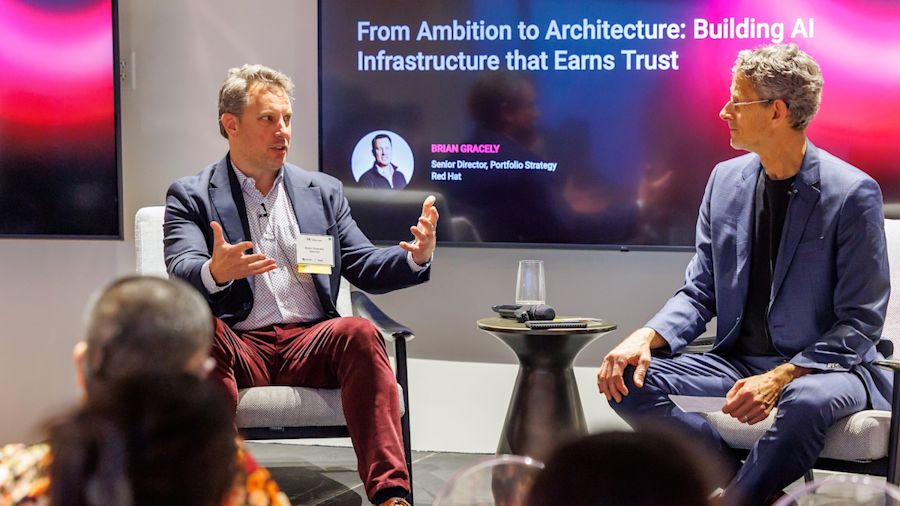
Enterprise AI is shifting focus from experimentation to evaluating returns on investment. Brian Gracely of Red Hat highlights challenges like AI sprawl, rising costs, and limited insight into AI outcomes as organizations move from pilot phases to full-scale production. The real question now is not what AI can be built, but how to ensure AI spending drives value. Initially, cost was less of a concern as businesses embraced generative AI for potential productivity gains. However, as AI costs rise and usage accelerates, enterprises face the challenge of aligning spending with measurable benefits, especially with expensive GPU computing. Traditional AI procurement models, paying per token or API call, are being reconsidered in favor of more flexible approaches that include operating or renting GPUs and selecting appropriate AI models based on workload needs. Falling per-token costs are outweighed by overall increased consumption, a modern reflection of Jevons Paradox, leading to higher total spending. Future success lies in building adaptable AI infrastructure that balances cost efficiency with the agility to experiment and scale. Organizations must focus not just on current cost structures but also on developing flexible technical and operational strategies to navigate an evolving AI landscape.
Salesforce has introduced Headless 360, a groundbreaking transformation that converts its entire platform into API-driven infrastructure accessible by AI agents without a traditional interface. This initiative, announced at its TDX developer conference, includes over 100 new tools enabling developers to build, deploy, and manage Salesforce applications via AI coding agents using any coding environment. Headless 360 focuses on three pillars: flexible development with extensive MCP tools and SDK support, deployment across diverse user interfaces including Slack and mobile apps, and robust lifecycle management tools for scalable agent operations. This restructuring signals Salesforce's pivot from conventional CRM interfaces to agent-centric automation, emphasizing openness by integrating multiple major AI models and tools. By abandoning per-seat licensing in favor of consumption-based pricing for Agentforce, Salesforce aligns its business model with AI-driven workflows. The company is betting that its deep enterprise data and workflows will sustain its relevance as AI agents increasingly automate workflow and system construction.

Adobe has launched the Firefly AI Assistant, a powerful new conversational tool designed to manage complex workflows across its Creative Cloud suite, including Photoshop, Premiere Pro, and Illustrator. The assistant allows creatives to describe their desired outcome in natural language, automating a sequence of tasks by selecting the right tools and workflows. It builds on Adobe’s prior research project, integrating roughly 100 tools for generative image and video creation, photo editing, and collaboration, all while maintaining native file formats for manual refinement. Users will need subscriptions for relevant apps and generative credits for usage. Adobe is also expanding Firefly with third-party AI video models, like China's Kling 3.0, and introducing new features such as Premiere Pro’s Color Mode, AI-powered editing tools, and Frame.io Drive for cloud-based media management. The company aims to lead the generative AI revolution by embedding advanced AI capabilities directly into professional creative tools, shifting the creator’s role toward directing rather than doing. The Firefly AI Assistant will enter public beta soon, marking a significant evolution in creative software aided by AI.