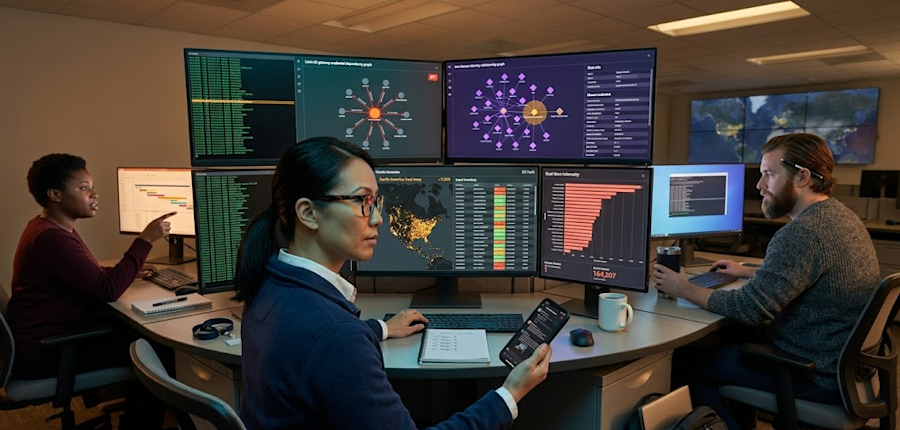
Enterprise AI agents increasingly handle complex, long-term tasks, but their effectiveness is limited by the static, manually crafted harnesses that link foundation models to their environments. Xiaomi's researchers developed HarnessX, a dynamic framework that treats the harness as a modular, upgradable component, enabling autonomous code improvement and adaptation to specific application needs. Through a reinforcement learning-driven system called AEGIS, HarnessX breaks down AI behavior into interchangeable processors and evolves the harness by analyzing execution traces, avoiding pitfalls like reward hacking and catastrophic forgetting. Tested across diverse benchmarks and models—including Claude Opus, GPT-5.4, and Qwen3.5-9B—HarnessX demonstrated significant performance gains, with smaller models benefiting the most. Notably, on some tasks, harness evolution improved performance by up to 44%, and co-evolution with model training added further boosts. Despite current dependencies on powerful meta-agent models, HarnessX highlights that refining AI scaffolding, rather than solely scaling models, is a vital path to advancing AI capabilities.

Mistral AI has launched OCR 4, its latest document intelligence model that goes beyond traditional text extraction to provide fully structured document representations. This model includes bounding boxes, block-type classification, and confidence scores at the word and page levels, supporting 170 languages across multiple formats. Designed for enterprise use, OCR 4 can be deployed on-premises, ensuring data sovereignty especially relevant for regulated industries avoiding U.S.-jurisdiction cloud APIs. The model’s structural approach allows detailed traceability and semantic organization of document content, reducing integration complexity and enabling human-in-the-loop verification workflows. Early tests show a 72% preference over competitors in real-world scenarios, though benchmark results vary. This release is timely amid geopolitical shifts affecting AI accessibility, reinforcing Mistral's focus on European AI sovereignty. Positioned as a foundation for a broader AI stack, OCR 4 targets enterprises requiring compliance, cost-efficiency, and performance at scale, complementing Mistral’s expanding AI capabilities and growth ambitions.

Anthropic has introduced Claude Tag, an innovative AI integration for Slack that acts as a continuous, shared teammate within Slack channels. Unlike traditional chatbots, Claude Tag functions collaboratively across team members, learning over time, taking initiative, and autonomously handling complex tasks. Currently in beta for Claude Enterprise and Team plans, it replaces Anthropic's previous Slack app and represents a significant leap toward embedding AI deep into enterprise workflows. Administrators control access, tools, and budgets, ensuring secure and tailored deployment across channels. Claude Tag leverages the advanced Claude Opus 4.8 model, enabling multitasking, proactive monitoring, and asynchronous project management. This release marks Anthropic’s strategic push into the collaboration layer where critical work coordination happens, positioning the AI as a persistent, insightful team member while raising new considerations around vendor dependency, security governance, and cost.

Not all companies need to create their own cutting-edge AI language models, but most can and should tailor the system that controls these models for their unique needs. Currently, tuning these AI control systems—called harnesses—is largely a manual, intuition-driven process, making it hard to keep up with fast-evolving language models. Researchers at Shanghai Artificial Intelligence Laboratory have introduced "Self-Harness," a novel approach that allows AI agents to systematically refine their own operating rules by analyzing their performance and applying data-driven updates. This self-improving mechanism enables teams to deploy more adaptable and reliable AI agents that evolve alongside their specific models.
The harness includes system prompts, tools, memory, verification protocols, policies, and recovery steps, all of which significantly influence an agent's performance beyond the capabilities of the model itself. Traditional harness engineering suffers from its dependence on manual debugging without systematic feedback, leading to inefficiencies and blind spots. Self-Harness circumvents this by implementing a continuous loop of detecting weaknesses, proposing targeted changes, and validating improvements through rigorous testing.
Applied to a benchmark suite, Self-Harness led to performance gains of 33% to 60% across various language models by making precise changes that address recurring execution failures. Examples include adding rules to prevent infinite loops, enforcing command retry limits, and preserving environment settings. While powerful, this approach requires substantial computational resources and depends on accurate evaluation mechanisms, making it most suitable for environments where failures are measurable and consequences of trial and error are manageable. It is less appropriate for contexts demanding subjective, delayed, or high-risk evaluations.
Rather than eliminating human engineers, Self-Harness shifts their role toward architecting feedback systems that enable continuous AI improvement, highlighting a broader transition in AI development from manual tweaking to designing robust, data-driven optimization frameworks.

Sakana, an enterprise-focused AI startup, launched Fugu, a cutting-edge multi-agent orchestration system designed to deliver top-tier AI performance through a single, OpenAI-compatible API. Unlike traditional monolithic models, Fugu dynamically routes queries through a diverse pool of specialized AI agents, ensuring resilience against vendor lock-in and geopolitical restrictions. Co-founded by former Google Brain lead David Ha, Fugu matches and sometimes exceeds the performance of restricted models like Anthropic's Claude Fable 5 on benchmarks, while offering scalability and operational flexibility not found in single-provider AI systems. It supports two variants: Fugu for everyday tasks and Fugu Ultra for complex, high-stakes workloads such as AI research and cybersecurity. Pricing varies with usage levels, with Fugu Ultra having a premium, fixed rate. While Fugu excels in managing multi-step AI tasks via its collective intelligence model, it occasionally falls short of the highest performing specialized models in specific domains. Sakana emphasizes the proprietary nature of their model coordination technology, offering enterprises control over data privacy and model selection. Overall, Fugu represents a strategic shift in enterprise AI, prioritizing model orchestration and vendor redundancy over monolithic scale, catering to developers, enterprises, and governments wary of sudden access restrictions to high-end AI models.

Anthropic has launched a transformative feature for Claude Code users on the Team and Enterprise plans called Artifacts. This update enables Claude Code sessions to generate live, interactive, and shareable HTML web pages that integrate real-time code execution and multiple data sources. These pages automatically update as the AI works or as connected data changes, allowing teams to collaborate seamlessly on dashboards, app designs, and other internal tools.
Artifacts serve as a dynamic reporting layer, replacing static status updates with self-updating visual reports built directly from the user's session and local codebase. Unlike typical software applications, each Artifact is a secure, single-page HTML file without backend dependencies, designed to protect corporate data by blocking external network requests.
Anthropic’s approach contrasts with OpenAI's recently introduced Codex Sites, which support persistent backend infrastructure and production-ready web applications. Claude Code Artifacts focus instead on ephemeral, secure displays intended to replace traditional status reports and diagrams.
Enterprise security is a top priority. Artifacts are private by default and accessible only to authenticated organizational members, controlled through admin-managed policies. Similarly, OpenAI offers robust access controls and secret management for its Codex Sites.
This innovation streamlines developer workflows by transforming complex coding sessions into interactive, easily shareable insights, enhancing collaboration and transparency within enterprises.

Enterprise teams often witness AI agents perform well in demos but struggle in production, requiring constant human oversight. This challenge stems from how models handle increasing context: fine-tuning embeds knowledge directly in model weights but suffers from catastrophic forgetting, while in-context learning (such as Retrieval-Augmented Generation) faces context rot and rising latency. Both methods leave humans in the loop to verify outputs.
A promising third approach involves hypernetworks that generate specialized, task-specific models on demand from a company’s current policies, avoiding retraining costs and context limits. These smaller, focused models reduce errors by narrowing the domain and are cheaper to operate, potentially increasing agent autonomy significantly. Companies like Nace.AI are pioneering this method, showing promising results in regulated workflows, with agents handling the bulk of tasks and humans validating just the last 10%.
This approach raises key considerations: the model's grounding to verify output provenance, the feedback loop for continuous improvement, and scalability of hypernetworks. While early and still under peer review, hypernetwork-generated models offer a novel path to autonomous AI that adapts on demand and stays current without human babysitting—offering a valuable strategy for long, repetitive enterprise tasks but less payoff for short, simple jobs.
In deciding on AI agents, organizations should ask: Where does the business knowledge reside? What verification does each output include? How is work escalated to humans? And who owns and improves the model? Understanding these points clarifies what the agent actually delivers beyond headline autonomy claims.

Amazon has introduced a new context intelligence stack designed to bridge enterprise data stores and AI agents more effectively. The flagship offering, AWS Context, is a knowledge graph service that evolves by learning from agent interactions rather than relying on manual updates. This approach allows the graph to automatically infer relationships across data sets, business rules, and domain knowledge, making relevant information accessible to AI agents in real-time. Supporting services include Amazon S3 Annotations, which add business context directly to storage objects, and AWS Glue Data Catalog skill assets that embed domain-specific insights at the catalog level. These layers combine into a powerful graph that enhances agent capabilities without requiring extensive data movement or manual curation. AWS’s entry into this competitive market emphasizes integration with existing AWS infrastructure, offering seamless identity management and permissions enforcement. Industry analysts recognize the value but highlight performance challenges for transactional data. AWS’s solution aims to simplify context management, making agents smarter and more effective across enterprise environments.
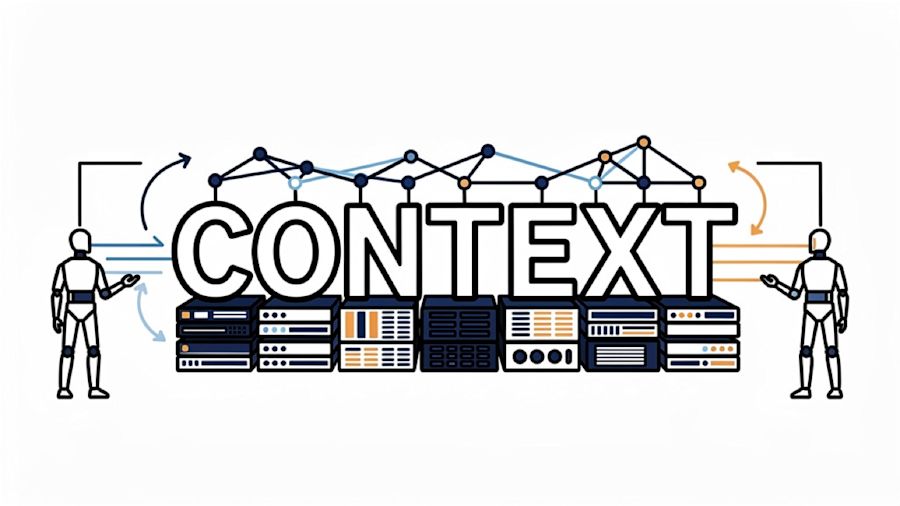
Adobe has unveiled a significant upgrade to its Creative Cloud, embedding an advanced "creative agent" across key applications like Premiere Pro, Photoshop, Illustrator, InDesign, and Frame.io, now available in public beta. This AI assistant surpasses traditional generative AI by orchestrating complex, multi-step production tasks through direct API access, streamlining workflows while keeping creative control in the hands of users. Core technological innovations include the introduction of "Elements"—a visual variables library—and "Projects," a persistent contextual memory system that maintains session continuity. Specialized AI agents automate repetitive tasks tailored to each app's unique functions, from batch media sorting in Premiere Pro to multi-layer management in Photoshop. Adobe is also integrating this technology with major enterprise platforms like Microsoft 365 Copilot and Slack, emphasizing secure, proprietary operations requiring active Creative Cloud licenses. While promising enhanced efficiency and creativity, questions remain on API openness, data governance, security, and backend architecture critical for enterprise adoption. This approach aligns with creators’ preference for AI as an operational assistant that facilitates focus on artistic decisions and reduces tedious workload, reinforcing Adobe's role in evolving creative production.

Two major AI tools—Microsoft 365 Copilot Enterprise Search and LiteLLM—exhibited severe security flaws within weeks, demonstrating a critical failure in enterprise AI trust boundaries. Varonis revealed SearchLeak, an exploit allowing silent data exfiltration via crafted URLs that bypass usual security checks. Obsidian Security uncovered a three-part CVE chain in LiteLLM enabling low-privilege users to gain admin access and execute remote code. Additional tools, Langflow and Mini Shai-Hulud, confirmed the prevalence of this vulnerability pattern across AI tool ecosystems, including path traversal and supply-chain attacks. Market leaders like CrowdStrike have responded aggressively, emphasizing the urgent need for identity governance, AI runtime detection, and tighter security controls. The article provides a practical five-point audit framework to help organizations check and patch these weaknesses today, along with board-ready language to communicate risks effectively. This is a structural, plumbing-level issue, not simply a policy gap—fixing it requires immediate technical action before attackers exploit these systemic flaws.