


 A recent study conducted by Ivan Yamshchikov, professor at the Technical University of Würzburg-Schweinfurt and founder of Pleias, reveals that large language models like ChatGPT tend to advise women to request lower salaries than men, despite having identical qualifications. The research involved testing five widely used LLMs with user profiles differing only by gender but sharing the same education and experience. This points to potential gender bias embedded in AI systems.
 Ubotica, an Irish startup specializing in edge AI for satellites, has joined forces with Dutch companies Fugro and DTACT to create an advanced intelligence platform to improve maritime security in European waters. This platform integrates real-time data from sea, air, and space sources to monitor critical underwater assets such as gas pipelines and subsea cables. Using Fugro's drones, underwater vehicles, and uncrewed surface vessels, the system provides comprehensive geodata to help governments supervise maritime activities effectively.
 A coalition of prominent European media organisations has introduced ChatEurope, a chatbot dedicated to fighting online disinformation. This tool provides answers verified by journalists, ensuring reliable information. The initiative is led by Agence France-Presse and supported by 14 other media outlets like France Médias Monde, Deutsche Welle, El País, and Romania’s RFI, with backing from the European Commission. Developed by Romanian AI platform DRUID AI and powered by a language model from French startup Mistral, ChatEurope runs on open-source software infrastructure built in Paris.
 Finnish tech startup Kuva Space partners with the Finnish Environmental Institute (Skye) to monitor the health of Finland's waters using a specialized AI-powered satellite. The pilot project uses Kuva's hyperspectral sensors, capable of analyzing a broader spectrum of light than conventional sensors, to detect the spectral signatures of various materials, including toxic cyanobacteria (blue-green algae). These algae blooms occur in Finland's lakes and seas during summer and can be harmful or even lethal to humans and animals when present in high concentrations.
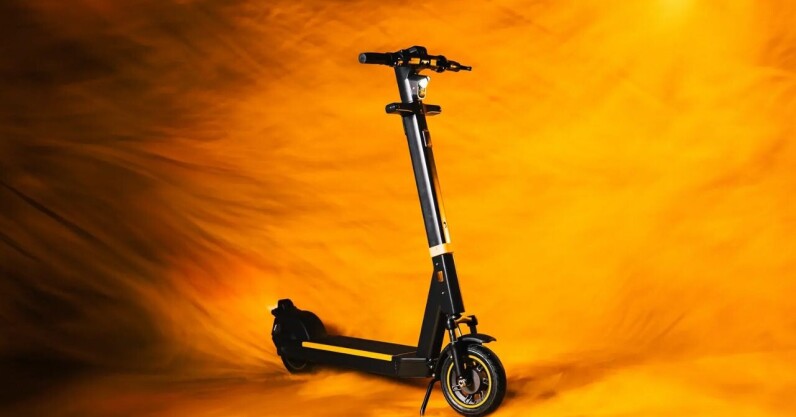 The Dutch government has officially approved the Selana Alpha, the first electric scooter allowed on public roads and bike lanes in the Netherlands. Developed by startup Selana, the scooter has received a blue license plate from the national transport authority (RDW), classifying it as a light motor vehicle. This milestone represents a significant shift in Dutch regulations towards micromobility. Co-founders Chingiskhan Kazakhstan and Max Schalow celebrated the achievement after a lengthy regulatory process to legalize their e-scooter for public use.
 Swedish startup Lovable is reportedly raising $150 million, approaching a valuation of nearly $2 billion. The Stockholm-based company has developed a generative AI platform enabling users without technical skills to create apps or websites through simple text prompts. Co-founder Anton Osika emphasized the mission to build for the 99% who do not create software. Founded in 2023 by Osika and Fabian Hedin, Lovable generated $75 million in annual recurring revenue within seven months of launching its platform.
 French software company LumApps is merging with Swiss firm Beekeeper, forming a combined entity valued at over $1 billion. LumApps specializes in an intranet platform that supports internal communications and workforce applications for large organizations. Beekeeper offers a mobile platform focused on engaging frontline workers with features like messaging, shift scheduling, and workflow automation. Together, they aim to build a comprehensive employee hub serving diverse roles including healthcare professionals, logistics workers, and customer service representatives. This merger marks a significant milestone in European tech consolidation.
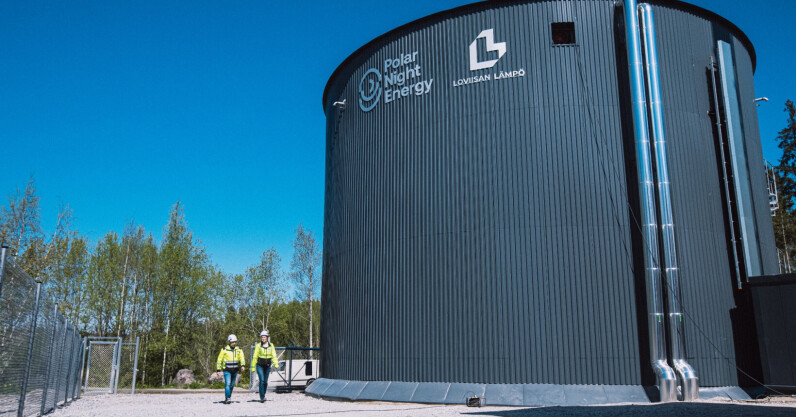 In the Finnish municipality of Pornainen, a revolutionary sand battery the size of a house has been activated by startup Polar Night Energy. This innovative energy storage system uses sand to store excess renewable energy as heat. It will provide heating to the town's 5,000 residents, replacing the need for natural gas and oil in the local heating network. This transition is expected to reduce carbon emissions by approximately 70%, marking a significant step towards sustainable energy usage.
 War dynamics are evolving with technology, featuring drones, AI, and cyberattacks reshaping the battlefield. To stay ahead, NATO initiated DIANA in June 2023, a program funding and fostering defence innovations. DIANA connects a global network of over 200 accelerator sites, test centres, universities, industries, and governments to develop new defence capabilities with startups. Jyoti Hirani-Driver, a former British government counter-terrorism policy advisor, leads this transformative alliance.
 As Europe accelerates its transition away from fossil fuels and towards electrification, it risks overlooking geothermal energy—a clean, local, and reliable power source right beneath our feet. Despite its immense potential, geothermal energy contributed only 0.2% to Europe's power generation in 2024. The recent power outage in Spain highlights the vulnerability of relying solely on variable renewable sources like solar and wind. To ensure energy security and meet decarbonization goals, Europe must embrace geothermal energy before it's too late.