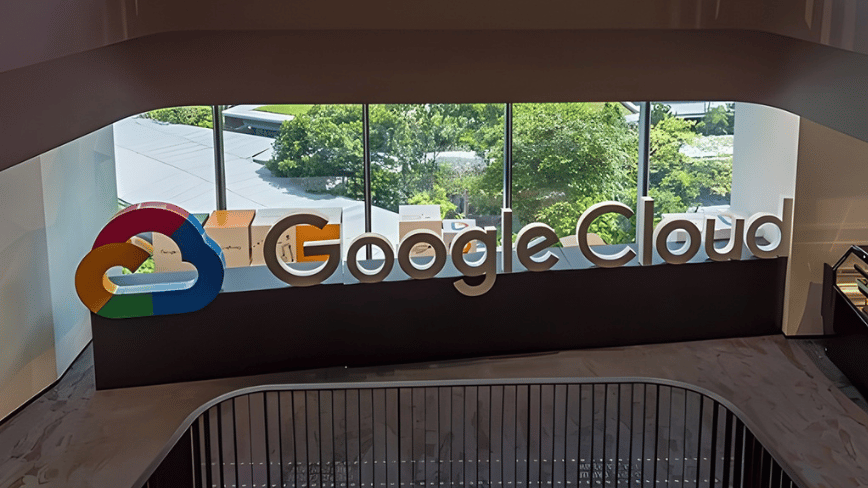
Google has extended its end-to-end encryption feature for Gmail to Android and iOS devices, a year after its initial launch on the web in April 2025. This update bridges the security gap for mobile users, allowing enterprise customers with Google Workspace Enterprise Plus and the Assured Controls add-on to securely compose and read encrypted emails directly within the Gmail app without additional steps.
SiFive, the pioneering RISC-V chip intellectual property company founded by engineers from Berkeley, successfully closed a $400 million Series G funding round on April 9, 2026. This oversubscribed round, led by Atreides Management and supported by major investors such as Nvidia, Apollo Global Management, D1 Capital Partners, and Point72, values the company at $3.65 billion. This marks the final funding event before SiFive's anticipated public offering.

On April 10, 2026, CoreWeave announced a significant multi-year partnership with Anthropic, the creators of the Claude AI model. This collaboration grants Anthropic access to Nvidia GPU resources across multiple data centers in the US, enabling large-scale AI production workloads. Financial details of the deal were not shared. This announcement follows closely on the heels of CoreWeave's $21 billion expansion in partnership with Meta, highlighting CoreWeave's growing influence in the AI infrastructure space by hosting nine out of the ten top AI model providers.

Meow Technologies has unveiled what it claims to be the first-ever agentic banking platform, designed exclusively for AI agents. This innovative platform allows AI agents to autonomously open business bank accounts, issue payment cards, execute transactions, and oversee daily account operations without any human intervention. It integrates smoothly with top AI models such as Claude, ChatGPT, Cursor, and Gemini, among others.

France Mandates Government Agencies to Transition from Windows to Linux to Boost Digital Sovereignty
On April 8, 2026, France’s Interministerial Digital Directorate (DINUM) announced a major shift in its IT infrastructure by transitioning all government workstations from Windows to Linux. This initiative requires every government ministry to develop a formal plan aimed at eliminating reliance on non-European digital technologies by autumn 2026. The mandate extends beyond operating systems to include collaborative tools, cloud services, and AI platforms, reinforcing France's commitment to digital sovereignty and security.

Peter Bailis, who stepped into the role of chief technology officer at Workday in May 2025, departed the company last month. He has since joined Anthropic as a member of their technical staff, where his focus will be on reinforcement learning engineering. This career move marks a shift from an executive position to a hands-on technical role, allowing him closer engagement with advanced technology development.
In a recent appearance on the 20VC podcast, Demis Hassabis shared insights into Google DeepMind's evolution after integrating Google Brain’s extensive computing capabilities with DeepMind's distinctive research-driven approach. He emphasized that this fusion sparked a renewed startup mentality within the company, fostering rapid innovation and agility reminiscent of its early days. This cultural and operational shift has been pivotal in DeepMind's accelerated development trajectory over the last few years.

Oracle has announced Hilary Maxson as its new chief financial officer, effective April 6, 2026. Maxson, who previously served as executive vice president and group CFO at Schneider Electric, will report directly to CEO Clay Magouyrk. Her appointment comes as Oracle embarks on a significant $50 billion capital investment to expand its AI data center infrastructure.

In his latest letter to shareholders dated April 9, 2026, Andy Jassy highlights Amazon’s custom semiconductor business, which includes the Graviton, Trainium, and Nitro chips. The segment currently generates over $20 billion in annual revenue and is experiencing triple-digit growth rates year-over-year. Jassy suggests that if this business were marketed externally in a manner similar to Nvidia, its valuation could soar to around $50 billion.

Google Cloud and Intel have strengthened their multi-year partnership focusing on AI infrastructure, involving both CPU deployment and the co-development of custom chips. Google Cloud plans to continue leveraging Intel's Xeon 6 processors globally for its C4 and N4 instances. Additionally, the collaboration is being extended to jointly develop custom Infrastructure Processing Units, enabling more optimized and efficient AI computing solutions.