


Around 1,600 Meta employees signed a petition opposing a monitoring tool that tracked keystrokes, mouse activity, and screen content. Meta, the company behind Facebook, Instagram, and WhatsApp, has paused the program due to privacy concerns and internal pushback. The tool was intended to gather data for refining its AI technologies.
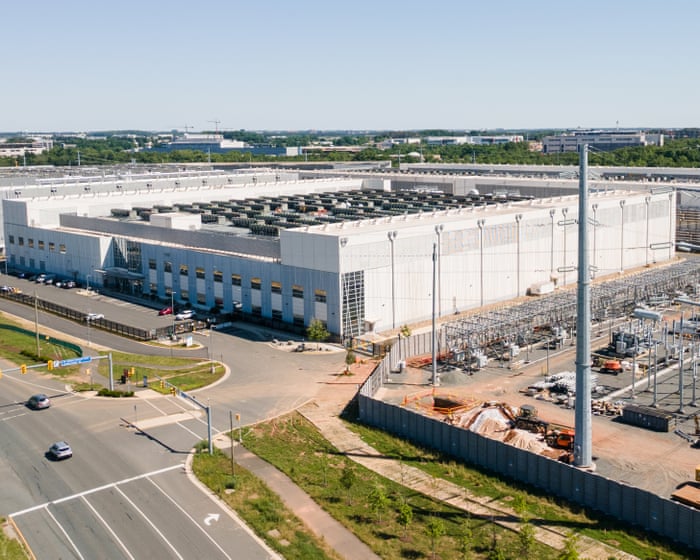
A recent study highlights that nearly 80% of datacenters worldwide face significant risks from climate-related threats such as floods, extreme winds, and wildfires. These vulnerabilities pose challenges for datacenter operations, potentially leading to outages, increased downtime, and higher costs for insurance and repairs. The report, conducted by climate risk analytics firm First Street, also points out the paradox that the booming AI industry, which relies heavily on these datacenters, contributes to greenhouse gas emissions that exacerbate these climate risks.
Signals intelligence agencies from Australia, the US, UK, New Zealand, and Canada have jointly warned that powerful AI models capable of disrupting governments and businesses are just months away. This alert follows the US administration's recent decision to restrict foreign nationals from accessing Anthropic's Fable AI model. The agencies urge global leaders to take immediate action to address the emerging risks posed by these advanced technologies.

An investigation reveals that brands are increasingly using AI-generated influencers on social media to promote products, often without disclosing that these personas are not real. This AI-driven content is designed to mimic genuine customer experiences, raising concerns about transparency in advertising.

Lloyds Banking Group is set to recruit 300 technology specialists focused on advancing its artificial intelligence capabilities. This move, announced just before CEO Charlie Nunn reveals a new strategy for the historic 261-year-old bank, aims to enhance the development of agentic AI — autonomous systems capable of performing tasks with limited human intervention. While these additions will increase staff numbers initially, the bank cautions that wider AI integration could eventually reduce jobs.

Imagine the year 2031: the US and China are dominating the tech landscape, leaving Europe struggling behind. The US has invested heavily in data centers, China has advanced its robotics, but Europe lagged in both areas. While American firms revamped their operations with AI—reducing staff—European workers took longer breaks and delegated routine tasks to AI assistants like Claude. This scenario sparks a debate on whether Europe’s cautious approach risks falling behind in the AI race or reflects deeper anxieties about technology’s future.

A recent Massachusetts Institute of Technology study warns that excessive reliance on chatbots could weaken critical-thinking abilities and hinder the capacity to identify misinformation independently. With the rise of advanced AI tools, manipulated digital content is more prevalent. While AI can assist users in spotting fake news, the research highlights the risk that depending too heavily on AI for truth verification may reduce one’s skill in making sound judgments.

The UK government has revealed ambitious plans to invest billions in AI infrastructure, aiming to boost its position in the global AI landscape dominated by the US and China. At London Tech Week, an event spotlighting the UK tech sector, officials highlighted new and existing initiatives focused on AI companies, talent development, and technological infrastructure. While the announcements mark a push for growth and innovation, uncertainties remain about the execution and effectiveness of proposals, especially concerning AI chips and social media regulation.

The narrative around artificial intelligence is polarized and overwhelming. On one side, AI is portrayed as a catastrophic threat; on the other, it's hailed as a revolutionary force for progress. Yet, neither the dystopian fears nor the utopian promises fully capture reality. AI's impact is massive, already driving significant economic growth—by late 2025, it contributed to nearly 60% of the U.S. economy's expansion. Despite its potential, the future of AI is not predetermined, and the hype often obscures a more nuanced understanding of its capabilities and risks.

The Medical Protection Society is urging a legal overhaul to protect healthcare professionals from being held liable for mistakes made by AI diagnostic and treatment tools. Currently, doctors and the NHS can be sued for medical negligence if AI-driven errors lead to patient harm or death. The existing law does not differentiate between human and AI mistakes, raising concerns as AI becomes more integrated into medical decision-making processes.
