


Artificial intelligence might not fulfill its promise of creating immense economic growth without significant social costs. In March, Anthropic, the AI company behind the chatbot Claude, released a study examining AI's effect on jobs, questioning fears that robots will soon eliminate the need for human workers. Last May, Anthropic's co-founder Dario Amodei warned AI could displace half of all entry-level jobs within a few years. However, recent discussions suggest that while AI will reshape labor markets, a complete job apocalypse is unlikely in the near term. The challenge remains balancing rapid AI-driven growth against increasing inequality and societal trade-offs.

The value of a task often lies not just in the result, but in the effort and learning during the process—much like the difference between actual work and a gym workout. Bruce Schneier, who teaches public policy at Harvard Kennedy School and the Munk School at the University of Toronto, observes that many of his students use AI to complete writing assignments, which he believes undercuts their educational experience. However, recognizing that AI tools will be part of their future careers, he suggests embracing them wisely. The AI researcher Daniel Miessler offers a useful framework for this dilemma, comparing the use of AI to distinguishing between productive work and exercises for personal growth.

Alphabet, Google's parent company, posted impressive second-quarter earnings with $120 billion in revenue, marking its 12th consecutive quarter of strong financial performance. These results surpassed expectations despite delays in launching the advanced AI model Gemini Pro. Investors are closely watching how Alphabet’s significant AI investments impact its financials as the company increases its annual capital expenditure forecast to $200 billion, with quarterly spending doubling year-over-year.

Tesla's shares dropped more than 3% in after-hours trading following the release of its second-quarter earnings, which revealed profits well below Wall Street forecasts. The company's stock, already down around 14% this year, fell further after the report. Meanwhile, Elon Musk's attention seems divided as SpaceX, his rocket and AI venture, caught the spotlight with the largest stock market debut ever last month. This milestone made Musk the first trillionaire, though his net worth has slipped since then.

Software engineering, once among the highest-paying US jobs in 2022, faces disruption from AI, causing layoffs and underemployment. Matt, a software engineer, uses his train commute to develop a browser-based video game, coding entirely by himself to maintain his skills. Though his work increasingly involves reviewing AI-generated code, he avoids relying on AI to preserve his craftsmanship. His experience highlights a broader trend of engineers reacquainting themselves with core programming skills while pushing for collaborative efforts in adapting to AI-driven changes.

The European Commission has fined Google €890 million (£760 million) for violating competition laws within the Digital Markets Act. The firm is accused of prioritizing its own services, like shopping and hotel deals, over competitors' offerings in search results. Google must now treat third-party services appearing in its search results fairly and without discrimination.

The US government will invest $5 billion to address critical scientific challenges across various disciplines using artificial intelligence, according to a statement from the Trump administration. This funding will enable 15 federal agencies to explore fundamental causes of chronic illnesses, speed up drug development, and create more durable materials. Scientists will gain access to Department of Energy supercomputers, specialized AI datasets, and other essential tools to enhance their research capabilities. The initiative also signals a shift in federal research funding priorities, emphasizing support for individual scientists and AI technologies over traditional university grants.

The water industry has raised serious concerns about the UK’s capacity to support future datacentres, highlighting potential water shortages that could impede AI development plans. Datacentres require substantial water usage to cool their server equipment, utilizing systems like cooling towers and chillers. This demand is compounded by the high electricity consumption that indirectly drives water usage. Industry experts warn that without government intervention to address these cooling water needs, the ambitious plans for AI growth may face critical obstacles.

Tech employees are increasingly turning to unions, challenging the long-standing notion that Silicon Valley workers are immune to unionization. Traditionally, tech jobs came with top-tier pay, excellent benefits, and a casual culture that gave engineers a sense of equality with their managers. However, recent AI-driven layoffs and concerns over job security have changed the landscape. Workers at companies like Google DeepMind and Meta are now pushing back against not only job risks but also ethical concerns about AI's military use and workplace monitoring. These developments have sparked a growing wave of union efforts among tech professionals.
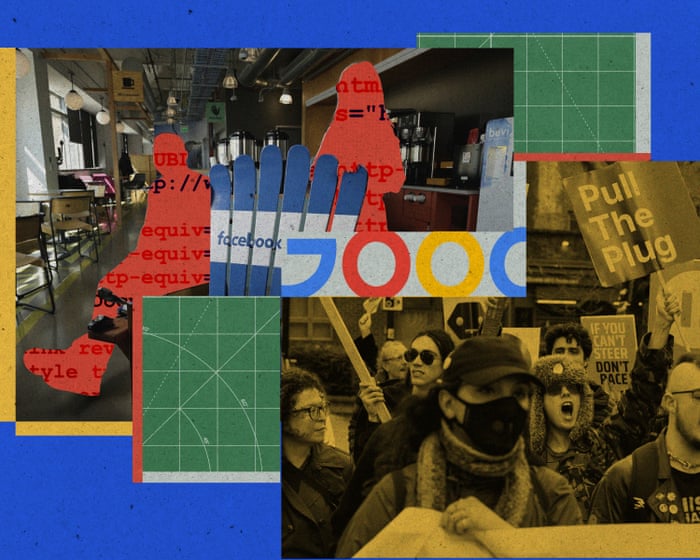
Google’s recent AI difficulties highlight growing concerns as new Chinese AI models challenge US technology leadership. Blake Montgomery shares insights following a cultural-filled Sunday featuring Christopher Nolan's The Odyssey and the World Cup final. The focus today is on China's advance in the AI race and Silicon Valley workers' efforts to safeguard their roles against AI automation. Notable developments include New York's unprecedented one-year halt on new AI data centers, sparking political debate and parallels in Australia where calls for regulatory pauses grow. Other tech news covers IBM's shares tumbling, teenagers' mixed reactions to the UK’s social media curfew, and a massive billing glitch affecting Amazon Web Services customers worldwide. For further reading, visit the original article on the tech rivalry between China and the US.
