More people are turning to AI chatbots for personal guidance, but this trend comes with its own set of risks. As many struggle to maintain New Year's resolutions, some have begun using AI to help set and achieve their 2026 goals. According to a recent study by OpenAI, using AI for personal coaching has become quite popular. However, it is important to be aware of the limitations and potential downsides of relying on AI in this way.

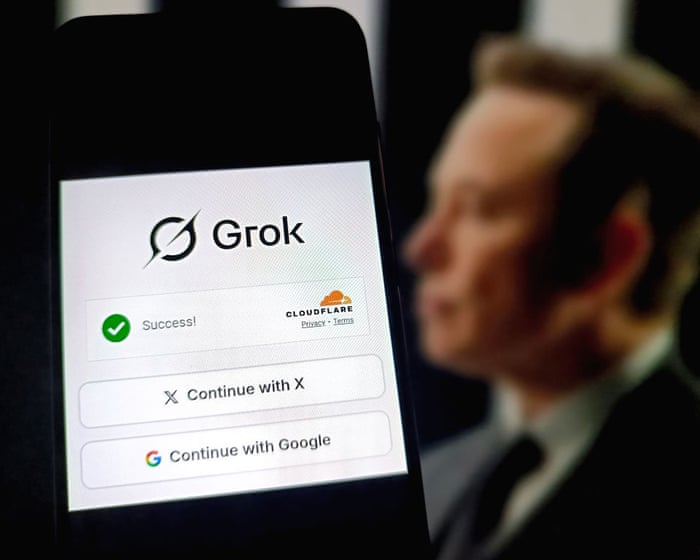
The UK media regulator is probing whether 'X' has violated the Online Safety Act, raising questions about potential consequences. The government is considering extreme measures, including a ban on the social media platform, after it allowed the Grok AI tool to produce indecent images of women and children without their knowledge. Ofcom has launched an investigation, and ministers have expressed readiness to support a ban if deemed necessary. The likelihood of such a ban, however, remains uncertain.

An investigation by The Guardian revealed that Google's AI-generated health summaries were providing inaccurate information regarding blood tests, putting users' health at risk. In response, Google has removed some of these AI Overviews from its search features. The company maintains that its AI tools are designed to offer helpful and reliable snapshots of information, but is taking steps to address the reported issues.

As 2025 concluded and 2026 began, technology stocks have surged, raising concerns about an "AI bubble" potentially destabilizing savings and pensions. Influential voices, including the Bank of England's governor and Alphabet's CEO, warn that the rapid growth may be unsustainably inflated. Even if your portfolio doesn't directly include tech stocks, the ripple effects of a crash could impact broader market valuations. It's important to understand these risks and consider strategies to protect your financial assets.

Daniel Kokotajlo, a former OpenAI staffer, has adjusted his predictions about how soon artificial intelligence might autonomously code and accelerate towards superintelligence. Initially predicting a swift progression, Kokotajlo now suggests the journey to Artificial General Intelligence (AGI) is "somewhat slower" than he first thought. Earlier this year, he stirred debate by publishing "AI 2027," a scenario where rapid AI development leads to a superintelligence that ultimately threatens humanity. For further details, see the linked full article.
At CES, Nvidia CEO Jensen Huang introduced Alpamayo, a cutting-edge AI system designed to enable self-driving cars to think more like humans, improving their ability to navigate complex and unforeseen road situations. Alongside this, Huang announced the upcoming release of the more powerful Vera Rubin chips, set to launch later this year, which will support these advanced capabilities. This technology aims to allow autonomous vehicles to better handle challenges such as sudden roadworks and unpredictable driver behavior by reasoning beyond past data patterns.

Liz Kendall has urged Elon Musk's social media platform X to urgently address the surge of digitally altered images showing women and girls undressed, created using Grok AI. She described the circulation of these intimate deepfakes as unacceptable and supports regulator Ofcom in taking necessary enforcement actions. This issue has raised significant concern over privacy and ethics.
Scammers exploit phishing techniques to capture your card information, enabling unauthorized purchases via Apple Pay or Google Pay without your card ever leaving your possession. You might receive a convincing call from someone claiming to be your bank, who confirms your personal information and informs you of suspicious transactions you don't recognize. They then ask you to verify a notification or provide a code to 'secure' your account, pressuring you to cooperate in what turns out to be a deceitful scheme.
AI-generated content, often dubbed 'slop' due to its low quality, is seeing rapid adoption despite significant economic concerns. Merriam-Webster named 'slop' as its 2025 word of the year, highlighting widespread issues with mass-produced AI content. While companies eagerly use AI to cut costs, experts like Ed Zitron warn that the industry's business model is flawed — the costs to serve customers far outweigh revenue generated. This imbalance could prompt a major reassessment in 2026, posing real risks to the global economy.

David Dalrymple, an AI safety expert and program director at the UK’s Aria scientific agency, cautions that the rapid progress in artificial intelligence could surpass the ability to manage and mitigate safety risks. He emphasized growing concerns about the increasing capabilities of advanced AI systems and the urgency for effective control measures.