


Nimble, a New York-based tech startup, has announced its Web Search Agents, a new retrieval system aimed at improving the efficiency and accuracy of AI-driven web research. These agents specialize in domain-specific knowledge, leading to 21% more accurate results and a 51% reduction in token usage compared to other AI search solutions. Unlike generic search engines, Nimble's technology adapts to the unique needs of each enterprise, optimizing retrieval strategies through self-learning algorithms and proprietary web indexes. This approach reduces unnecessary data processing, shortens research paths, and enhances overall operational efficiency for tasks such as competitive intelligence, lead generation, and compliance. The platform is accessible via API, SDK, and Model Context Protocol, enabling seamless integration into existing workflows. Supported by partnerships with major firms like Microsoft and Oracle, Nimble's solution addresses the growing demand for specialized, cost-effective search capabilities in enterprise AI applications.

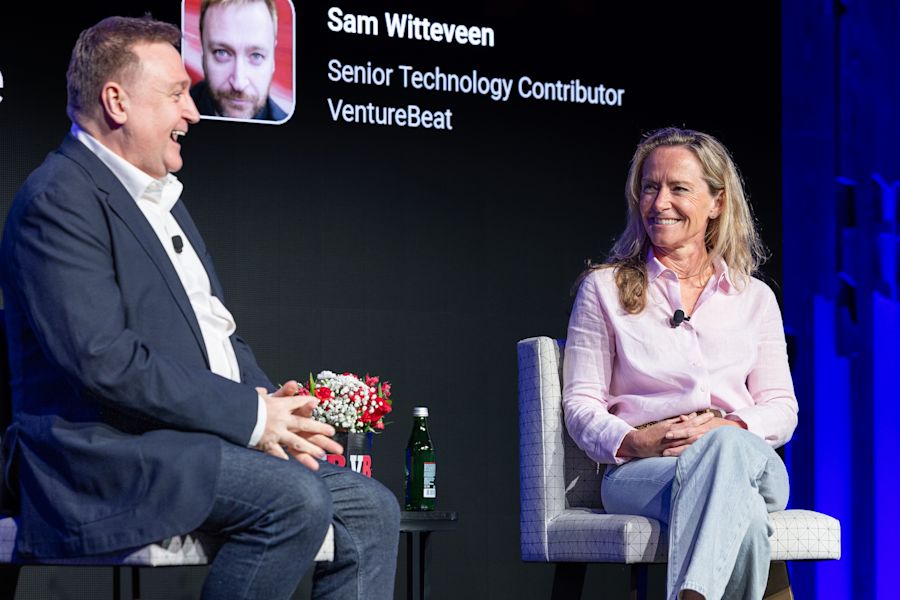
Siobhán Mc Feeney, Target's Senior Vice President, highlights that the true competitive advantage in AI comes not from the models themselves, but from the robust frameworks and systems built around them. At VB Transform 2026, she explained that while AI models are crucial, they aren't sufficient alone to deliver value. Target carefully evaluates whether an AI agent is needed, what kind of agent to deploy, and ensures each agent earns its autonomy gradually. These agents are deeply integrated into Target’s infrastructure, enhancing supply chain efficiency, demand forecasting, and product availability.
Mc Feeney detailed how their approach involves comprehensive governance layers, continuous monitoring, and evaluation of AI agents’ performance and autonomy. This systematic architecture enables scalability and cost-efficient use of frontier AI models suited for complex tasks. Agents operate within clearly defined guardrails and can lose their autonomy if they underperform, ensuring transparency and reliability.
The process also requires a cultural shift where builders and engineers adapt to managing AI alongside human workers, developing new skills to maintain accountability as AI adoption accelerates. This layered approach to AI adoption exemplifies how Target maximizes value in its AI initiatives by focusing on the entire ecosystem around the models, not just the models themselves.
Bright Machines aims to tackle a critical challenge in AI infrastructure production: preserving quality data integrity when manual assembly is necessary. Their new Hybrid BRC (Bright Robotic Cell) integrates human operators into a sensor-monitored robotic system, maintaining a continuous digital record for every component during assembly. This innovation addresses a key weakness in current electronics manufacturing, where manual steps disrupt production data or halt lines entirely, leading to lower first-pass yields—which can be as low as 20% initially, versus over 98% through robotic assembly. By allowing human intervention without breaking data flow, the Hybrid BRC improves yield, traceability, and speeds up server deployment for hyperscalers. Bright Machines currently operates hybrid lines in the US, building thousands of compute nodes, and foresees significant growth driven by AI infrastructure demands and onshoring trends. Their approach combines automation with human flexibility, backed by robust data orchestration, setting them apart from competitors that only offer software or manual processes. The system also respects data ownership and worker privacy, emphasizing security for high-IP electronic manufacturing. Ultimately, Bright Machines is betting that the future of AI hardware manufacturing relies on seamlessly integrating humans and robots to boost yield and agility in response to rapidly evolving hardware needs.

Visa deployed Anthropic's Claude Mythos AI to rigorously test its vast payment network that processes billions of daily transactions across over 200 countries and handles nearly 5 billion payment credentials. This AI-driven approach uncovered deep, complex vulnerabilities by linking minor system weaknesses into exploit chains typically found only late in penetration testing. Visa's president of technology, Rajat Taneja, highlighted how the company open-sourced the Visa Vulnerability Agentic Harness—an AI governance pipeline that runs multi-phase, multi-model security evaluations with human oversight. This tool helps ensure fixes are effective and measurable through a new metric, Mean Time to Adapt (MTTA), which tracks how quickly vulnerabilities are verified, fixed, and validated in production. Beyond security, Visa is preparing for an AI-driven future where agents transact autonomously, emphasizing the need for stringent identity and trust frameworks. Their work also extends to supply chain security through initiatives like Project Lightwell—partnering with IBM, Red Hat, and major banks to strengthen open-source components using AI. Visa’s strategy focuses on proactive security, rapid adaptation to threats, and autonomous defenses at scale, with the AI harness and best practices available openly to help other security teams.


Dung Hoang/theispot.com
The digital age has vastly expanded access to explicit content, and generative AI now enables users to create explicit images with alarming ease. Governments and the U.N. warn about the rise of illegal AI-generated deepfakes, particularly those involving minors. Despite these concerns, some tech leaders, like OpenAI's Sam Altman, have considered integrating adult content features into AI tools.
Our research investigates how AI-generated explicit content affects offline sexual crime, using Japan as a case study due to its detailed public crime data. Following the mid-2023 launch of ChatGPT’s mobile app and improvements in AI image generation, Japan saw a significant rise in reported rape cases, increasing from an average of 148 to 265 per month. This rise surpassed other violent crimes such as murder, suggesting a specific link to sexually motivated offenses.
Analysis of activity on a major Japanese online art community revealed that peaks in engagement with AI-generated adult images correlated with increases in rape cases, especially those involving minors. The findings suggest a disturbing connection between AI-generated explicit content and real-world sexual crimes.
While causation cannot be fully proven, the evidence raises serious concerns about the societal impacts of unrestricted AI-generated adult content. Policy measures like watermarking, strict age verification, and enforcement of existing child protection laws could mitigate these risks. The scale of the problem calls for urgent legal reforms and careful consideration from technology companies to prevent facilitating sexual crimes, particularly against minors.


The Federal Communications Commission (FCC) has announced a ban on humanoid and animal-like robotic devices from China, citing significant national security risks. This action aligns with the Trump administration’s ongoing efforts to restrict Chinese technology access in the United States. The banned devices are classified by the FCC as 'advanced robotic devices,' including both humanoid and quadruped robots.

The energy regulator Ofgem plans to introduce upfront fees or financial guarantees like letters of credit and bonds for datacentre projects connecting to Britain's power grid. This move aims to address the growing backlog in electricity connections by discouraging speculative projects that slow down the queue, which also affects critical infrastructure such as hospitals, schools, and housing developments.

Queensland and the Northern Territory have opposed the federal government’s proposal to require AI data centres to operate on renewable energy, criticizing it as an underdeveloped plan that increases Canberra's control. This debate emerges amid warnings from S&P Global that electricity consumption by data centres may quintuple by 2035, potentially accounting for 10% of Australia’s total power use. The agency highlights concerns that timing mismatches between data centre energy demands and renewable energy projects could cause electricity costs to soar.


Antora Energy, specializing in thermal battery solutions for data centers, has successfully raised $550 million in a Series C funding round. Co-led by G2 Venture Partners and Eclipse, this financing included prominent investors such as Decarbonization Partners, Lowercarbon Capital, and Breakthrough Energy Ventures. Since its founding in 2017, Antora, based in San Jose, California, has now raised $770 million. The fresh capital will accelerate large-scale battery storage projects nationwide to address the rising energy demands fueled by AI growth. Antora recently commissioned a 5-gigawatt-hour thermal battery system in South Dakota, one of the largest globally, using innovative technology that stores electricity as heat in solid carbon blocks to provide continuous clean energy. The company’s factory-built modules are versatile, serving industries like chemical, food production, steel manufacturing, and data centers without reliance on scarce minerals or long construction times. CEO Andrew Ponec emphasizes that Antora’s approach can break energy supply bottlenecks and support industrial expansion with American innovation. This funding round represents a significant cleantech investment amidst a period of modest venture activity in the sector.


A federal judge ruled that the Trump administration failed to provide adequate evidence to classify Anthropic as a supply-chain risk. This decision raises questions about the government's ban on Anthropic’s AI technology, potentially impacting future regulatory actions.
