Enterprises face a significant challenge as each new AI agent starts without memory of business operations, data locations, or rules, leading to data silos. At Microsoft Build 2026, Microsoft introduced solutions to tackle this: Microsoft IQ and Rayfin. Microsoft IQ unifies four critical context sources—Work IQ (daily organizational workflows), Foundry IQ (institutional knowledge and rules), Fabric IQ (live operational business data), and Web IQ (real-time external world data)—providing AI agents a comprehensive understanding of the enterprise environment. Meanwhile, Rayfin is an open-source SDK and CLI that deploys agent-built applications directly into Microsoft Fabric, ensuring all application data integrates into the same governed platform, avoiding silo creation. This approach creates a virtuous cycle where agents draw from a shared data ontology and contribute back to it, enhancing organizational knowledge continuously. While other platforms like Snowflake, Pinecone, and Redis also develop context-rich AI layers, Microsoft's integrated and governed system aims to simplify execution and build trust in enterprise AI deployment, moving beyond just model availability toward scalable, compliant AI at the core of business operations.

Microsoft has introduced Microsoft Execution Containers (MXC) at its annual Build developer conference, addressing a critical concern in AI agent deployment: security. MXC is embedded directly into Windows and the Windows Subsystem for Linux, enabling developers and IT administrators to define strict execution policies that the OS enforces at runtime, ensuring AI agents can only access authorized resources. This policy-driven sandbox supports various isolation levels — from lightweight process isolation to micro-VMs and cloud instances — guaranteeing flexible protection based on the agent's function and risk. Key features include session isolation to prevent UI spoofing, input injection, and data leakage, plus binding agents to unique identities for precise audit and control. Microsoft demonstrated MXC's strength with an AI agent prevented from deleting desktop files due to these enforced boundaries. The system integrates with Microsoft's enterprise security tools like Defender, Entra, Intune, and Purview under the Agent 365 umbrella, set for preview in July, allowing centralized governance and compliance. Major industry players like OpenAI, Nvidia, Manus, and Nous Research are early adopters, signaling MXC's potential as a new standard for secure AI agent operation on Windows. By embedding containment at the OS level, Microsoft offers a uniquely practical, scalable solution, positioning Windows as the trusted platform for autonomous AI in diverse environments.

OpenAI has launched a significant update to its Codex AI platform, designed to extend its use from developers to a broad range of business professionals. This update introduces "Sites," a feature for rapid, semi-private web hosting within Codex, allowing teams to create and share dynamic, interactive web pages that transform static data into functional applications. Additionally, the "Annotations" tool enables precise, localized edits within documents like spreadsheets, preventing unnecessary full-document changes and preserving formatting integrity.
To further support enterprise needs, OpenAI has rolled out role-specific plugins encompassing 62 popular business applications and over 110 automated skills, covering functions in data analytics, creative production, sales, product design, and investment banking. These integrations simplify complex workflows without requiring custom API development.
Targeted at non-developers such as financial analysts, marketers, and researchers, who are rapidly adopting Codex, the update marks a strategic move to establish the platform as a daily operational tool in white-collar environments. The new features are accessible through the Codex app and plugin directory, available primarily to Business and Enterprise users under OpenAI's proprietary licensing model, with continued access through existing subscription plans.

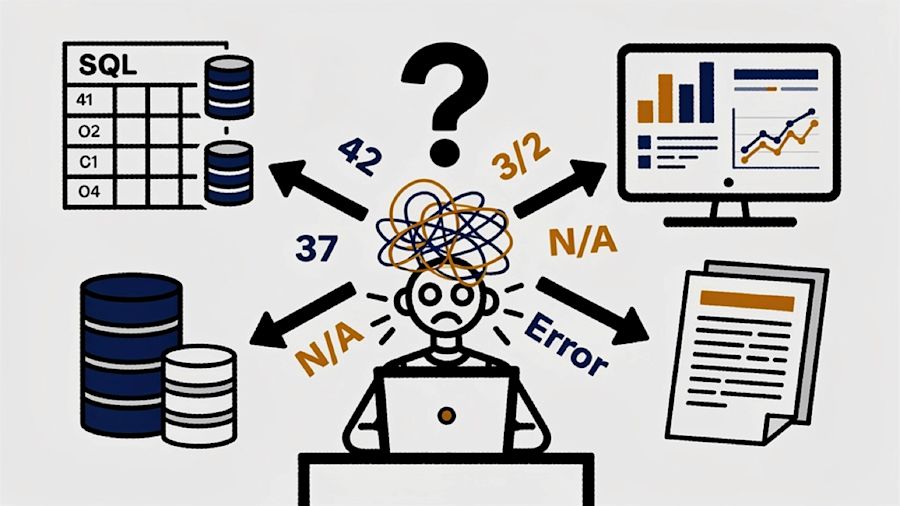
Enterprise AI agents face a significant challenge beyond the AI models themselves: inconsistent answers arising from fragmented business logic across different systems. As organizations shift from basic retrieval architectures to hybrid retrieval methods, varying interpretations of data emerge depending on the querying tool or agent. Revenue figures, for example, differ between BI dashboards, SQL tables, and agent instructions due to differing semantic understandings.
At the Snowflake Summit 26, Snowflake introduced solutions aiming to unify business logic via a two-layer context system—Horizon Context and Cortex Sense. Horizon Context consolidates customer-declared metadata from various sources to create a shared, governed business logic catalog, while Cortex Sense automatically enriches context based on data usage patterns, enhancing default agent behavior.
This approach addresses the growing demand for hybrid retrieval strategies, as confirmed by recent market data showing a rapid increase in adoption. Snowflake's system emphasizes interoperability and governance to ensure consistent, auditable, and portable semantic definitions across platforms.
Other vendors like Microsoft, Redis, and Pinecone are also developing context layers, highlighting the industry's recognition that trustworthy AI agents depend as much on their underlying data semantics as on the models themselves.
Experts emphasize that the success of AI agents hinges on robust context layers with clear governance, lineage, and portability—not just a plug-and-play solution. Enterprises must carefully evaluate these factors to avoid costly errors from AI agents confidently delivering incorrect answers.

Jean-Christophe Jaunin took over as CEO of Nespresso North America in 2026, coming from a role as global chief customer and technology officer. In an interview at the NYU Stern Center for Sustainable Business forum, he discussed how Nespresso integrates sustainability into its business model. Jaunin emphasized that sustainability is integral to maintaining the coffee's quality and future-proofing the business against environmental changes. Over the past two decades, the company shifted from conventional farming, which weakened soil and flavor, to methods that safeguard biodiversity and enrich the ecosystem, enhancing coffee quality. Nespresso supports over 150,000 farming families through its Sustainable Quality Program, offering training, direct partnerships, and income diversification initiatives like beekeeping, which not only benefits the environment but also fortifies farmers' economic resilience. The company consciously chose aluminum capsules for their ability to preserve coffee freshness and be recycled endlessly, committing to costly yet necessary recycling efforts including infrastructure investments in multiple states to ensure capsules can be fully recycled. This sustainability focus is tightly woven into the brand promise and long-term supply strategy.

This research, carried out between 2022 and 2025 by Kevin and Ivo alongside 23 Swiss companies, reveals how generative AI can be effectively scaled across diverse industries such as banking, insurance, healthcare, manufacturing, and consulting. Despite substantial investments in large language models (LLMs), many companies struggle to translate these technologies into broad, strategic advantages. The key to success lies in adopting three core practices: expanding use cases beyond isolated tasks, continuously refining these applications, and promptly discontinuing those that underperform.
A central concept introduced is the 'AI spine'—a novel organizational structure that integrates domain experts from different business units into a central team managing the AI portfolio. This flexible spine fosters coordination across functions, streamlines processes, and ensures ongoing improvement and compliance. Examples include a Swiss bank that significantly boosted customer service efficiency with generative AI tools, and a medical coding company that not only cut operational costs but also created new revenue streams by commercializing AI-driven coding solutions.
The AI spine is financed independently and overseen by C-suite executives, ensuring strategic alignment and agility in funding high-impact projects. It contrasts with traditional hub-and-spoke models by centralizing cross-unit business knowledge rather than dispersing technologists across units. This structure also embeds continuous feedback loops involving business owners, tech specialists, compliance experts, and end users to evolve solutions responsive to real-world needs.
While alternatives like GenAI units and squads offer some benefits, they often fall short of achieving enterprise-wide integration and sustained innovation. The research highlights the necessity for top-level commitment, cross-unit collaboration, clear metrics for value, and ongoing dialogue between technology and business stakeholders. Leaders seeking transformative impacts with generative AI must architect such collaborative frameworks to unlock and sustain economic value at scale.


Alphabet, Google's parent company, plans to raise up to $80 billion through equity sales to support its expansive investments in artificial intelligence infrastructure. This unprecedented move surpasses the combined equity amounts of the three largest IPOs in history. Included in the fundraising is a $10 billion share sale to Berkshire Hathaway, the investment group previously helmed by Warren Buffett until last year. This significant raise highlights the growing financial scale behind the AI sector, prompting further discussion on its economic impact.

Anthropic has confidentially submitted its registration for an initial public offering on the US stock exchange, signaling a pivotal moment in the increasingly competitive AI sector. Known for its Claude chatbot, favored by software developers and corporate users alike, Anthropic's rapid growth this year highlights the rising financial stakes as companies like SpaceX, OpenAI, and Anthropic prepare to debut publicly. While detailed terms and valuation targets remain undisclosed, the company recently raised $65 billion in funding, boosting its valuation to $965 billion, a sharp increase from $380 billion earlier this year.


Hyundai's U.S. marketing efforts during the World Cup feature the 'Next Starts Now' campaign, which integrates TV commercials, social media initiatives, and experiential activations to engage audiences.

Walmart Connect is broadening its offsite advertising reach by partnering with Yahoo and Magnite. This initiative will enable advertisers who use Yahoo’s demand-side platform to access Vizio's inventory via Magnite, with plans to onboard more partners in the future.