


A recent survey of 1,700 U.S. workers by FlexJobs reveals that women prioritize remote work, flexible schedules, and work-life balance more than men when applying for jobs. While salary remains important for both genders, 78% of women versus 70% of men consider remote work options a key factor, with women ranking it as their top priority. Women also emphasize benefits, feeling valued, learning opportunities, and meaningful work more than men. However, studies have noted that remote work can negatively impact women’s career advancement compared to men. Flexibility appears crucial in retaining female employees, as rigid work structures often lead to burnout and mid-career exits among women. Companies offering flexible work arrangements can benefit from increased productivity, engagement, and revenue growth, highlighting the importance of adaptable workplace policies.


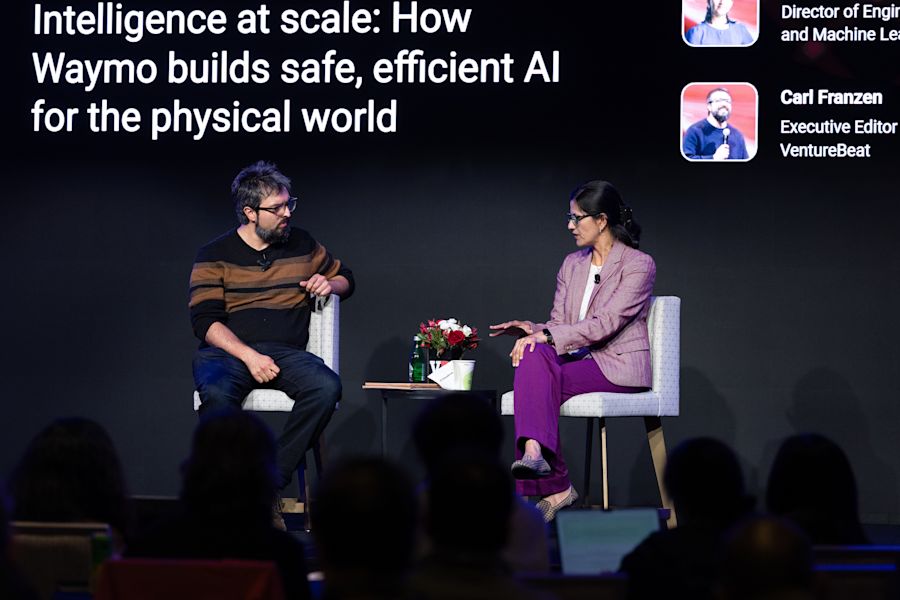
Waymo, Alphabet’s self-driving car division, faces unique challenges where AI performance directly impacts safety on the streets. Their approach to AI development prioritizes continuous and comprehensive evaluation over simply achieving strong model results. Manasi Joshi, Waymo’s director of engineering, shared insights on this at VB Transform 2026, highlighting their strategy of “eval-centric development.”
This means that a project’s readiness is judged by the maturity of its evaluations, not just the model’s output. Waymo conducts ongoing assessments during and after model training, combining real-world driving data with extensive simulations to ensure safety and effectiveness. Evaluations continue post-launch to adapt to evolving conditions and maintain high standards linked directly to key business outcomes.
Safety remains paramount, with detailed attention to rare and hazardous scenarios like construction zones and vulnerable road users. Human oversight remains crucial; automated systems do not make release decisions alone. Efficiency in computing resources is balanced carefully against reliability to meet growing demands without sacrificing quality.
Internally, AI agents assist engineering teams, and these agents themselves undergo rigorous testing to confirm accuracy and trustworthiness. Joshi emphasized that successful deployment of agentic AI depends on clear objectives, representative data, continuous evaluation, scalable infrastructure, and accountable human leadership to build and maintain trust.
Summary:
Waymo sets an industry benchmark by embedding continuous, rigorous evaluation into AI development, focusing on safety and trustworthiness beyond mere model performance. Their approach offers valuable lessons for enterprises deploying AI, emphasizing ongoing testing, human oversight, and linking evaluations to real-world outcomes.
Nimble, a New York-based tech startup, has announced its Web Search Agents, a new retrieval system aimed at improving the efficiency and accuracy of AI-driven web research. These agents specialize in domain-specific knowledge, leading to 21% more accurate results and a 51% reduction in token usage compared to other AI search solutions. Unlike generic search engines, Nimble's technology adapts to the unique needs of each enterprise, optimizing retrieval strategies through self-learning algorithms and proprietary web indexes. This approach reduces unnecessary data processing, shortens research paths, and enhances overall operational efficiency for tasks such as competitive intelligence, lead generation, and compliance. The platform is accessible via API, SDK, and Model Context Protocol, enabling seamless integration into existing workflows. Supported by partnerships with major firms like Microsoft and Oracle, Nimble's solution addresses the growing demand for specialized, cost-effective search capabilities in enterprise AI applications.

Bright Machines aims to tackle a critical challenge in AI infrastructure production: preserving quality data integrity when manual assembly is necessary. Their new Hybrid BRC (Bright Robotic Cell) integrates human operators into a sensor-monitored robotic system, maintaining a continuous digital record for every component during assembly. This innovation addresses a key weakness in current electronics manufacturing, where manual steps disrupt production data or halt lines entirely, leading to lower first-pass yields—which can be as low as 20% initially, versus over 98% through robotic assembly. By allowing human intervention without breaking data flow, the Hybrid BRC improves yield, traceability, and speeds up server deployment for hyperscalers. Bright Machines currently operates hybrid lines in the US, building thousands of compute nodes, and foresees significant growth driven by AI infrastructure demands and onshoring trends. Their approach combines automation with human flexibility, backed by robust data orchestration, setting them apart from competitors that only offer software or manual processes. The system also respects data ownership and worker privacy, emphasizing security for high-IP electronic manufacturing. Ultimately, Bright Machines is betting that the future of AI hardware manufacturing relies on seamlessly integrating humans and robots to boost yield and agility in response to rapidly evolving hardware needs.


The energy regulator Ofgem plans to introduce upfront fees or financial guarantees like letters of credit and bonds for datacentre projects connecting to Britain's power grid. This move aims to address the growing backlog in electricity connections by discouraging speculative projects that slow down the queue, which also affects critical infrastructure such as hospitals, schools, and housing developments.


Okta has acquired the AI security startup Permiso for about $200 million, enhancing its capabilities in identity threat detection. This acquisition comes as enterprises increasingly prioritize securing AI agents and other non-human identities in cloud environments, helping bolster cybersecurity defenses.

Tesla has reached a significant milestone by producing its 10 millionth electric vehicle. This achievement puts the company halfway to meeting one of the four key product goals set by Elon Musk, which is essential to unlocking his full $1 trillion compensation package.

British AI-focused cloud company Nscale has acquired Anyscale, a software startup specializing in helping businesses efficiently scale their AI workloads across multiple data centers and servers. This move aims to strengthen Nscale's position in the AI computing stack market.

Zoox, the autonomous vehicle division owned by Amazon, has secured a temporary exemption from federal safety regulators. This approval allows Zoox to begin charging customers for rides in its specially designed robotaxis, marking a significant step forward in commercial autonomous transportation.


The US government has imposed a ban on imports of humanoid robots manufactured in China, aiming to restrict China's presence in advanced robotics technology. In response, China’s commerce ministry condemned the move as discriminatory, stating it damages trade relations significantly. Beijing has vowed resolute retaliation, suggesting it might leverage its control over rare-earth materials, critical for tech manufacturing, to counter the US action.
