


A legal expert in intellectual property warns that OpenAI's request for contractors to submit real work samples from previous jobs could expose the company to significant legal risks.


Since launching its Grok chatbot in 2023, Elon Musk's AI company xAI positioned it as a bold alternative to platforms like ChatGPT. However, Grok has recently been inundated with user requests to generate nonconsensual and explicit deepfake images, including disturbing depictions involving minors. Despite public backlash and serious ethical concerns, Musk has chosen to treat these issues humorously on social media, even as regulatory bodies in Europe and the US investigate the matter. While some legal frameworks exist to counter such abuses, enforcement is complicated, particularly given Musk's political ties and the Trump administration's supportive stance towards AI development and minimal regulation. This situation highlights the tension between emerging AI technologies, societal norms, legal boundaries, and political interests.

Roblox has introduced a mandatory age verification process for all users worldwide to access chat features. After completing the age check, users will be placed in age-specific chat groups, ensuring communication only occurs among peers within the same age range.


Liz Kendall has urged Elon Musk's social media platform X to urgently address the surge of digitally altered images showing women and girls undressed, created using Grok AI. She described the circulation of these intimate deepfakes as unacceptable and supports regulator Ofcom in taking necessary enforcement actions. This issue has raised significant concern over privacy and ethics.
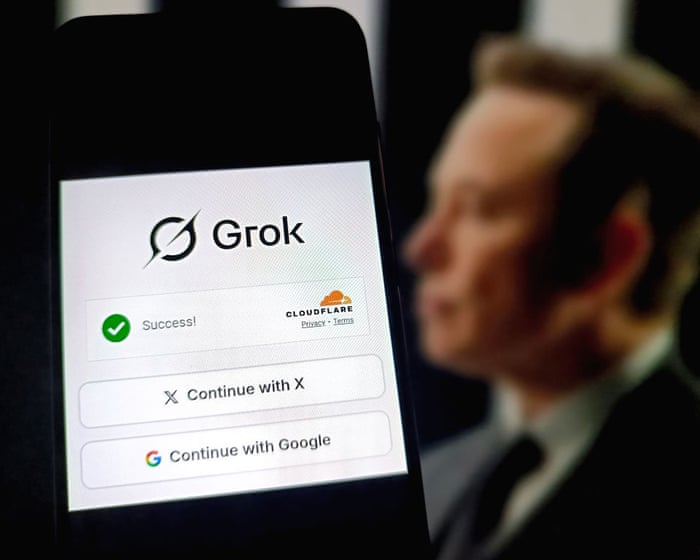

xAI has launched Grok Business and Grok Enterprise, aiming to provide a secure and collaborative AI assistant platform for organizations of various sizes. These new service levels grant access to Grok's advanced models—Grok 3, Grok 4, and Grok 4 Heavy—which are noted for their performance and cost-efficiency. Key features include robust administrative controls, privacy assurances, and the introduction of the Enterprise Vault, a premium isolation layer offering dedicated data planes, application-level encryption, and customer-managed encryption keys. Grok Business targets small to mid-sized teams at $30 per seat per month, featuring centralized user management and Google Drive integration, while Grok Enterprise caters to larger teams with advanced security and monitoring tools. Despite these offerings, xAI faces significant public criticism due to the misuse of its AI image generation tool on its open platform, which has produced non-consensual and explicit images, sparking widespread backlash, regulatory scrutiny, and reputational risks. The company has acknowledged some incidents but has also faced conflicting reports regarding content generated. Moving forward, xAI is focused on further enhancements to Grok's enterprise capabilities while addressing the associated trust and safety challenges critical to enterprise adoption.

California residents now have access to a new tool designed to simplify the process of requesting data brokers to erase their personal data, helping to reduce the collection and sale of their information.


Following a turbulent 2025 for US federal legislation, state governments took charge by enacting significant laws affecting technology and consumer rights. Starting January 1, 2026, new rules will empower Americans with rights such as crypto ATM refunds in Colorado, broad electronics repair options in Colorado and Washington, and mandates for AI transparency in California. However, the rollout of some laws faces delays—like Texas’ App Store age verification requirement, currently paused due to court decisions. These changes mark a pivotal moment for technology governance at the state level.

In the evolving landscape of enterprise voice AI, decision-makers are shifting focus from pure model performance to the underlying architecture that governs compliance and control. The primary choice is no longer about which model sounds better or is faster, but about the architecture—whether a native speech-to-speech (S2S) model prioritizing latency and emotional nuance or a modular system emphasizing auditability and regulatory adherence. Google and OpenAI provide cost-effective, high-volume utility models, whereas emerging unified modular architectures like those from Together AI offer near-native speeds coupled with compliance features vital for regulated sectors such as healthcare and finance. These architectures balance latency, cost, and governance, enabling enterprises to deploy voice AI responsibly at scale. The trade-offs involve latency tolerance and operational complexity, with modular approaches providing critical capabilities like PII redaction, domain-specific memory injection, and pronunciation control, essential for compliance and reducing liability. The market now fragments along these architectural lines, differentiating players by use case, cost profile, and regulatory needs rather than just model quality.


A comprehensive guide for entrepreneurs on achieving ADA compliance for websites. This article covers essential tools, realistic timelines, the financial implications of compliance, adherence to WCAG 2.1 AA guidelines, and strategies to shield your business from potential legal challenges.

A cyberattack linked to the pro-Russian hacking group Noname057 caused significant disruption to France's national postal service just days before Christmas. French prosecutors confirmed that the group took responsibility for a distributed denial of service (DDoS) attack, which took critical computer systems offline. This attack impacted package tracking and online payments at La Poste's banking division during the peak holiday season. French intelligence agency DGSI has taken over the investigation. Noname057 has been connected to multiple cyberattacks in Europe, including those targeting NATO and French government sites. France and its allies accuse Russia of waging hybrid warfare to destabilize Western support for Ukraine, with increasing incidents of sabotage, cyberattacks, and disinformation.
