


The promise of AI in drug discovery is substantial but often exaggerated. For example, at Novartis, researchers are using generative AI to design millions of compounds targeting Huntington's disease. Despite these advances, significant diseases like Alzheimer's remain without effective cures, illustrating that technological breakthroughs alone haven't solved the most pressing health challenges. Meanwhile, caution is advised as even health chatbots have shown risks, reinforcing the complexity of medical innovation.

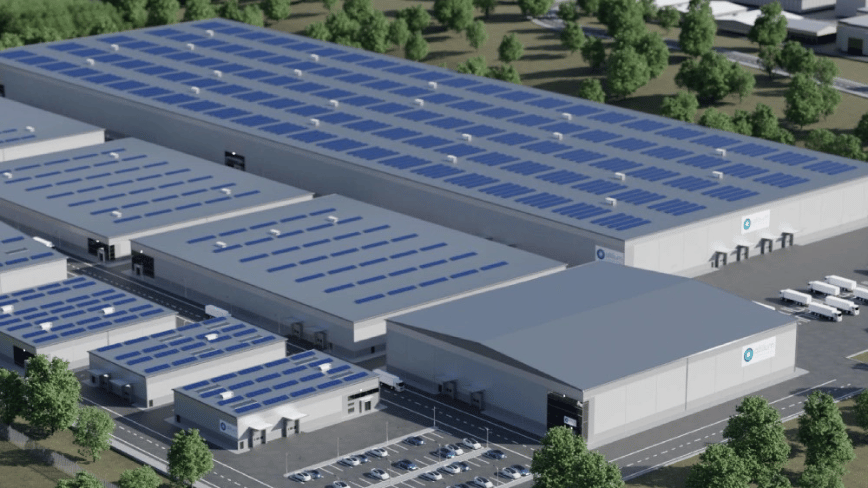
Altilium, a UK-based clean tech firm, has been awarded £18.5 million through the government’s DRIVE35 Scale-Up Fund to develop ACT3, the nation’s inaugural commercial facility dedicated to reclaiming vital minerals from used electric vehicle batteries. Situated in Plymouth, Devon, this plant will recycle 24,000 EV batteries annually by employing Altilium’s innovative EcoCathode™ technology.

Emerging technologies often seem overly hyped because the initial surge of public interest precedes the actual, profound changes those technologies bring about in the underlying systems.


Presented by AWS
Autonomous agents are revolutionizing software development by drastically reducing delivery timelines from weeks to days. The future belongs to enterprises that adopt spec-driven development, a methodology where agents work from a detailed and structured specification defining system behavior and correctness before writing any code.
The shift to spec-driven development raises the quality and reliability of AI-generated code by providing a trust model for autonomous agents. Specs function as a continuous reference point, enabling agents to generate, test, and verify code with automated, property-based testing that explores edge cases beyond human-written tests.
This approach supports continuous autonomous development, where agents self-correct through iterative build and test cycles anchored by the specs. Developers currently using these methods run multiple agents concurrently, writing and refining specs to direct the agents’ work—turning complex problems tractable and shortening development cycles significantly.
Infrastructure advancements now allow these agentic workloads to execute at scale in the cloud with robust governance, cost control, and reliability. As agent capabilities grow rapidly, with anticipated tenfold improvements within a year, spec-driven development is becoming the cornerstone of enterprise autonomous software systems.
Deepak Singh, VP of Kiro at AWS, highlights how these technologies empower developers to think systemically and collaborate with agents, fundamentally transforming how software is built in the enterprise.
Summary:
Autonomous agents combined with spec-driven development are transforming enterprise software delivery by ensuring code quality and enabling continuous self-verification. This approach reduces timelines dramatically, supports multi-agent collaboration, and runs at scale in the cloud with enterprise-grade infrastructure, marking a paradigm shift in software engineering.


Amanda Forrester, SVP of Marketing and Communications at OpenX, explains how artificial intelligence is elevating marketing to the heart of business strategy. Marketing plays a crucial role in shaping how companies are discovered, understood, and trusted by both consumers and the AI systems influencing their choices. This shift has significantly broadened marketing’s influence within organizations.


The U.S. Department of Agriculture (USDA) has announced plans to integrate xAI’s Grok chatbot across various agency applications, moving forward amid significant safety and ethical concerns that have surrounded the AI tool. Grok has faced scrutiny following incidents involving inappropriate and harmful responses, including antisemitic remarks and misuse for generating nonconsensual images. Despite such setbacks and slow adoption by other federal agencies due to safety reviews and government evaluations, USDA is sponsoring Grok's participation in the FedRAMP authorization process, aiming to ensure compliance with government cybersecurity and privacy standards. The USDA plans to use Grok as an optional resource for internal data analysis, research, and operational tasks, positioning it alongside other AI tools like Copilot and OpenAI models, focusing on agricultural and scientific applications.


Microsoft is experimenting with integrating features inspired by OpenClaw—an open-source platform for AI agents that operate locally—into its Microsoft 365 Copilot assistant. This move aims to enable the Copilot to function independently, running continuously to complete tasks for users without constant input. Omar Shahine, corporate vice president at Microsoft, confirmed the company is investigating how technologies like OpenClaw might be applied in enterprise environments. The initiative reflects Microsoft's broader ambition to enhance productivity through more autonomous AI assistance.


In the first quarter of this year, Asia's startup funding surged to its highest point in over three years, largely propelled by a revival in Chinese venture capital. Investors allocated $27.4 billion across seed to growth-stage funding rounds, marking a 20% increase from the previous quarter and nearly doubling compared to last year. Most funding flowed into larger rounds, with deal counts remaining stable. China led the charge, receiving $16.5 billion, about 60% of the region's total, mainly fueled by AI-focused ventures. India followed with $3.8 billion, including a significant $600 million AI investment. Funding rose across all stages, especially later-stage rounds, with notable investments like Singapore's $2 billion Series C for DayOne. Early-stage investments also peaked at $11.2 billion, and seed funding climbed 85% year-over-year. AI startups attracted a record $11.2 billion, highlighting AI's prominence in the market. Overall, the quarter reflects growing momentum in China's and other Asian countries' startup ecosystems, signaling a positive outlook for innovation and investment in the region.

Microsoft has introduced MAI-Image-2-Efficient, a new variant of its flagship text-to-image AI model that offers production-quality results at nearly half the cost and 22% faster performance compared to its predecessor. Available now in Microsoft Foundry and MAI Playground without a waitlist, this efficient model is designed to support high-volume, budget-sensitive use cases such as product photography, marketing assets, UI mockups, and real-time applications. It features improved throughput efficiency on NVIDIA H100 hardware and outperforms several competing models on latency benchmarks. Microsoft's strategy pairs this cost-effective model with its original MAI-Image-2, targeting different enterprise needs. This launch arrives amid Microsoft’s push to develop proprietary AI models and reduce reliance on OpenAI, reflecting a broader organizational shift and a vision for agent-driven AI workflows in future productivity tools. While the new model addresses speed and cost, some questions remain about content filtering and output constraints. The development marks a notable milestone as Microsoft accelerates its AI capabilities, aiming to lead in scalable, cost-efficient image generation.

A recent viral post by ex-Google engineer Steve Yegge sparked debate about AI adoption within Google. Yegge relayed a Googler friend's view that internal AI use splits into three groups: 20% reject AI tools, 60% use basic assistants, and 20% employ advanced agentic AI extensively. This portrayal of uneven and less transformative AI uptake drew pushback from Google's AI leaders. Demis Hassabis, CEO of DeepMind, called the claims "absolute nonsense," while other Googlers highlighted widespread use of advanced AI tools internally, citing tens of thousands of engineers using them weekly. Yegge defended his stance, emphasizing deeper integration of AI in workflows as the true measure of adoption, suggesting Google may still lag in this regard. The controversy underscores differing views on what meaningful AI adoption means: broad tool usage vs. profound change in engineering practices. Google's response reflects a sensitive tension between public perception and internal AI culture, with veteran voices on both sides.
