A team of university researchers has introduced Memento-Skills, a pioneering framework that allows AI agents to autonomously update and expand their skills without needing to retrain their core language models. This groundbreaking approach uses an evolving external memory composed of structured markdown skill files, which the AI refines through a cycle of execution, feedback, and self-modification using a mechanism called Read-Write Reflective Learning. Unlike traditional methods that rely on static skill libraries or simple text-based retrieval, Memento-Skills retrieves and upgrades skills based on actual performance and utility, significantly improving task success rates. In benchmarks such as GAIA and Humanity's Last Exam, this system demonstrated substantial gains, including a 13.7-point accuracy improvement and more than doubling performance in complex academic tasks. This technology is especially promising for enterprise applications involving structured workflows, as it reduces operational costs linked to retraining and manual skill updates. To ensure stability and security, automated skill updates undergo rigorous testing before implementation. The researchers have made the code available on GitHub, inviting further exploration and adoption in practical settings.


Venture capital investor Will McKelvey shared insights with Inc. on his strategy to leverage the less obvious but impactful opportunities stemming from AI's ripple effects, emphasizing the potential of 'unsexy' yet smart ideas.


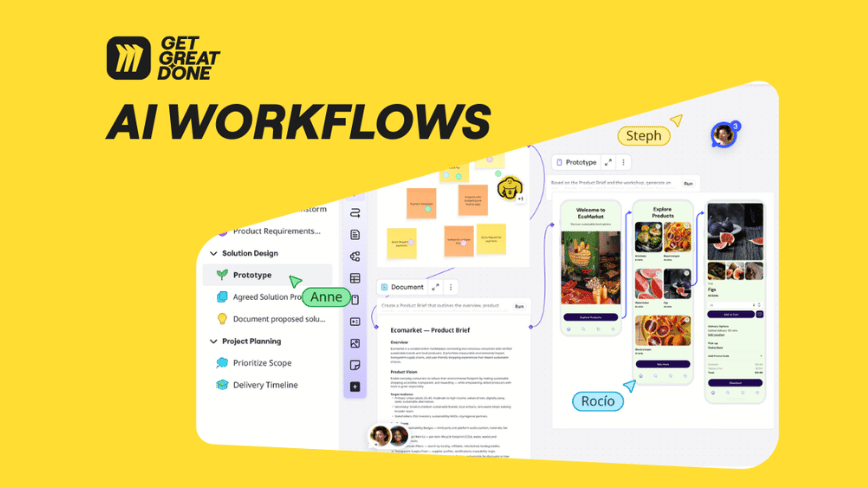
There's a unique frustration in having to re-explain the context your team spent days developing on a whiteboard to an AI. Usually, you have to transfer sticky notes, describe diagrams, and clarify relationships that were clear when everything was visually arranged. Now, AI agents integrated directly with your team's whiteboard know the context from the start, eliminating that tedious process.
Verne, an autonomous mobility company originating from Croatian electric hypercar manufacturer Rimac Group, officially began offering commercial robotaxi rides in Zagreb on April 8. The service, which operates with onboard safety drivers, was launched in partnership with Pony.ai and Uber. Meanwhile, Waymo has announced plans to introduce its robotaxi service in London by the fourth quarter of 2026.

Meta has introduced Muse Spark, its inaugural AI model from Meta Superintelligence Labs, established by Alexandr Wang. Developed over a nine-month period following Meta's $14.3 billion investment in Scale AI, Muse Spark is a fully multimodal model featuring a new “Contemplating” reasoning mode that runs multiple sub-agents simultaneously to enhance performance. This closed-source release marks a significant step in Meta's AI advancements.
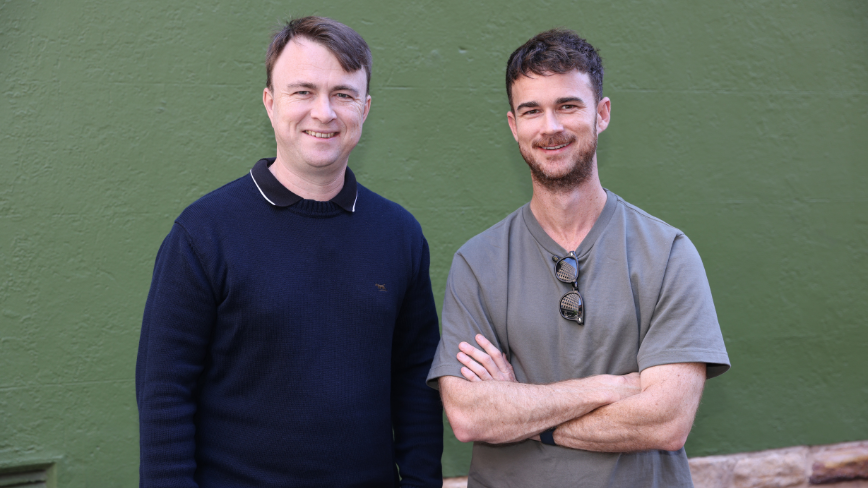
Brothers Chris and Mike Sharkey, also known for founding the Australian holiday rental platform Stayz, built both Simtheory and Ortto. Canva has acquired these two companies—Simtheory, an innovative AI-driven collaboration platform, and Ortto—to drive its most significant transformation yet, which it plans to unveil at Canva Create on April 16. Financial details of the deal were not made public. This strategic move aims to transition Canva from a design tool into a full-fledged end-to-end work platform.

Confluence introduces new capabilities allowing users to generate visual content directly within the platform. Additionally, the software now supports third-party agents from Lovable, Replit, and Gamma, enhancing workflow and collaboration.
OpenAI has introduced a $100 monthly ChatGPT Pro subscription aimed at developers and AI programmers, featuring usage limits on Codex that are five times larger than those of the $20 Plus plan. This new tier supplements OpenAI's existing lineup, including free, Go ($8), Plus ($20), and Pro ($200) plans, plus organizational offerings like Business and Enterprise subscriptions. The firm's CEO, Sam Altman, highlighted the growing demand for more robust Codex capabilities as the driving force behind this launch. However, OpenAI is concurrently adjusting ChatGPT Plus limits to encourage more frequent, shorter AI interactions rather than prolonged daily sessions. Detailed limits for local messages and cloud tasks vary by AI model, with tiers including ChatGPT Plus, Pro 5x, and Pro 20x, the latter offering exclusive experimental features for professional users. This strategy arrives amidst rising competition from Anthropic, whose rapid revenue growth and subscription restrictions have reshaped the competitive landscape in autonomous AI coding. OpenAI’s move to increase capacity and onboard key figures from the OpenClaw community aims to solidify its position as the leading platform for AI-assisted software development.


HappyHorse 1.0 quickly rose to the top of the Artificial Analysis leaderboard, showcasing impressive AI capabilities. This achievement has paved the way for a significant $293 million funding round, led by Alibaba, to support the growth of this promising Chinese AI startup.
Gary Leyden, CEO of InsTech.ie, highlights how artificial intelligence is opening up new possibilities for the insurance industry in Ireland, urging stakeholders to embrace the technology rather than hesitate. He discusses the potential impacts and benefits AI can bring to insurers and customers alike.