


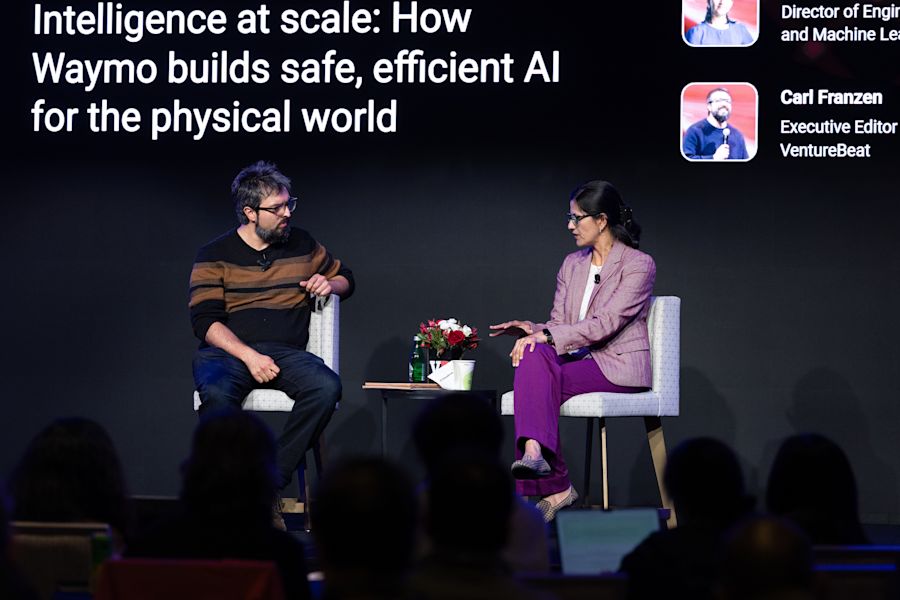
Waymo, Alphabet’s self-driving car division, faces unique challenges where AI performance directly impacts safety on the streets. Their approach to AI development prioritizes continuous and comprehensive evaluation over simply achieving strong model results. Manasi Joshi, Waymo’s director of engineering, shared insights on this at VB Transform 2026, highlighting their strategy of “eval-centric development.”
This means that a project’s readiness is judged by the maturity of its evaluations, not just the model’s output. Waymo conducts ongoing assessments during and after model training, combining real-world driving data with extensive simulations to ensure safety and effectiveness. Evaluations continue post-launch to adapt to evolving conditions and maintain high standards linked directly to key business outcomes.
Safety remains paramount, with detailed attention to rare and hazardous scenarios like construction zones and vulnerable road users. Human oversight remains crucial; automated systems do not make release decisions alone. Efficiency in computing resources is balanced carefully against reliability to meet growing demands without sacrificing quality.
Internally, AI agents assist engineering teams, and these agents themselves undergo rigorous testing to confirm accuracy and trustworthiness. Joshi emphasized that successful deployment of agentic AI depends on clear objectives, representative data, continuous evaluation, scalable infrastructure, and accountable human leadership to build and maintain trust.
Summary:
Waymo sets an industry benchmark by embedding continuous, rigorous evaluation into AI development, focusing on safety and trustworthiness beyond mere model performance. Their approach offers valuable lessons for enterprises deploying AI, emphasizing ongoing testing, human oversight, and linking evaluations to real-world outcomes.
Enterprise AI agents are capable of performing tasks independently, but the infrastructure enabling them to communicate, ensure trustworthiness, and be audited effectively is still emerging. Five innovative startups are addressing this crucial gap by focusing on orchestration, observability, secure connectivity, and governance, as showcased at VB Transform 2026.
BAND is developing a coordination system that allows multiple AI agents to interact seamlessly and collaborate in real time, solving the challenge of digital isolation among agents. This allows human users to monitor live tasks and workflows conducted by agents.
Conifers empowers cybersecurity defenders to operate at machine speed against increasingly sophisticated attacks by integrating various defense components into a unified, agent-driven system that drastically reduces response times.
Raindrop AI tackles the complexity and critical failure risks of long-running AI agents by creating an audit log platform that detects issues, simulates fixes before deployment, and provides transparent notifications to users.
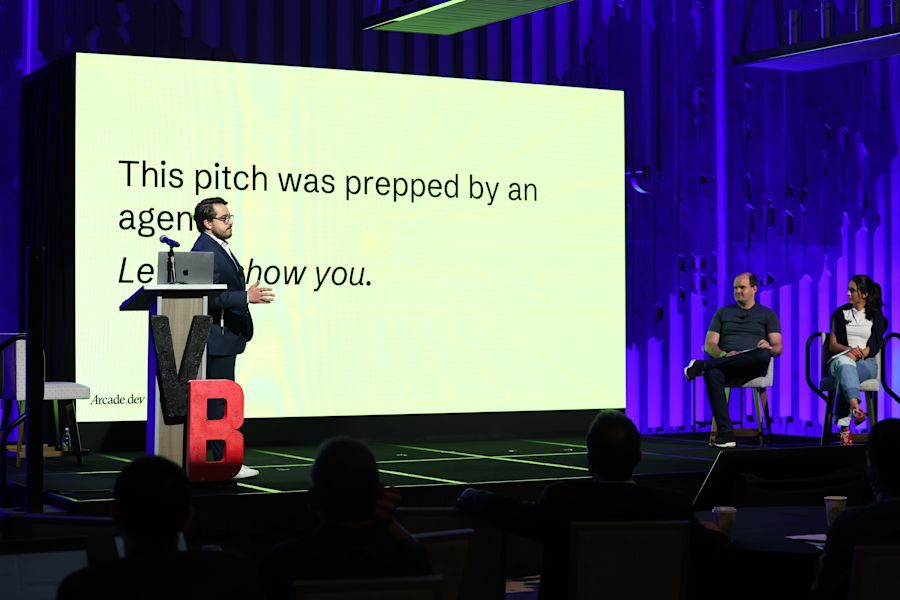
Arcade.dev ensures AI agents operate within strict security frameworks by providing an authorization and observability layer that meets enterprise-grade security standards, enabling safe execution of tasks with minimal privileges.
Omilia enhances enterprise customer experience by merging control and speed in its AI platform, offering a self-learning, agent-based system that continuously improves through real customer interaction data, significantly boosting efficiency and revenue.
Together, these startups are laying the foundation for enterprise AI agents to work more effectively, securely, and transparently across industries.
Nimble, a New York-based tech startup, has announced its Web Search Agents, a new retrieval system aimed at improving the efficiency and accuracy of AI-driven web research. These agents specialize in domain-specific knowledge, leading to 21% more accurate results and a 51% reduction in token usage compared to other AI search solutions. Unlike generic search engines, Nimble's technology adapts to the unique needs of each enterprise, optimizing retrieval strategies through self-learning algorithms and proprietary web indexes. This approach reduces unnecessary data processing, shortens research paths, and enhances overall operational efficiency for tasks such as competitive intelligence, lead generation, and compliance. The platform is accessible via API, SDK, and Model Context Protocol, enabling seamless integration into existing workflows. Supported by partnerships with major firms like Microsoft and Oracle, Nimble's solution addresses the growing demand for specialized, cost-effective search capabilities in enterprise AI applications.

Bright Machines aims to tackle a critical challenge in AI infrastructure production: preserving quality data integrity when manual assembly is necessary. Their new Hybrid BRC (Bright Robotic Cell) integrates human operators into a sensor-monitored robotic system, maintaining a continuous digital record for every component during assembly. This innovation addresses a key weakness in current electronics manufacturing, where manual steps disrupt production data or halt lines entirely, leading to lower first-pass yields—which can be as low as 20% initially, versus over 98% through robotic assembly. By allowing human intervention without breaking data flow, the Hybrid BRC improves yield, traceability, and speeds up server deployment for hyperscalers. Bright Machines currently operates hybrid lines in the US, building thousands of compute nodes, and foresees significant growth driven by AI infrastructure demands and onshoring trends. Their approach combines automation with human flexibility, backed by robust data orchestration, setting them apart from competitors that only offer software or manual processes. The system also respects data ownership and worker privacy, emphasizing security for high-IP electronic manufacturing. Ultimately, Bright Machines is betting that the future of AI hardware manufacturing relies on seamlessly integrating humans and robots to boost yield and agility in response to rapidly evolving hardware needs.


Antora Energy, specializing in thermal battery solutions for data centers, has successfully raised $550 million in a Series C funding round. Co-led by G2 Venture Partners and Eclipse, this financing included prominent investors such as Decarbonization Partners, Lowercarbon Capital, and Breakthrough Energy Ventures. Since its founding in 2017, Antora, based in San Jose, California, has now raised $770 million. The fresh capital will accelerate large-scale battery storage projects nationwide to address the rising energy demands fueled by AI growth. Antora recently commissioned a 5-gigawatt-hour thermal battery system in South Dakota, one of the largest globally, using innovative technology that stores electricity as heat in solid carbon blocks to provide continuous clean energy. The company’s factory-built modules are versatile, serving industries like chemical, food production, steel manufacturing, and data centers without reliance on scarce minerals or long construction times. CEO Andrew Ponec emphasizes that Antora’s approach can break energy supply bottlenecks and support industrial expansion with American innovation. This funding round represents a significant cleantech investment amidst a period of modest venture activity in the sector.


Simile, a synthetic-user startup, has quickly ascended into the AI unicorn ranks, securing $200 million at a $2 billion valuation just five months after a $100 million Series A funding round. This rapid growth underscores the company's rising prominence in the AI space.

Tesla has reached a significant milestone by producing its 10 millionth electric vehicle. This achievement puts the company halfway to meeting one of the four key product goals set by Elon Musk, which is essential to unlocking his full $1 trillion compensation package.

Meta's CEO Mark Zuckerberg revealed that AI is significantly simplifying the creation and launch of new consumer apps. He informed investors that the company is planning to introduce several new consumer products in the near future, emphasizing AI's role in accelerating innovation.

Commonwealth Fusion Systems has successfully raised $1 billion in funding as it progresses toward building its first commercial fusion power plant, marking a significant milestone in the development of clean energy technology.

Zoox, the autonomous vehicle division owned by Amazon, has secured a temporary exemption from federal safety regulators. This approval allows Zoox to begin charging customers for rides in its specially designed robotaxis, marking a significant step forward in commercial autonomous transportation.
