Understanding the significance of clarity, decision rights, and consistency reveals why these elements are fundamental to effective governance. Unlike mere hustle, which focuses on speed and effort, healthy governance provides structured advantages that ensure sustainable success and sound decision-making.


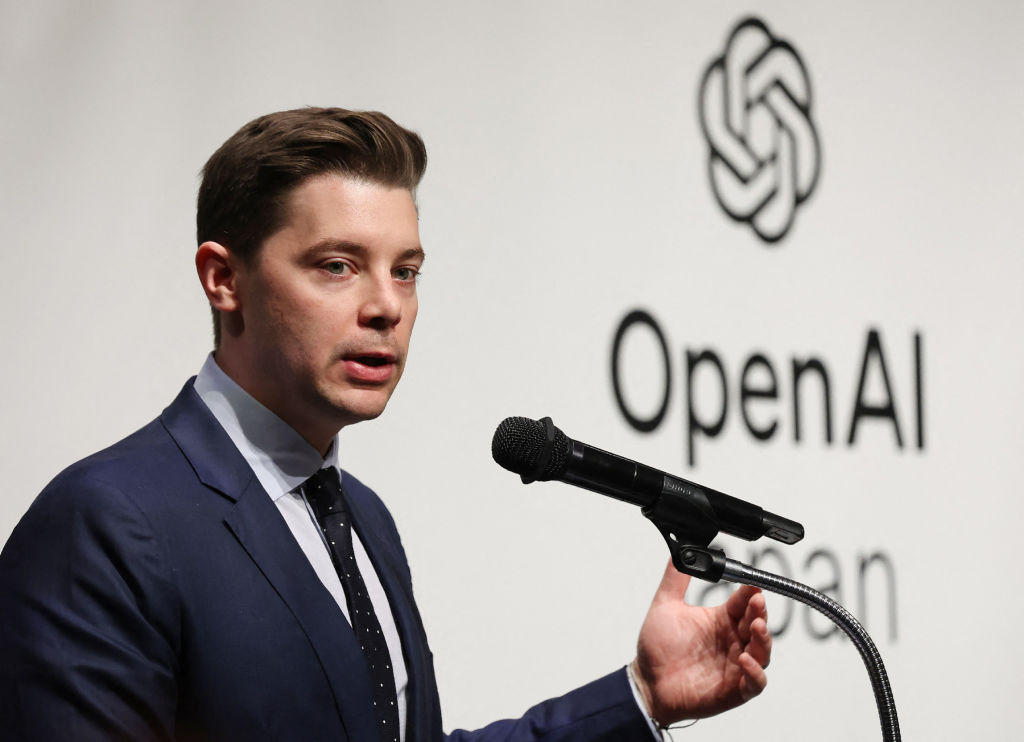
OpenAI has restructured its executive team, assigning COO Brad Lightcap to oversee special projects within the company. Meanwhile, CMO Kate Rouch will be temporarily stepping away to focus on her cancer recovery, with plans to return once she is able.

Carolyn Geason-Beissel of MIT Sloan Management Review and Minneapolis Institute of Art explores how generative AI is shifting organizational priorities from merely increasing production speed to mastering systematic learning from AI outputs. AI now dramatically lowers the cost of initial drafts, code, and prototypes, but the real value lies in how organizations evaluate and learn from these outputs to improve future iterations. Companies that establish feedback systems to verify, evaluate, and capture insights from AI outputs experience substantial financial benefits and improved organizational learning. This process, termed “return on iteration,” relies on creating infrastructure to support ongoing improvement. By employing specialists as evaluators rather than just producers, and embedding mechanisms for verification and learning capture into workflows, firms can transform AI interactions into compounding assets. Examples include practices like automated self-verification in AI coding and evolving marketing strategies based on feedback loops that refine brand messages continuously. Leaders are urged to measure the learning cycle itself, not just output metrics, to fully realize AI's potential for organizational growth. The central message: AI's promise is best fulfilled not through consumption but through persistent learning and iteration, making expert judgment and infrastructure investment critical to gaining a competitive edge.


Lean In, the organization founded by Sheryl Sandberg, is addressing the gender gap in AI adoption in professional environments. Their recent study reveals that while 78% of men have used AI at work, only 73% of women have done so, with men engaging more frequently in daily AI use. This disparity may increase over time if unaddressed. Women tend to be more cautious about ethical concerns related to AI, fearing perceptions of cheating and questions of accuracy and ethics, which can deter their usage. Furthermore, the workplace environment often encourages men more than women to utilize AI tools, with men receiving greater recognition for their usage. These biases and workplace dynamics contribute to a widening gap. Prior research supports these findings, showing women are generally less likely to adopt generative AI and often find themselves in roles vulnerable to AI disruption while being underrepresented in AI-augmented positions. Lean In emphasizes the need for employers to actively bridge this gap to prevent women from being left behind in the AI evolution.


Behind the constant heroics and last-minute saves, there’s often a deeper execution issue that leaders fail to address.
The necessity for continuous learning in the workplace has always existed, but the way we approach and facilitate learning needs to evolve. Embracing mistakes as valuable learning opportunities is key to fostering growth and innovation within teams.

Common beliefs hold that as burnout increases, individuals reduce their effort. However, recent research reveals a surprising pattern that challenges this assumption.

If your business feels stagnant, the first step is self-reflection—how you lead shapes everything.

Work-life balance isn't a fixed goal but an ongoing process of adjustment and compromise.

As a company grows, it's crucial for the founder to empower the team to operate independently and make decisions without constant oversight.