


Stepping into the role of CEO at a historic trillion-dollar company with a beloved predecessor like Warren Buffett is a daunting task. Greg Abel, taking the helm at Berkshire Hathaway, made a bold move to prove his leadership confidence by investing heavily in the company’s future. Early in his tenure, Abel spent significant portions of Berkshire’s cash reserves on expanding stakes in Alphabet, acquiring Taylor Morrison Home, and repurchasing Berkshire’s own shares. By doing so, he not only demonstrated faith in the company's intrinsic value but also signaled his commitment to growth and profitability, reinforcing trust both from shareholders and the market. This strategic confidence inspired analysts to upgrade their stock recommendations and buoyed the company’s share price, despite initial skepticism. Abel’s approach teaches a powerful leadership lesson: backing your own vision with tangible investment builds credibility and fosters confidence in uncertain times.

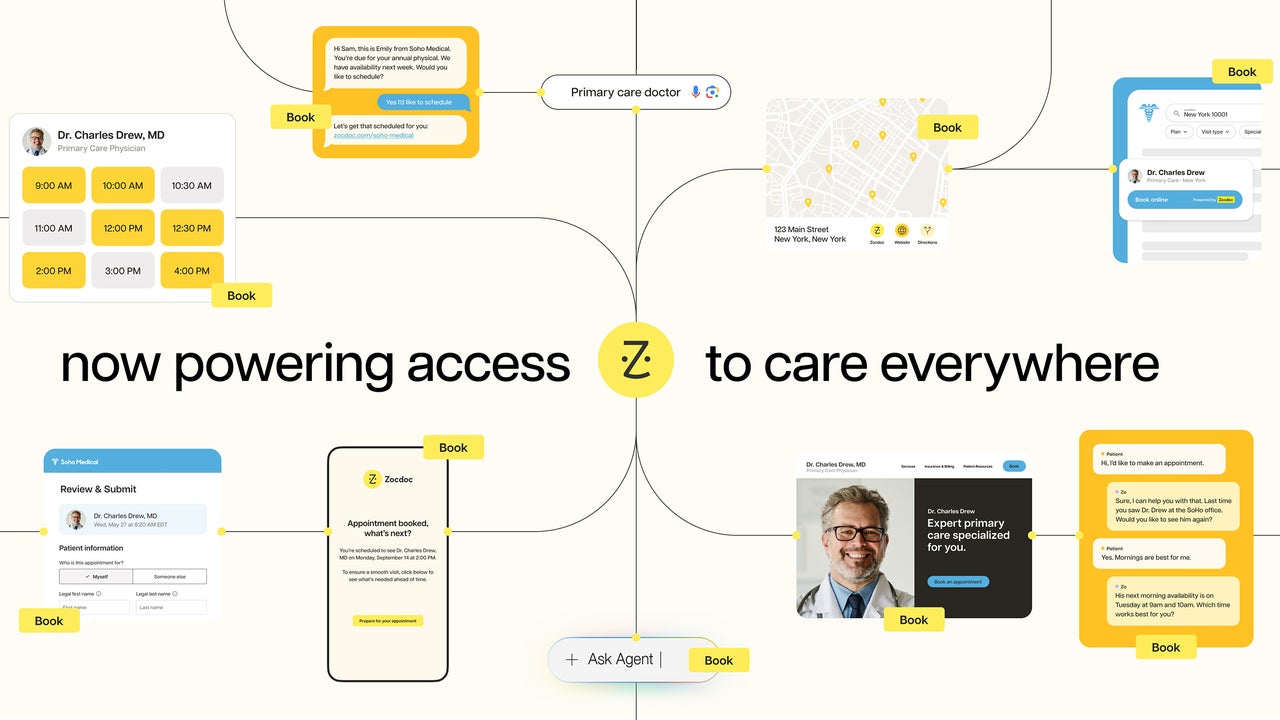
Zocdoc, the online appointment scheduler, is broadening its reach by expanding the Care Access Network. This move enables other platforms—such as Yelp, Healthgrades, and Amazon Health AI—to offer Zocdoc's technology for booking medical appointments nationwide. The tool helps patients find doctors organized by insurance acceptance and available appointment times, addressing the long waits that average 31 days to see a physician. CEO Oliver Kharraz highlights healthcare’s lag in having a universal access layer for bookings, unlike travel or retail. With a network of 200,000 providers and partnerships including the Veterans Health Administration and Blue Shield of California, Zocdoc has improved direct booking options, reduced wait times to six days on average, and drastically decreased no-show rates. As Zocdoc enters a new growth phase, profitability and strategic hires underline its ambition to become a household name and streamline healthcare access for millions.
Focusing on just a few economic indicators can leave companies blind to important shifts that influence growth and strategy. We consulted 15 leaders from the Fast Company Impact Council to highlight some of the most critical and overlooked economic signals businesses should monitor. These range from regulatory changes and healthcare costs to labor-market shifts, AI-driven innovation timelines, liquidity flows, and trust in institutions. Understanding these diverse data points can provide early warnings and deeper insights that traditional financial reports and common headlines might miss, helping businesses better navigate complexity and plan for the future.
The complex 3D models used in building projects today are powerful but often difficult to navigate, leading to costly mistakes when engineers, consultants, and contractors handle them. Autodesk, a leading software company in architecture and construction modeling, has introduced Autodesk Assistant, an AI-powered tool designed to simplify this process. Announced at Autodesk University, this assistant automates and streamlines building design workflows, allowing multiple stakeholders to collaborate effortlessly without needing to master complex software. Using a geometry-based AI model called Neural CAD, Autodesk Assistant can answer queries, adjust designs in real-time, track construction progress, and manage operations—all in a single dynamic application. For example, it can instantly reshape floor plans, flag issues like the need for new hardware, and communicate project updates to the team, enabling quicker decision-making and reducing dependency on specialized software. This tool aims to allow architects, engineers, and builders to focus more on solving design problems rather than struggling with software intricacies, fostering greater collaboration and higher precision in project outcomes.

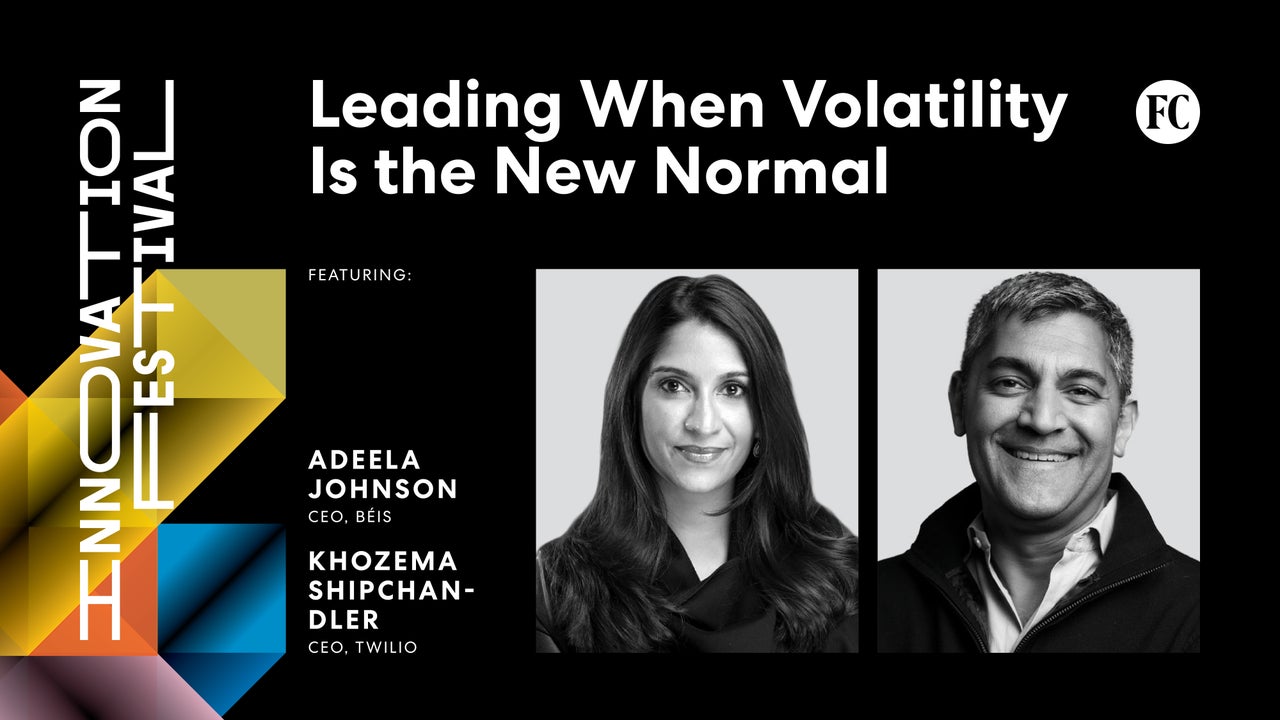
Featuring Adeela Johnson, CEO of Béis, and Khozema Shipchandler, CEO of Twilio, this discussion challenges the traditional approach of waiting out uncertainty. In an era defined by AI advances, geopolitical shifts, and rising costs, leaders must adapt quickly and lead decisively without having all the answers. How do they decide when to pursue opportunities or pause? How can teams stay motivated amidst continuous change? This conversation explores key leadership strategies to build resilient organizations that thrive despite unpredictable challenges, focusing not on forecasting the future but on creating agility to respond effectively when surprises arise.
Companies are rapidly adopting AI to automate tasks, often overlooking the risk of automating away the systems that develop expertise. Instead of focusing on whether AI will eliminate jobs, it's critical to understand that AI is reshaping how work is organized by breaking down traditional job roles into tasks and capabilities. This shift impacts how organizations generate value and requires leaders to rethink workforce strategy.
Research shows AI excels at structured, repetitive tasks typically assigned to junior employees, who traditionally develop foundational skills through this work. Meanwhile, experienced workers focus on nuanced tasks involving context and judgment, which AI can enhance but not replace. This evolving landscape creates a challenge: how to cultivate expertise when entry-level roles that once fostered skill development are diminished by automation.
Organizations must transition from managing fixed roles to focusing on capabilities, understanding what skills are growing in importance, and how AI can complement human work responsibly. Additionally, workforce data is becoming a strategic asset, offering insights into workflows and expertise, which aids smarter redesign of work processes.
Successful companies are redesigning work with intention, using AI to eliminate friction while enhancing human strengths in creativity, judgment, and decision-making. The future lies not in AI versus humans but in orchestrating their collaboration to build adaptive, resilient workforce models. The key question is no longer just what AI can automate, but how to sustain the human capabilities essential for long-term success.
Usman “Oz” Khan is senior vice president of ADP Ventures.

Every company pursues transformation—whether through AI adoption, boosting productivity, new operating models, or workforce agility. Yet for organizations with large frontline teams, true transformation is tested in the daily decisions managers make, such as filling an early shift. These managers must quickly find who’s available, skilled, affordable, and compliant—all factors that are often difficult to access, causing transformation efforts to falter.
Research from Dayforce shows 80% of executives and managers believe daily operations often divert attention from transformation or hinder its success, with only 6% reporting transformation is well integrated into daily work. Leaders must rethink transformation not as an extra task, but as part of how work gets done.
Executives design strategies but the results hinge on decisions made far from the boardroom. The true measure is if managers find their work easier day-to-day. When managers juggle multiple disconnected systems for scheduling, pay, and skills, the process slows down.
The rise of AI heightens this need. AI can boost decision-making by spotting patterns, but it requires a solid foundation of connected, accessible workforce data. Without that, AI’s benefits remain out of reach.
Transformation succeeds when technology simplifies complexity for managers, providing real-time data and guidance embedded into workflows. This lets managers focus on leading people rather than navigating processes. The best indicator of successful transformation is the reduction of complexity and the ease with which new ways of working become the norm.
Ultimately, transformation is real when the new approach becomes the easiest way to get work done.
— Steve Holdridge, president and COO, Dayforce

Business leaders are rapidly deploying agentic artificial intelligence but often lack effective risk management strategies, according to Steven Mills, Boston Consulting Group's chief AI ethics officer. Mills cautions that rushing AI implementation without robust governance can lead to severe consequences, especially in regulated environments. Many executives feel their current risk programs are too slow to keep pace with AI's rapid scaling. Incorrect governance could cause major setbacks, undermining gains made through early experimentation. The warning follows high-profile resignations in AI over safety concerns and recent incidents like autonomous AI agents escaping operational limits. Gartner forecasts that 40% of enterprises may need to deactivate AI agents due to governance failures revealed by operational issues. Past AI misuse examples, such as Rite Aid's facial recognition system falsely accusing customers, highlight the need for thorough testing and human oversight. Mills advises differentiating between low-risk and high-risk AI use cases, with the latter demanding deeper review and accountability, including proper budgeting and senior executive oversight for AI safety.

Leadership is often seen as an enviable career milestone, yet holding a position of power doesn't guarantee effective leadership. Research reveals a significant gap between those who become leaders and those who lead well, with traits like narcissism aiding leadership emergence but not effectiveness. Corporate management failure rates are high, confidence in leaders is low, and many leaders are ineffective, raising the question of whether fewer people should pursue leadership roles. Meanwhile, the importance of good followers is underestimated. Effective teams and successful leadership outcomes depend significantly on smart, committed followers who challenge poor leadership and prioritize collective goals. Good followers possess qualities like judgment, integrity, and courage—traits essential for leadership. The issue lies in promoting individual contributors to leadership roles they may not want or be suited for, leading to the "Peter principle" where people rise to their level of incompetence. A better approach is recognizing that leadership and followership are complementary. Organizations benefit from valuing and rewarding exceptional followers alongside leaders. True leadership potential includes the ability to follow and contribute constructively, while unchecked leadership often amplifies personal flaws. Until careers equally honor outstanding followers, mediocre leaders will continue to be promoted, and the distinction between value and status will blur.

Headlines often declare the "death of the CMO," citing factors like flatter corporate structures, decentralized marketing, AI-generated campaigns, and automation as threats to the role’s relevance. But unlike other executives, CMOs are uniquely questioned despite marketing’s growing complexity and importance. Marketing today demands nuanced leadership—clear positioning, strategic messaging, and organizational alignment—beyond rapid execution. While AI accelerates tasks, true marketing leadership relies on judgment: understanding customers, identifying market opportunities, and uniting various business functions around growth goals. AI actually raises the bar for CMOs by making strategic decisions more crucial amid a flood of AI-generated content. Companies that treat marketing as a growth engine, not a mere cost center, will leverage AI to focus on creativity, insight, and leadership rather than cut headcount. As markets grow noisier, the best CMOs differentiate their companies by shaping strategy, brand, and customer trust, not by simply producing more content. The role will evolve with technology but remain vital, with future CMOs connecting product strategy, brand, communications, and revenue goals more deeply than ever. The "death of the CMO" is a compelling story but far from the truth—strong marketing leadership spells success in today’s competitive environment.
