Trust in business isn't lost; it's evolving. As AI becomes integral, people redefine credibility standards. Mission North's 2026 Brand Expectations Index, surveying over 1,500 U.S. adults and knowledge workers, reveals surprising shifts in trust-building. Key findings include: mere visibility of leaders no longer equates to trust; generational differences deeply influence where trust is earned—with younger audiences favoring social platforms like YouTube and TikTok, while older generations lean towards traditional media; AI both challenges and reinforces trust, hinging on transparency about its use; sometimes silence is wiser than premature communication in crises; and ultimately, substance and accountability outshine biases. Leaders must prioritize expertise, transparency in AI, and clear, value-driven messaging, as the future of trust lies not in visibility but in responsibility and authenticity.

Following the launch of new AI products, security experts and hackers alike rapidly challenge these systems, attempting to bypass safeguards and manipulate outcomes, from unsafe content to instructions for harmful activities. Recent controversies highlight AI's tangible risks, such as its links to mental health problems, creation of nonconsensual fake imagery, and enabling cybercriminals. Beyond public releases, Microsoft's AI Red Team proactively stress-tests AI models internally, simulating attack scenarios to uncover vulnerabilities before exploitation. This dedicated group, composed of specialists from diverse fields, examines risks ranging from loss of AI control to detecting AI-assisted cyberattacks. Their efforts include developing tools like PyRIT for automated testing and collaborating widely within the AI community to enhance safety. As AI technologies evolve into complex multimodal systems, the Red Team's work becomes increasingly critical to secure emerging applications spanning coding assistants to autonomous agents.

I recently engaged with 300 leaders at a leading transit authority, probing how many had experienced leadership that truly cared about its people. While many remembered caring leaders, fewer felt pushed to exceptional performance. An even smaller group had leaders who combined high expectations with deep care — the rare "Expect a Lot, Care a Lot" leaders who inspire the best results and highest engagement. Data from FranklinCovey confirms only 7% of leaders meet this balance, yet their teams outperform others significantly, showing higher engagement and exceptional performance ratings.
The key challenge is consistency. Leaders must balance drive and genuine care in a predictable, steady way, avoiding erratic behaviors that erode trust and slow decision-making. True care goes beyond kindness; it means actively engaging with people while holding them accountable, fostering honest feedback, and supporting mission alignment.
Doug McMillon’s approach at Walmart exemplifies this leadership style—investing in people while raising expectations and supporting teams through changes. For leaders at any level, the first step is honest reflection on whether they are undersupplying care or expectation. Asking trusted team members for candid feedback can uncover areas for growth. The most memorable leaders successfully avoid being distant or indulgent, choosing instead to sustain both demand and care with discipline and intention.
Ultimately, leaders who master this balance create teams that feel valued, energized, and capable of extraordinary achievement.

Sundar Pichai, Google's CEO, reflects on being caught off guard by ChatGPT's rapid emergence in the AI space, despite his early belief in an AI-first world. In response, Google consolidated its AI efforts by merging Google Brain and DeepMind, creating Google DeepMind and accelerating its AI initiatives. This led to the release of the Gemini series, with Gemini 3 Pro outperforming competitors and powering key Google products. Google's strategic use of its broad ecosystem, from cloud infrastructure to consumer devices, positions it strongly against rivals like OpenAI. While the company carefully balances AI innovation with user trust, through features like AI Mode in Search, it also faces challenges in making AI essential in productivity tools. Google’s significant investments in AI infrastructure and cautious approach to monetization reflect its long-term commitment to shaping the future of generative AI.

The healthcare crisis in the U.S. is driven by escalating costs, coverage shortfalls, overwhelming medical debt, and restricted access. While nonprofits and companies are implementing creative solutions, experts warn the crisis will worsen without significant federal policy reform. Nonprofits like Undue Medical Debt have relieved $27 billion of medical debt for millions by buying debt at a fraction of its value, yet the growing debt burden remains concerning. State-level protections offer some relief but are only stopgap measures. Federal policy cuts, such as a $1 trillion reduction in Medicaid funding over the next decade, threaten to increase overall healthcare expenses, impacting employers and employees alike. Companies like Lantern are helping reduce specialty care costs by guiding members toward affordable, high-quality options. Legal advocacy also plays a critical role; the ACLU has successfully challenged policies in the courts, emphasizing the power of collective voices in pushing for change. Business leaders are urged to advocate actively to safeguard and improve the healthcare system.

Google recently unveiled significant updates to its AI-powered design tool, Stitch, signaling a strong commitment to advancing what they're calling "vibe design." The latest version introduces an AI-native design canvas that allows users to create, iterate, and collaborate using natural language inputs to generate high-fidelity UI designs. Key new features include an infinite design canvas reminiscent of Figma's, voice interaction capabilities, AI design agents for workflow management, and a comprehensive redesign of the user interface. Additionally, Stitch now supports enhanced design system integrations and offers instant prototyping functionalities. Following the announcement, Figma’s stock declined, highlighting market concerns about Stitch's competitive impact. However, experts note that while Stitch excels at quickly turning ideas into interactive prototypes, Figma still dominates professional design workflows, suggesting both tools may serve complementary roles in the product design process.

AI capabilities are evolving at an unprecedented pace, making agility an essential survival skill for business leaders rather than just a competitive edge.
Peter Smart, chief experience officer at product design firm Fantasy, highlights that companies' value delivery and business models are being reshaped in real time. He stresses the importance of creating clarity around what a company does, the value it generates, and how it plans to achieve its goals.
Prashanth Chandrasekar, CEO of Stack Overflow, adds that companies with a strong mission and clear purpose are better equipped to adapt to these rapid changes. Leaders must adopt a constant learning mindset and stay flexible in their approaches to effectively navigate this shifting landscape.
Sam Jordan from Future Today Strategy Group recommends revising incentive systems to encourage experimentation and testing. However, she warns that periods of chaos often signal deeper structural shifts, urging leaders to carefully consider what is truly changing and to balance judgment with efficiency.
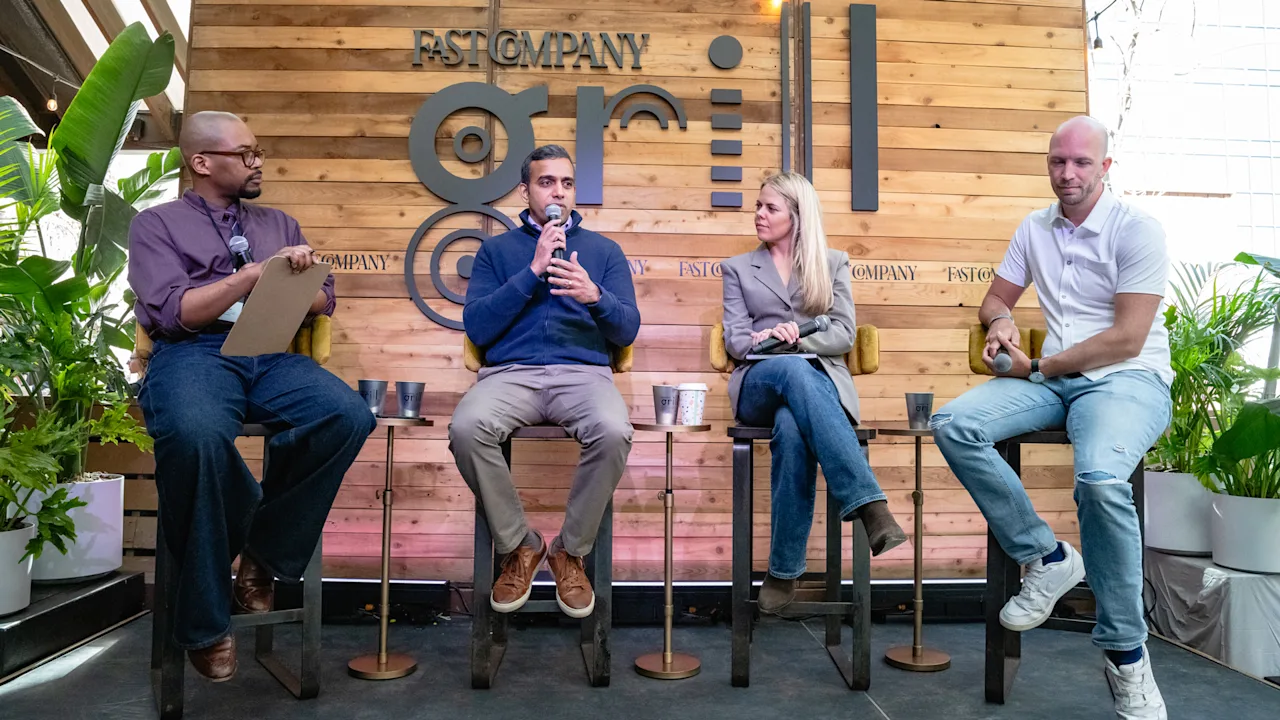
US-based venture capital has largely remained unchanged for decades, relying on traditional models and fee structures. However, the rise of AI is disrupting these norms by lowering the cost and time of starting tech companies, making solo founders and capital-efficient startups more common. While large AI infrastructure firms attract immense capital, many smaller AI startups achieve rapid revenue growth without venture funding. The conventional VC process, long key to resource access and market entry, is challenged as AI tools level informational advantages. Yet, venture capital remains crucial for massive-scale AI projects and sectors demanding deep financial resources. Ultimately, as AI enables more founders to build significant ventures independently, the traditional VC model faces a shrinking role.

After-hours meetings have become more frequent, with 33% of US knowledge workers routinely participating in them in 2025, up from 23% in 2024, according to a survey by AI-driven workspace provider Miro. Experts suggest that while AI tools could help reduce late-night meetings through features like AI note takers and asynchronous collaboration, technology alone won’t fix a culture that often schedules unnecessary meetings without clear agendas or outcomes. The rise in after-hours meetings is partly driven by flexible and global work arrangements, with meetings spanning multiple time zones making it hard for workers to maintain boundaries between work and personal life. Industry voices warn that better meeting habits and intentional workplace policies are essential to truly address the challenges associated with increasing meeting demands.

Digg has announced a temporary shutdown just two months after its open beta relaunch, as the site struggles to manage an overwhelming influx of bots and AI-generated content. CEO Justin Mezzell revealed that the team is significantly downsizing and founder Kevin Rose will return full-time to help reshape the platform. Despite Digg’s historic influence as an early pioneer of social news and user-driven content voting, its recent efforts to regain traction have been hindered by sophisticated automated accounts attempting to exploit the site’s high SEO value. Attempts to curb the bots by banning thousands of accounts weren't enough to protect the integrity of the community. Digg’s future direction is currently uncertain, but the team is committed to creating a genuinely different, human-centered experience that fosters trust in content and contributors.