In an interview with TechCrunch, Crunchbase’s head of research Gené Teare highlighted that despite Black founders securing the highest quarterly funding since 2022, they still face significant obstacles. The key barriers include limited access to important networks, relationships, and early-stage introductions essential for growth and investment.


On April 1, 2026, Monzo announced the closure of its US branch, ceasing new American customer registrations immediately and planning to close all current US accounts by June. The bank will also reduce its workforce by around 50 employees. This move follows Monzo obtaining a full banking license from the European Central Bank and the Central Bank of Ireland, signaling a strategic shift to focus on its European market.


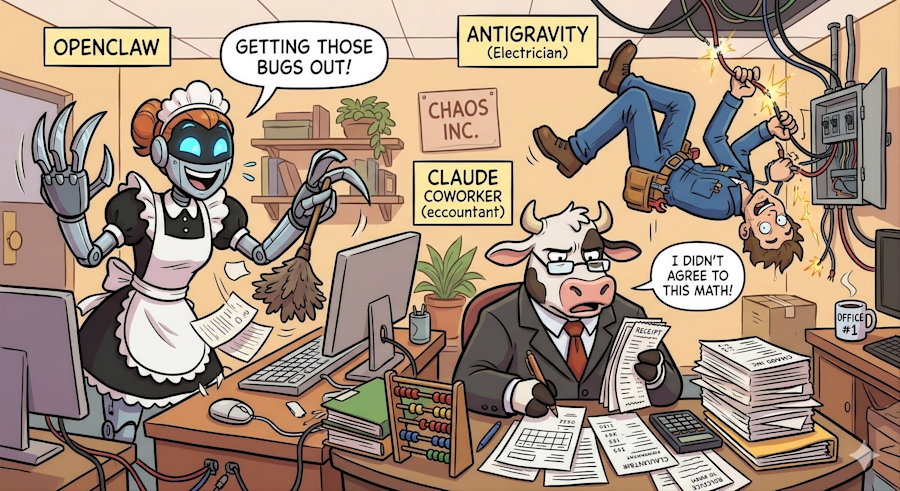
The era of autonomous AI agents has arrived, reshaping the landscape of work and technology. What began as casual interactions with ChatGPT in 2022 has evolved into serious discussions about job security and machine autonomy. Recent developments feature powerful agents like OpenClaw, Claude Cowork, and Google’s Antigravity, each offering distinct capabilities—from household task automation to specialized legal and financial services, and coding assistance. These tools require varying levels of access and trust, raising concerns about misuse and data security. While OpenClaw operates openly without central oversight, solutions like Claude and Antigravity come from established providers with safeguards. The real challenge lies in balancing empowerment with control, ensuring agents act with accountability, transparency, and adherence to ethical AI principles. Implementing strict monitoring, shared ontologies, and trust frameworks are essential to harness agent potential without chaos. Done properly, agentic AI can reduce human workload by handling routine tasks, allowing people to focus on high-value activities, marking a transformative step in the evolving AI ecosystem.
Glen Anderson, president of Rainmaker Securities, highlights the unprecedented activity in the secondary market for private shares, with Anthropic emerging as the most sought-after asset. Meanwhile, OpenAI's influence is waning, and the anticipated SpaceX IPO is expected to significantly alter the dynamics of private market trading.

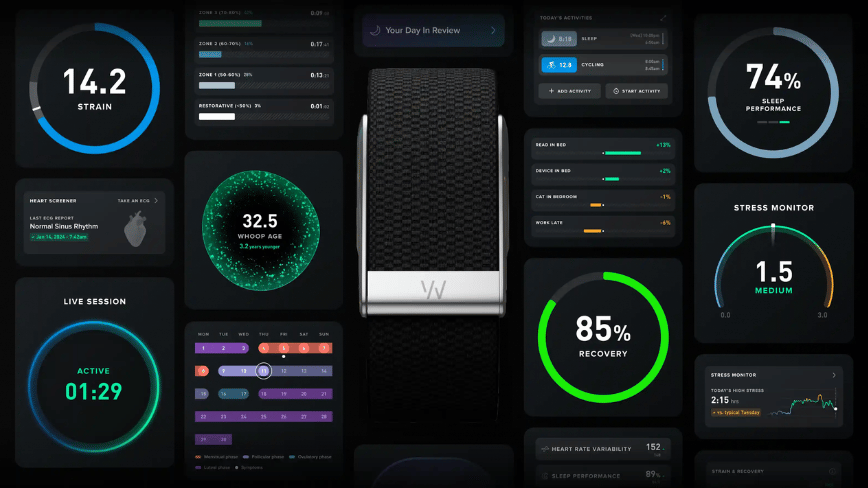
WHOOP has successfully raised $575 million in its Series G funding round, boosting its valuation to $10.1 billion — nearly triple its 2021 value. The Boston-based maker of screenless health wearables attracted investment from sovereign wealth funds, top medical institutions, and well-known athletes. This fresh capital injection positions the company for a potential initial public offering (IPO). Founded and led by its visionary CEO, WHOOP continues to innovate in the health tech space.
The first quarter of the year saw startup funding reach unmatched levels, driven primarily by four massive deals involving OpenAI, Anthropic, xAI, and Waymo. This surge not only highlights significant investments in these key players but also reflects a robust and active venture capital market overall.


Updated as of April 1, 2026, Crunchbase data reveals an unprecedented $300 billion invested in startups globally during Q1 2026, marking a surge driven by AI compute and frontier labs. This quarter’s funding eclipsed typical records, reaching over 150% growth quarter and year over year, and nearly matching 70% of all venture capital spent in 2025. Most funds focused on AI, with the top four biggest deals involving U.S.-based frontier labs like OpenAI ($122B) and Anthropic ($30B). AI investments totaled $242 billion, or 80% of total funding, with the U.S. commanding 83% of venture capital. Late-stage investments exploded to $246.6 billion, while early-stage and seed funding also increased significantly. Though IPOs slowed in the U.S., mergers and acquisitions were strong, totaling over $56 billion in exits. This wave of funding highlights the ongoing impact of AI across sectors including autonomous vehicles, robotics, and semiconductors, with growing pressure for IPO market revival.


OpenAI has successfully closed a significant funding round, raising $122 billion and achieving a post-money valuation of $852 billion. This impressive investment highlights the growing confidence in OpenAI's technology and future potential within the AI sector.

When Intuit launched AI agents to serve 3 million customers, 85% of users returned. According to Marianna Tessel, EVP and GM at Intuit, the key was blending AI technology with human intelligence to build trust and confidence. This hybrid approach, combining AI agents with access to human experts in accounting, tax, and payroll, proved more effective than using chatbots alone. The company’s GenOS platform and Intuit Intelligence dashboard help automate tasks like invoicing, payroll, fraud detection, and reporting, cutting manual effort by 30% and accelerating payments. Users can consult human specialists for complex issues or high-stakes decisions, enhancing reliability. Intuit continues to innovate with user-friendly tools that allow business owners to customize AI-driven workflows without needing coding skills. This blend of human insight and AI technology sets a new standard for enterprise AI adoption.

OpenAI's recent funding round, spearheaded by Amazon, Nvidia, and SoftBank, has valued the AI company at an impressive $852 billion. This growth comes as OpenAI moves closer to its initial public offering, marking one of the largest private fundraising efforts to date.