Large language models (LLMs) excel at abstract knowledge but fall short in understanding physical world dynamics crucial for robotics, autonomous vehicles, and manufacturing. This limitation is driving investment in 'world models,' which simulate real-world environments internally before any physical action. These models avoid pixel-level predictions and instead use three main architectural strategies:
- JEPA (Joint Embedding Predictive Architecture) focuses on learning abstract latent features rather than detailed visuals, enabling efficient real-time inference ideal for robotics and healthcare.
- Gaussian splats use generative techniques to create complex 3D spatial environments from textual or visual prompts, suitable for spatial computing and industrial design.
- End-to-end generative models continuously produce physics, lighting, and object interactions in real-time, powering synthetic data generation for autonomous vehicle and robotics training but at a high computational cost.
Hybrid models are emerging, combining these approaches' strengths to enable more nuanced and capable AI systems. LLMs remain essential for reasoning and communication, while world models underlie physical and spatial data understanding essential for safe real-world AI applications.

Cursor, a San Francisco AI coding platform by startup Anysphere valued at $29.3 billion, has introduced Composer 2, an upgraded coding model integrated within its agentic AI environment. Composer 2 significantly improves performance over its predecessor Composer 1.5 while being about 86% cheaper, with a faster variant called Composer 2 Fast also available at reduced costs. Unlike standalone models, Composer 2 is optimized specifically for Cursor's platform, supporting long-horizon coding workflows requiring multiple steps and tool integrations such as semantic code search, file editing, and terminal commands. Benchmark scores show Composer 2 surpasses Composer 1.5 and Claude Opus 4.6 but still trails GPT-5.4 in key terminal-based coding benchmarks. Cursor emphasizes the practical value of its model’s cost-efficiency, tight integration, and suitability for complex coding tasks over pure leaderboard dominance. Pricing tiers and team features reflect Cursor's strategy to offer a managed AI coding platform rather than just a model, competing in a market where first-party vendors like OpenAI and Anthropic increasingly provide their own coding tools. Despite some user critiques favoring alternatives for longer workflows or pricing, Composer 2 represents a strategic move to solidify Cursor’s position by delivering better economics and deeper platform integration for developers.

The AI landscape is witnessing a significant shift with the introduction of Mamba-3, an advanced State Space Model (SSM) designed to outperform traditional Transformer architectures. Unlike Transformers, known for their computational intensity, Mamba-3 prioritizes inference speed and efficiency by addressing the "cold GPU" problem, where hardware often idles during processing. This model achieves notable improvements in language modeling with nearly 4% better performance compared to Transformers, while significantly reducing memory needs by using half the state size of its predecessor, Mamba-2.
Mamba-3 introduces innovative techniques such as complex-valued states for enhanced logical reasoning, a Multi-Input Multi-Output (MIMO) system that quadruples computational operations without increasing latency, and advanced discretization methods for better model accuracy. These advancements enable Mamba-3 to deliver higher throughput and smarter processing without imposing additional demands on hardware.
This open-source model, released under the Apache 2.0 license, is geared toward developers and enterprises aiming to optimize AI inference costs and support intricate agentic workflows. Despite challenges in ecosystem maturity and compatibility with existing AI optimization tools, Mamba-3 represents a promising foundation for hybrid AI models that blend the memory efficiency of SSMs with the precision of Transformers, pointing to a future where AI efficiency is as critical as raw power.

Mistral AI has introduced Forge, an advanced training platform for enterprises to develop and refine AI models using proprietary data, positioning itself against major cloud providers. This platform surpasses traditional fine-tuning by supporting complete model training cycles, including pre-training, advanced fine-tuning methods, and reinforcement learning to align AI with internal policies. Early clients have leveraged Forge to solve unique challenges — from restoring ancient manuscripts to optimizing legacy code translation at Ericsson and enhancing propriety-focused models for hedge funds. Forge's business model is multi-faceted, including licensing fees, optional data services, and embedded AI scientists to assist clients, catering to organizations requiring strong data privacy by enabling on-premises training without data exposure. Alongside Forge, Mistral recently launched innovative models and joined Nvidia's Nemotron Coalition, underscoring its commitment to shaping open-source frontier AI models. Mistral's strategy emphasizes enterprise AI sovereignty, advocating that building bespoke models offers distinct competitive advantages over relying solely on generic cloud APIs.

LinkedIn’s content feed, used by over 1.3 billion members, was originally powered by five distinct retrieval systems, each serving different types of content and optimized independently. Over the past year, LinkedIn’s engineering team replaced these separate pipelines with a unified system based on a large language model (LLM), dramatically improving both relevance and efficiency. This redesign involved revamping content retrieval, ranking strategies, and compute resource management. By processing rich professional context and treating users’ interaction histories as sequences of professional stories, the new system delivers more tailored feeds. Additionally, LinkedIn overcame challenges of handling numerical data in prompts and optimizing GPU usage by separating CPU and GPU workloads, ultimately reducing operational costs while enhancing performance at massive scale.

At GTC 2026, Nvidia introduced its Agent Toolkit, an open-source platform designed to simplify and unify the creation of autonomous AI agents for enterprises. Seventeen major software companies, including Adobe, Salesforce, SAP, and Cisco, have adopted the platform to build AI-powered solutions across industries such as creative workflows, customer service, and semiconductor design. The toolkit includes Nemotron open models, AI-Q blueprints for cost-efficient orchestration, OpenShell runtime for secure policy enforcement, and cuOpt optimization libraries—all optimized for Nvidia hardware. Nvidia aims to become the foundational infrastructure for AI agents much like it did for GPUs in AI computing. While the platform shows promise in advancing enterprise AI adoption, challenges remain around operational maturity, security, and organizational readiness. Beyond software, Nvidia announced new AI hardware and infrastructure investments reinforcing its vision of owning the AI agent ecosystem's stack.

Recent data shows many AI projects are failing, pointing to cultural challenges rather than just technical ones. Companies often face problems like engineers creating models that product managers can’t use, or data scientists developing prototypes that operations teams find hard to maintain. Successful organizations foster collaboration across departments and share accountability for AI outcomes. Three key practices can help overcome these barriers: expanding AI literacy beyond just engineers so that every role understands how AI applies to their work; establishing clear guidelines on where AI can operate autonomously versus where human oversight is necessary, ensuring auditability, reproducibility, and observability of AI decisions; and creating cross-functional playbooks that detail how teams collaborate with AI systems, test recommendations, and respond to failures. These cultural and organizational efforts are as critical as technical excellence for the successful adoption of AI.
NanoClaw, an open-source AI agent platform developed by Gavriel Cohen, has teamed up with Docker to enable running AI agents within Docker Sandboxes. This partnership addresses a key challenge for enterprises: allowing AI agents to operate freely without risking harm to surrounding systems. As AI agents transition from novelty to essential tools, their ability to safely interact with live data and systems is crucial. NanoClaw emphasizes security by isolating agents within Docker Sandboxes—an infrastructure innovation providing stronger, microVM-based containment rather than relying on software-level trust. Docker's Mark Cavage highlights how traditional container models fail with agents due to their need for mutable environments, making this integration a breakthrough for secure deployment. The collaboration supports multi-agent orchestration across teams via NanoClaw’s open-source framework, simplifying adoption with a one-command Docker Sandbox setup. Importantly, this alliance is driven by technical compatibility, not commercial incentives, signaling a foundational shift. It points to a future where secure, bounded autonomy in agent deployment is paramount for enterprise adoption, moving beyond AI capabilities to the infrastructure that supports them.

Anthropic has upgraded its Claude AI model to provide enhanced functionality across Microsoft Excel and PowerPoint, offering enterprises new ways to streamline workflows across these key applications. The updated add-ins are now available to Mac and Windows users on paid Claude plans, and enterprises can access them through their existing cloud infrastructure, including Amazon Bedrock, Google Cloud Vertex AI, or Microsoft Foundry, providing flexibility for compliance and cloud setups.
Starting March 11, paid users benefit from a new beta feature where Claude shares conversation context seamlessly between Excel and PowerPoint, enabling continuous sessions without manually transferring data. For instance, financial analysts can extract data, prepare analyses, and generate presentations and emails in one integrated workflow.
A highlight of the launch is the introduction of Skills—tools that let users create and save repeatable workflows within Excel and PowerPoint sidebars for wider organizational use. This enables one-click access to complex tasks like financial audits or presentation building, improving consistency and productivity.
Anthropic’s solution complements Microsoft's recent Copilot Cowork feature, which the company also helped develop. While Copilot Cowork emphasizes autonomous multi-application task completion, Claude's continuous sessions facilitate live data sharing and formula writing across apps to support efficient knowledge work.
This development underlines the growing competition in enterprise AI, where integration, trust, and workflow enhancement are key drivers alongside AI performance benchmarks.
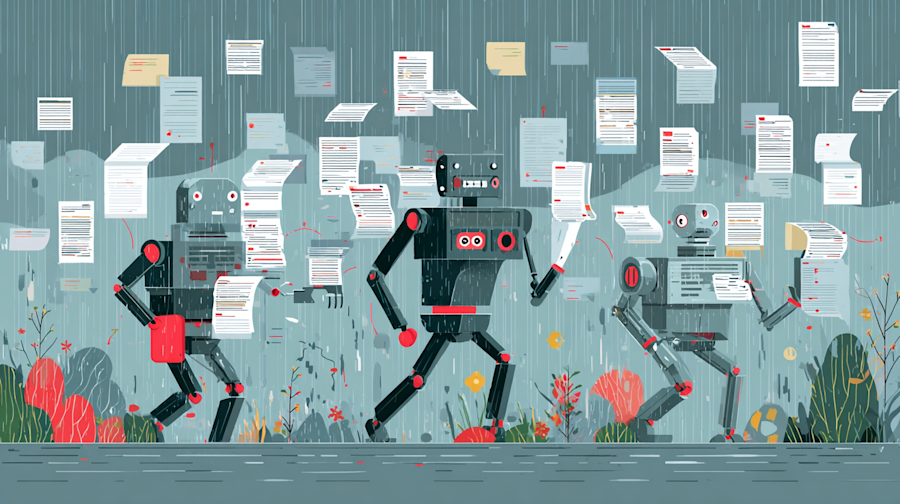
The recurring pattern with new technologies is familiar: initial excitement, rapid investment, soaring valuations, followed by a correction and skeptics citing past crashes, like dot-com or crypto. Many see AI as just another bubble because we instinctively compare it to previous technological revolutions. However, AI represents a fundamental shift because it performs cognitive tasks, unlike past technologies which extended but did not replace human intelligence. This shift disrupts traditional valuation methods that assume steady growth, causing apparent overvaluation and uncertainty—hallmarks of a bubble, but also signs of frameworks struggling to model discontinuous change.
Unlike electricity or the internet, AI compresses expertise and learns from use, accelerating improvements nonlinearly. This alters the role of human labor and judgment, as redundancies are replaced with opportunities for strategic insight. While skeptics are right about overhype and early failures, the transformative potential of AI in automating knowledge work remains undeniable. The real test lies not in debating whether AI is a bubble, but in identifying meaningful applications that create value despite market volatility.
Humans still hold a crucial role where judgment under uncertainty and strategic prioritization matter most. Successful companies and investors will be those who quietly integrate AI to improve workflows and tolerate early uncertainties. Ultimately, AI’s scalability of intelligence marks a historic inflection point that will reshape industries fundamentally over the coming decade. The narrative of bubbles will fade, leaving behind those who focused on constructive adaptation rather than short-term valuation battles.