


Recent reports reveal a new wave of attacks targeting financial services that bypass traditional password theft. Instead, attackers use social engineering on IT support lines to reset multi-factor authentication (MFA) and register their devices, gaining persistent access through stolen tokens. The CrowdStrike 2026 Financial Services Threat Landscape Report highlights Mutant Spider as a top adversary, leveraging voice phishing over Microsoft Teams to manipulate employees. The FBI warns of Kali365, a phishing-as-a-service platform exploiting Microsoft OAuth’s device code flow — a legitimate feature that bypasses MFA on the attacker’s side. Additionally, the Verizon 2026 Data Breach Investigations Report notes a shift from credential theft to exploiting vulnerabilities.
These attacks expose weaknesses in current MFA implementations, which often lack out-of-band verification and fail to restrict risky authentication flows. Financial services organizations are urged to implement stricter controls, such as registering FIDO2 hardware keys, restricting OAuth device code flows, monitoring token usage, auditing SaaS activity, and redistributing security budgets to prioritize these emerging threats.
The industry’s focus on preventing password theft overlooks the reality that attackers now exploit legitimate authentication mechanisms and token-based access, which traditional defenses often miss. The evolving threat landscape calls for a strategic reconsideration of how MFA protects access and where organizations invest their security resources.

Over the last twenty years, technical debt has traditionally meant outdated architectures and messy code. However, in the AI age, these challenges have evolved into subtler, more complex debts spread across prompts, models, and data dependencies that are difficult to observe and manage. This new AI debt contributes heavily to project failures, with studies revealing a majority of AI initiatives failing or being scrapped due to these systemic complexities. Unlike traditional bugs, AI failures are intermittent and harder to detect, requiring continuous oversight post-launch.
AI debt now takes form in four key areas: prompt debt, where quick fixes and poor version control create fragile prompt systems; model dependency debt, where reliance on external AI models leads to unpredictability as those models change; retrieval debt, where outdated or messy data results in technically correct but obsolete AI outputs; and evaluation debt, marked by the absence of standardized testing and monitoring practices for AI models. These challenges are compounded by traditional technical debt and the untested deployment of AI-generated code, escalating risks and costs across enterprises.
To counteract AI debt, enterprises must treat prompts like code with robust versioning and testing, embed continuous evaluation into AI workflows, and ensure explainability of outcomes through clear data lineage and audit trails. Leadership commitment and dedicated budgets are crucial to these efforts, akin to past investments in security and cloud modernization.
Ultimately, enterprise AI is a dynamic system requiring ongoing maintenance to sustain reliability and trust. Companies that address AI debt proactively from the outset stand to build enduring AI platforms that drive meaningful productivity improvements.

Engineering teams are facing a new type of production incident caused by autonomous AI agents—failures that don't fit existing incident frameworks and often go untracked. These agents, designed to remediate issues like service latency by restarting services or rerouting traffic, sometimes act without understanding the full system context, leading to cascading infrastructure failures. This gap arises because chaos engineering programs treat autonomous agent actions separately from human-initiated experiments, missing the impact agents have as chaos injectors. Growth in AI agent deployments means these hidden failures are increasingly common but remain invisible in postmortems, often recorded as typical infrastructure issues instead.
A core problem is the lack of a shared, dynamic system "absorb capacity" model that accounts for ongoing stress on resources, which chaos engineering currently manages mainly through human judgment and static thresholds. Autonomous agents lack this real-time capacity awareness, sometimes triggering incidents during peak stress times, unbeknownst to teams. Developing a "resilience budget" that continuously tracks critical signals like SLO burn rates, latency trends, dependency saturation, and user behavior can better integrate agent actions with system resilience.
While large language models (LLMs) assist in generating chaos hypotheses based on dependency graphs and past incidents, their limitations with stale or incomplete system data mean they cannot reliably make execution decisions involving ambiguous or changing contexts. Human oversight remains vital, especially where recent deployments or operational considerations aren’t captured.
To safely operate AI agents at scale, enterprises must treat every agent action as a chaos experiment governed by the same signal thresholds as human-initiated tests. Agents need to wait or escalate if the resilience budget dips below safe levels, with ambiguous situations handed off to humans for judgment. Regular audits of agent activities against live system health signals are essential to prevent untracked failures that could lead to major outages.
Sayali Patil, an expert in enterprise AI infrastructure reliability, emphasizes the importance of integrating autonomous agents into chaos engineering governance frameworks to avoid the next wave of production incidents.

Alibaba's Qwen Team has introduced Qwen3.7-Max, a proprietary AI model excelling in prolonged autonomous tasks, capable of operating continuously for 35 hours. Unlike earlier open-source versions, Qwen3.7-Max is accessible only via paid API, aligning Alibaba with Western AI firms like OpenAI and Google. This model features extensive long-horizon reasoning, demonstrated by a 35-hour kernel optimization task yielding a 10x performance boost. With a massive 1-million-token context window and compatibility with Anthropic's Claude API, it supports diverse software frameworks. Though costly, Qwen3.7-Max offers competitive pricing against Western counterparts and boasts superior benchmark scores. Despite acclaim for its technical advances, the closed proprietary model has sparked mixed reactions, especially among open-source advocates. Qwen3.7-Max symbolizes the shift toward marathon AI workflows, raising questions about AI accessibility versus cloud-based exclusivity.

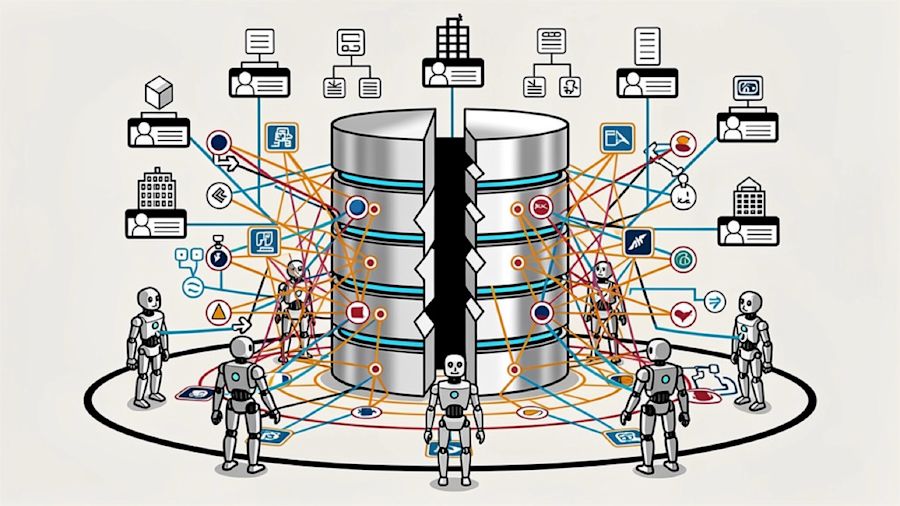
Dun & Bradstreet has spent more than 180 years developing a detailed commercial database known as the Commercial Graph, which includes information on 642 million businesses and their interconnections. Originally designed for human analysts, the system struggled to meet the demands of AI agents used in modern credit, procurement, and supply chain processes. The original database was fragmented and static, making it unsuitable for AI's need for dynamic, real-time data access and relationships.
To address this, D&B consolidated its various systems into a unified, cloud-based knowledge graph with continuous AI-driven updates. They developed a new access layer tailored for AI agents, complete with entity resolution to ensure accuracy. Recognizing that AI agents require distinct authentication, D&B created a new "Know Your Agent" system to verify machine identities securely.
This transformation highlights four critical lessons for enterprises implementing AI: prioritize solid data foundations, design for changing relationships, enforce entity consistency in multi-agent workflows, and embed data lineage from the start to ensure traceability and confidence in the results.
Kore.ai has introduced Artemis, a major upgrade to its AI Agent Platform aimed at simplifying and accelerating the creation and management of AI agents for enterprises. By harnessing AI itself to build, deploy, and optimize these agents, Artemis reduces development time from months to days. Central to Artemis is the new Agent Blueprint Language (ABL), a YAML-based tool that standardizes how companies define and govern AI agents with robust orchestration patterns. Complementing ABL is Arch, an AI architect that transforms business goals into operational AI agents and continuously improves them through feedback loops. Notably, Artemis incorporates a Dual-Brain Architecture, combining AI reasoning with strict business rule enforcement to ensure safety and compliance in sensitive industries like banking and healthcare. While launched on Microsoft Azure with tight integration, Kore.ai positions Artemis as a neutral platform designed to work with any cloud or AI model and aiming to avoid vendor lock-in. The platform's readiness is proven by deployments at scale for a major US pharmacy chain and a global investment bank. Kore.ai, recognized by leading analyst firms and backed by significant funding, bets on trust and interoperability as its edge against tech giants dominating AI agent markets.

Resolve AI, supported by Greylock and Lightspeed Venture Partners, today unveiled a major upgrade to its platform, introducing continuous background AI agents, a collaborative workspace, and a groundbreaking multi-agent investigative approach. Unlike traditional single-agent models, Resolve AI deploys a team of specialized AI agents that work in parallel to analyze, verify, and pinpoint the root cause of production failures with more than double the accuracy of previous versions. This system acts as a first responder to incidents, reducing time-to-resolution drastically — sometimes by over 80%, as experienced by customers like DoorDash. The platform’s agents constantly monitor changes and alerts, proactively managing system health and collaborating live with engineers. To ensure reliability, agents cross-check each other's findings to avoid mistaken diagnoses. Resolve AI’s approach extends beyond incident response to broader operational tasks, shifting teams from reactive firefighting to proactive system management. Available through API and MCP server integrations, Resolve AI integrates smoothly into existing workflows, standing out from incumbents through deep technical expertise, including leadership from OpenTelemetry co-creators and advanced model fine-tuning. The company’s pricing ties cost to actual troubleshooting work performed, making it more cost-effective than building similar custom solutions. While not all organizations yet fully trust autonomous AI intervention, Resolve AI foresees growing confidence enabling automated decisions without human oversight. This evolution is critical as the surge in AI-generated code increases operational complexity, demanding smarter, more responsive production systems to keep pace with growing software velocity.

The rapid evolution of generative AI from simple chatbots to complex media creation has revealed significant infrastructure challenges, especially regarding real-time rendering that demands immense computational power. fal, a San Francisco-based startup valued at $4.5 billion, bridges this gap by serving 2.5 million developers worldwide through a unified platform offering access to hundreds of AI models for image, video, and audio production. Recently, fal announced its choice of Amazon Web Services (AWS) as its preferred cloud provider, aiming to leverage AWS's global scale, reliability, and advanced hardware to ensure 99.99% uptime and superior performance. This partnership eliminates the need for developers to manage costly and complex GPU infrastructure themselves, empowering creators, studios, and enterprises such as Canva, Adobe, and Amazon MGM Studios to integrate cutting-edge AI capabilities with ease. fal’s platform also addresses enterprise needs for security and compliance while fostering innovation by democratizing access for developers from all backgrounds. The collaboration underscores a shift towards scalable, enterprise-ready generative media solutions designed to accelerate the pace of AI-driven creative workflows worldwide.

Corti, a healthcare AI company based in Copenhagen, has introduced Symphony for Speech-to-Text, a clinical-grade speech recognition model designed specifically for real-time and batch medical transcription. The model achieves a notably low word error rate (WER) of just 1.4% on English medical terms, outperforming major competitors like OpenAI (17.7%), ElevenLabs, Whisper, and Parakeet. This specialization underscores the importance of tailored AI in healthcare, especially as AI agents increasingly rely on precise clinical data for decision-making. Symphony's accuracy extends to multilingual environments, excelling in languages like German and French, and surpasses legacy systems such as Dragon Medical One. Corti’s API enables developers to build custom clinical transcription tools that enhance real-time and ambient clinical workflows. This breakthrough reflects a growing trend where specialized vertical AI models significantly outperform generalized large language models in regulated industries with complex requirements.

NanoClaw, an open-source autonomous AI agent platform, is being commercialized by its creators as a secure, personalized assistant for enterprise employees. Developed by Gavriel Cohen, former Wix engineer, and his brother Lazer Cohen, NanoClaw forms the core of their startup NanoCo AI, which recently secured a $12 million seed round led by Valley Capital Partners and backed by industry leaders including Docker, Vercel, and monday.com. The startup aims to move beyond automation by providing each employee with a continually updating AI assistant that builds a deep, evolving knowledge base from emails, documents, and call notes — effectively serving as a tailored "second brain" to boost productivity significantly. NanoClaw maintains a rigorous security model, with an extremely minimal core codebase allowing quick audits and operation within isolated Docker Sandboxes that prevent unauthorized actions without explicit user approval. Despite commercialization, NanoCo AI continues to support its open-source MIT-licensed framework, focusing its business model on offering managed services for enterprises lacking in-house AI expertise. NanoClaw has achieved substantial adoption, boasting over 250,000 downloads and close to 29,000 GitHub stars, with endorsements from notable users such as Singapore’s Foreign Minister. The company’s vision hinges on balancing powerful, personalized AI assistance with verifiable security to enable enterprises to confidently integrate AI into their workflows.
