


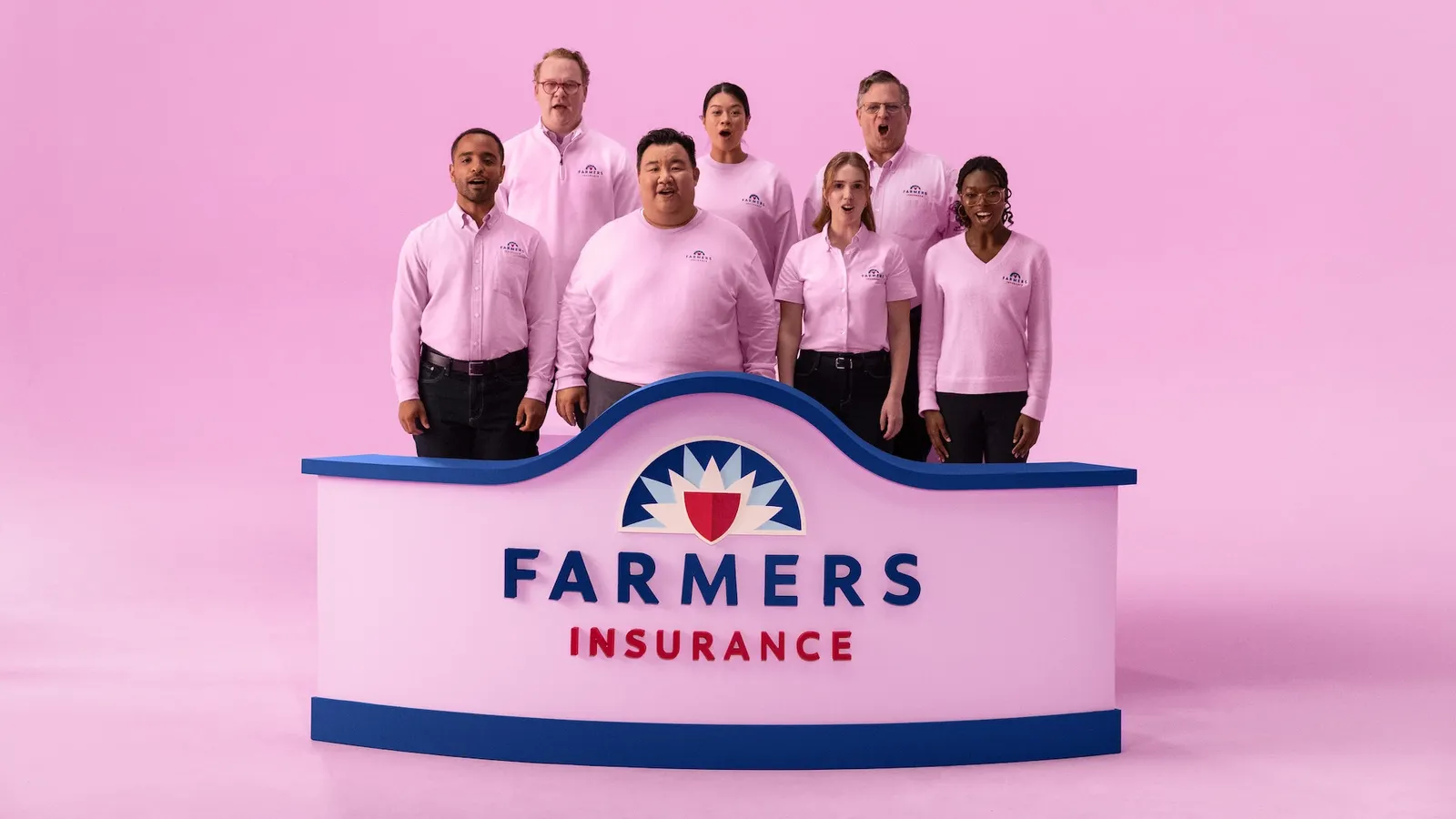
In an effort to differentiate itself in a crowded insurance market, Farmers Insurance has overhauled its classic jingle and adopted a bold all-pink rebrand. Eleanor Solomon, the brand's head of creative, explained that this change aims to break through the "sea of sameness" that characterizes the industry.

Many customer-focused companies increasingly rely on generative AI alongside large language models (LLMs) to better understand their customers and markets by analyzing internal content. These hybrid approaches, often using retrieval-augmented generation (RAG), combine company-specific insights with general LLM knowledge bases to improve knowledge management. Benefits include easier access and natural language summarization of insights, which is especially valuable in large organizations where employees struggle to locate and use customer data.
Customer insights come from diverse sources like market research, sales interactions, social media, and purchase behavior. While AI tools help summarize and categorize this vast information, focusing solely on storing insights is insufficient. Organizations must also enhance how insights are created, analyzed, and shared, overcoming challenges that plagued earlier knowledge management attempts such as organizational silos and cultural resistance.
Programs like Procter & Gamble’s GenAI system and Novartis’s Sherlock platform exemplify how AI enhances insight accessibility and reduces redundant research costs. Additionally, generative AI enables qualitative data analysis through tools that transcribe, summarize, and surface themes from interviews and focus groups, speeding up traditionally lengthy processes without replacing the expertise of human researchers.
However, AI currently cannot replace strategic human decision-making and faces limitations due to inconsistent data standards across global units, insufficient integration into corporate culture, complexity from agency relationships, and perceptions of analytics roles. Companies like PepsiCo have addressed these issues by fostering unified approaches, empowering insights functions, and emphasizing human-AI collaboration.
Ultimately, while generative AI tools can significantly augment customer insights management, they must be part of a broader cultural and strategic framework that values data-driven decision-making and effective knowledge sharing.


The advertising world is on the brink of a significant transformation—Mediapalooza is arriving, and this time, it promises to bring real change. Unlike past industry buzz, this new wave could reshape how advertising operates and impacts audiences.

Unilever employs artificial intelligence to carefully screen creators and streamline operational processes as it grows its extensive network of 300,000 content creators. However, it retains direct oversight of creative choices to maintain authenticity and quality.


The landscape of B2B customer experience is rapidly changing, and most teams are unprepared to meet the new demands. Understanding the reasons behind this shift is crucial for staying ahead.


Google has introduced a new feature in its "My Ad Center" that reveals whether ads on Google Search, Google Discover, and YouTube have been created or edited using AI. This label appears under the "how this ad was made" section, accessible via the three dots or info button on ads. Ads generated with Google's AI tools will automatically display the label, while ads created with other AI platforms require manual labeling. This update enhances transparency, allowing users to better understand the origins of digital ads.


While marketers argue over brand building versus performance marketing, the most successful consumer brands prioritize converting temporary attention into lasting loyalty.

In today’s AI-driven world, original ideas are quickly integrated into vast knowledge systems, but the recognition of their source often gets lost. I've experienced this firsthand, seeing how AI can absorb creative work without giving credit where it’s due.


At a recent TIME100 Talks panel in Cannes, executives from diverse industries—including Nespresso, Luma AI, Philip Morris International, and Publicis Sapient—discussed how artificial intelligence is reshaping creativity in their companies. They emphasized the vital synergy between human insight and AI technology, highlighting that AI enhances human capabilities rather than replaces them. For example, Nespresso utilizes AI to deepen customer engagement by personalizing the coffee experience via its app. Leaders noted a growing curiosity and willingness among younger, AI-native workers to experiment and learn continuously. They also stressed the importance of investing equally in AI tools and human talent to unlock true creative potential. While AI can analyze vast data, it cannot replace the nuanced understanding gained from direct human interaction. Overall, AI acts as an amplifier for creativity when coupled with human intuition, agility, and thoughtful risk-taking in the workplace.

Bose is launching a new entertainment division, marking a major shift in its business. Interestingly, Bose's Chief Marketing Officer hasn’t engaged a creative agency in the past five years, a strategy that ties directly into their fresh approach to entertainment.
