The AWS executive highlighted the company's strong tradition of managing competitive dynamics, pointing out that Amazon often competes with its own partners in the cloud industry. This cultural approach allows AWS to invest in both Anthropic and OpenAI without conflicting interests becoming a problem.


In many boardrooms, leadership demands rigorous metrics, but the numbers reported often lead to premature judgments that AI initiatives are failing. This happens because traditional business measures like ROI and cost savings don't capture the unique value AI projects create during early stages. AI projects often deliver benefits such as faster decision-making, improved data quality, and reduced errors that aren't immediately visible in conventional financial reports. When judged by standard metrics within a short time frame, teams focus on what’s measurable rather than essential work like workflow redesign, which is slow and disruptive but critical for scaling AI.
This mismatch leads to many pilots failing to progress, a phenomenon now known as "proof-of-concept fatigue." Four key areas of AI value are frequently overlooked: learning about AI readiness, true adoption challenges in real workflows, the importance of workflow redesign for profitability, and the development of internal AI capabilities that grow competitive advantage long-term. Metrics influence behavior; if leaders emphasize short-term ROI, teams optimize for it—often at the expense of true transformation. More than 40% of companies struggle with measuring AI impact due to outdated KPIs and leadership perspectives.
Effective measurement for AI requires aligning metrics with the initiative’s maturity level, focusing on learning, adoption, and capability growth rather than only immediate cost reductions. This approach helps differentiate genuine progress from superficial results, fostering meaningful AI-driven transformation.


More leaders are understanding that unresolved trauma within employees is significantly diminishing overall business performance.


In 2018, a self-driving Uber vehicle in Tempe, Arizona, tragically killed a pedestrian, raising urgent questions about responsibility in the age of autonomous technology. Traditional blame on individuals such as drivers or leaders is no longer sufficient, as decisions now emerge from complex interactions between humans and AI systems. This shift necessitates moving away from assigning fault towards building a shared understanding of responsibility through "narrative responsibility." Unlike classic linear models that pinpoint a single cause, narrative responsibility recognizes accountability as distributed across teams, technology, and organizational culture. It encourages mapping the full story beyond immediate errors, distributing ownership collectively rather than blaming individuals, and embedding continuous reflection about decisions into daily practices. Examples from Google’s handling of AI failures to aviation safety panels and healthcare incident reviews illustrate how organizations can institutionalize this approach to strengthen learning and resilience. While narrative responsibility complements existing legal and ethical standards without replacing them, it offers a vital framework for navigating accountability amid the rapid evolution of AI-driven systems.

Leadership behavior fundamentally shapes company culture well before marketing initiatives reach the audience.


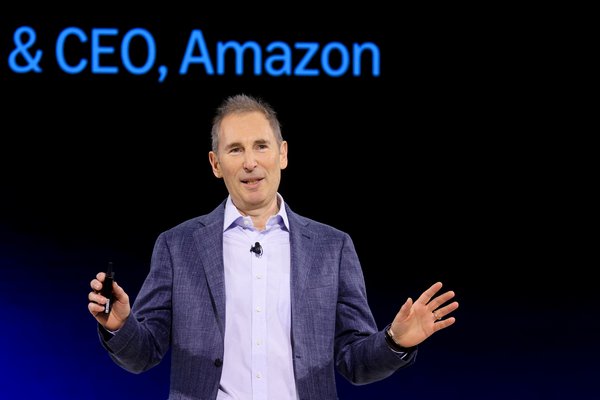
In his annual letter to shareholders, Amazon CEO Andy Jassy emphasized the company's commitment to AI by stating they're not making a $200 billion capital expenditure in 2026 based on guesswork.

Peter Bailis, who stepped into the role of chief technology officer at Workday in May 2025, departed the company last month. He has since joined Anthropic as a member of their technical staff, where his focus will be on reinforcement learning engineering. This career move marks a shift from an executive position to a hands-on technical role, allowing him closer engagement with advanced technology development.

In a recent appearance on the 20VC podcast, Demis Hassabis shared insights into Google DeepMind's evolution after integrating Google Brain’s extensive computing capabilities with DeepMind's distinctive research-driven approach. He emphasized that this fusion sparked a renewed startup mentality within the company, fostering rapid innovation and agility reminiscent of its early days. This cultural and operational shift has been pivotal in DeepMind's accelerated development trajectory over the last few years.

Oracle has announced Hilary Maxson as its new chief financial officer, effective April 6, 2026. Maxson, who previously served as executive vice president and group CFO at Schneider Electric, will report directly to CEO Clay Magouyrk. Her appointment comes as Oracle embarks on a significant $50 billion capital investment to expand its AI data center infrastructure.

Imagine walking into a dealership with your budget set, only to find the first quoted price creeping into every counteroffer you make. This cognitive bias, called anchoring, causes even seasoned negotiators to get stuck near the initial number presented, limiting their negotiating power. Recent research shows a simple yet effective approach to combat this: adopting a "choice mindset" the moment you hear the first offer. This mindset reminds you that you have multiple options, nudging your brain to explore a broader range of counteroffers instead of fixating on the anchor.
Studies found that a brief prompt — "You can choose any amount you want" — helped participants counteroffer more boldly, moving further from the first price. Preparing several counteroffers ahead of time also reduces anchoring’s grip. Importantly, negotiation should happen when you’re mentally focused, as distractions weaken this effect.
In practice, when faced with a first offer, take a moment to pause, remind yourself of your choices, and brainstorm different counteroffers before responding. This cognitive shift can transform tough negotiations into collaborative problem-solving, letting you set terms that align with your goals rather than reacting to the initial number. Following this, articulate clear reasons for your counteroffers and look for objective criteria to guide the discussion, keeping the negotiation on your terms.