


Samsung is launching a new robotics division, spearheaded by Dongkun Lee, former lead at Boston Dynamics. The company aims to create robotics research centers in the US, China, and Japan, unifying these efforts under Lee's leadership to advance innovation in robotics technology.


Intel revealed on Tuesday that it will reduce its workforce in the data center division, which focuses on Xeon server chips and AI hardware, as part of a larger restructuring effort led by CEO Lip-Bu Tan. Despite the layoffs, Intel's shares climbed up to 8 percent in early trading, continuing a rally fueled by optimism about the company's strategic turnaround.


Balancing day-to-day operational demands with fostering innovation is a key challenge for managers. Front-line employees, despite immense pressures like regulations and staffing shortages, are eager to contribute ideas but often lack the opportunities or support to do so. This creates a cycle where stress limits creativity and quality issues escalate workloads. Our research in hospital nursing departments reveals that successful innovation depends on aligning top and middle management to build employees' confidence and identity as innovators.
Middle managers, positioned close to front-line workers, play an essential yet often overlooked role. They translate organizational vision into practice, encourage idea generation, and support experimentation. When middle management is diminished, organizations risk losing this critical catalyst for innovation. Senior leaders must empower middle managers by providing resources, training, and structural support, and by visibly endorsing innovation as vital to the organization's mission.
Practical steps for leaders include allowing small-scale experiments, protecting time for creative thinking, providing prompt feedback on ideas, modeling learning from failure, and recognizing contributions. Top management’s consistent support helps create a culture where innovation is expected, valued, and integrated into everyday work. When aligned in purpose and practice, leadership at all levels can unlock the inventive potential of front-line employees, transforming routine operations into opportunities for meaningful improvement.


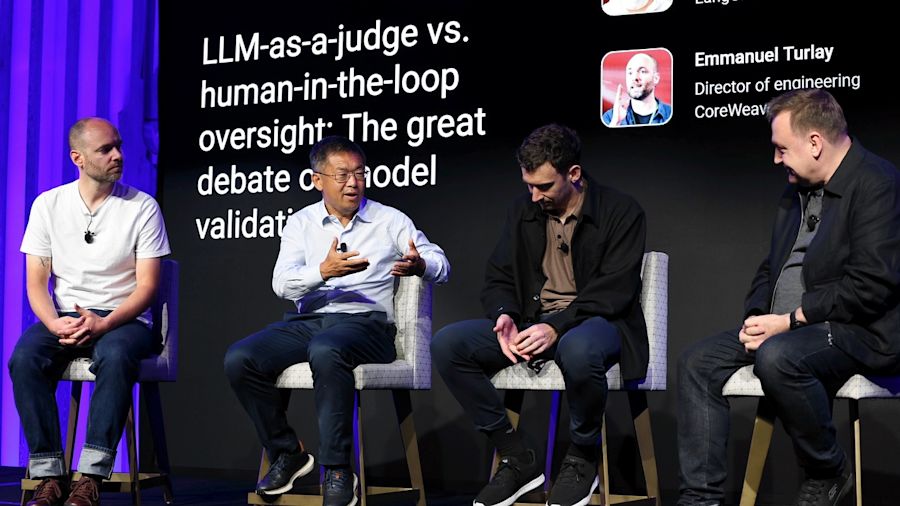
A conversation with a single AI agent can seem flawless in isolation, yet it might still indicate underlying product issues. This discrepancy is pushing enterprises to shift from evaluating individual interactions to analyzing user cohorts against a performance baseline. At the VB Transform 2026 event, leaders from LangChain, Conviva, and CoreWeave discussed this shift, highlighting a move towards using more cost-effective, purpose-specific judge models to evaluate AI agents. Despite advances in automated judging by large language models (LLMs) or agents, human review remains crucial for accuracy and trustworthiness. Harrison Chase of LangChain emphasized that evaluation criteria should act as evolving product specifications rather than fixed tests, fostering continuous improvement. Hui Zhang from Conviva explained that scoring conversations one at a time misses patterns only visible by comparing groups, a method known as contrastive analysis. Emmanuel Turlay from CoreWeave noted that widespread and ongoing monitoring detects real-world failures more effectively than pre-launch testing alone. Furthermore, scalable models tuned to detect errors—such as LangChain’s fine-tuned Qwen model—offer significant efficiency gains. However, human oversight is still essential for accountability, especially in critical sectors like legal, healthcare, and finance. The panel highlighted the importance of human involvement not only for safety but also for building trust and enabling AI systems to learn over time.

The recent surge in AI agents within your revenue operations isn't hampered by poor prompts—it's hindered by subpar data quality. Leaders need to focus on the integrity and value of their data to truly harness AI capabilities.


Jensen Huang concluded his Tokyo visit by securing significant partnerships across Japan's diverse technology landscape, highlighting a comprehensive engagement with the country's tech sector.

Pursuing cost-cutting during rapid expansion might seem wise, but it often exhausts the very team driving growth, risking burnout and stalled progress.


Since 1965, Harvard Business Review has surveyed men and women executives on perceptions of women in leadership. Early results showed strong negative views of women in management by many men. Sixty years later, while attitudes improved, a significant gap remains. In 2006, men and women largely agreed on the critical judgment faced by women leaders. Today, 90% of women see higher scrutiny versus 35% of men. Women are more likely to feel they must outperform men to succeed and view promotion criteria as unequal. Men tend to see senior roles as limited by family demands, while women experience pre-emptive assumptions against them. Despite progress, recent political shifts have rolled back diversity initiatives. Studies show women are sponsored and promoted less often, remain underrepresented in leadership, and face higher burnout rates.

Shortly after a firebombing incident at Sam Altman's residence, Anthropic experienced a security breach when an intruder entered their lobby to deliver a warning about a potential threat. This incident underscores the growing security concerns faced by executives in the AI industry, prompting major technology companies to strengthen their protective measures.

Jamie Dimon, CEO of the largest U.S. bank, downplays fears about AI leading to job losses, highlighting a broader view of AI's role in the workforce.
