Explore the biggest startup funding events in the US for the week of May 18-22, 2026, highlighting over $100 million deals that shape the tech landscape. Leading the pack is MiRus, which secured a $1.5 billion corporate investment led by Boston Scientific for advanced orthopedic and spinal solutions. Hot on their heels, Hark raised $700 million in a Series A to pioneer personalized AI hardware, supported by industry giants like Nvidia and Intel Capital. Other significant funding rounds include Modal Labs' $355 million for AI infrastructure, Decart's and Amca’s $300 million deals in generative AI and aerospace defense, respectively, and Mercury’s $200 million Series D fueling fintech growth. These investments underline a strong trend in physical technology, frontier labs, and AI-driven innovations, reflecting robust investor confidence across sectors such as healthcare, AI, fintech, and aerospace. Stay tuned for the latest developments in startup innovation and funding.


BioOrbit, a British startup, is advancing drug-crystallisation technology by launching a compact unit, Box-E, to the International Space Station aboard a SpaceX flight. This device, roughly the size of a microwave, is designed to grow ultra-pure protein crystals to develop self-injectable cancer drugs. The technology, developed in BioOrbit's London labs, aims to revolutionize cancer treatment by enabling the production of highly effective medications in space.


Neurovalens, a Northern Irish firm, has extended its FDA approvals by gaining clearance for a new device aimed at treating PTSD. The company has previously received FDA authorization for its technologies addressing insomnia, anxiety, and weight management.


Biotech is driving scientific breakthroughs that were once unimaginable. However, Jeremy Levin, a veteran executive in the industry, warns that while the future of biotech looks promising, the institutions supporting these innovations—ranging from regulators and investors to the broader public—face significant challenges that could jeopardize America's leadership in the field.


Implementing straightforward mental health check-ins can help identify when employees are under pressure, allowing intervention before they take unplanned sick days.


HeartFocus, developed by French medtech firm DESKi, has introduced HeartFocus Link—a device that connects a tablet to any cart-based ultrasound system using a straightforward HDMI cable. This setup enables the tablet to run HeartFocus’s AI-guided software alongside live ultrasound images, providing real-time instructions for probe positioning. This innovation aims to assist clinicians and trainees in capturing high-quality cardiac images more effectively during diagnostics.


AI technology is advancing rapidly, but are we truly prioritizing human impact? Rana el Kaliouby, AI scientist and founder of Affectiva, now an investor at Blue Tulip and host of the podcast Pioneers of AI, argues that placing humans at the heart of AI development is crucial not only for safety but for social, economic, and emotional flourishing. After selling Affectiva in 2021, she focuses on supporting founders pioneering human-centered AI, elevating diverse AI voices, and fostering collaboration across disciplines. Kaliouby emphasizes that AI should enhance human capabilities rather than replace them and that ethical considerations such as bias, trust, and responsible deployment must be central. Addressing common myths, she acknowledges a speculative investment bubble in AI but stresses that meaningful innovation and economic opportunity are just beginning, especially in healthcare, the future of work, and sustainability. Her perspective calls for conscientious use and development of AI, ensuring it serves humanity's best interests.

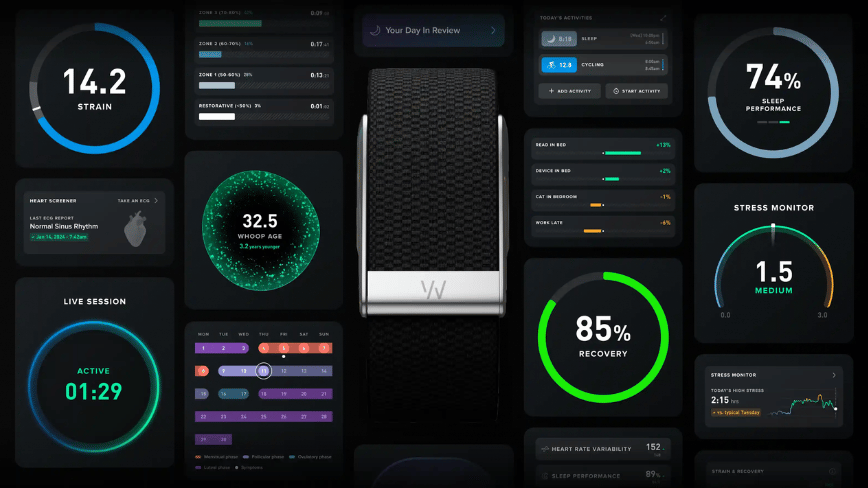
WHOOP has successfully raised $575 million in its Series G funding round, boosting its valuation to $10.1 billion — nearly triple its 2021 value. The Boston-based maker of screenless health wearables attracted investment from sovereign wealth funds, top medical institutions, and well-known athletes. This fresh capital injection positions the company for a potential initial public offering (IPO). Founded and led by its visionary CEO, WHOOP continues to innovate in the health tech space.
Camille Bouget explores the transformative role of artificial intelligence in advancing treatments for immune system-related diseases.

The FDA has given the green light to Eli Lilly's latest obesity medication, positioning it in direct rivalry with Novo Nordisk's recently launched Wegovy pill.