


Sten H. Vermund and Patricia J. Kissinger highlight the growing energy consumption of artificial intelligence technologies as an emerging risk to public health. They emphasize the need to recognize this impact and propose actionable solutions to mitigate AI's strain on vital health resources.


A London startup, founded by a former Palantir healthcare executive with experience in NHS hospitals during the Covid pandemic, has secured £9.7 million in funding. The investment round for Frontier Health was led by At...


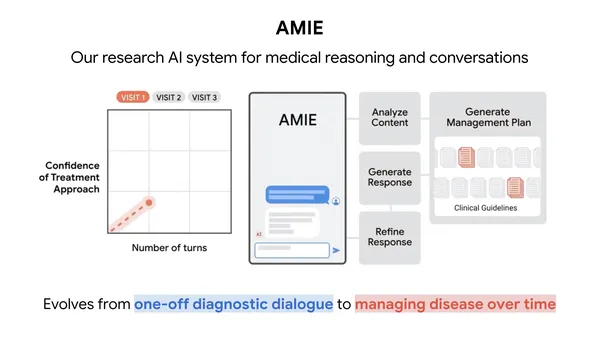
A recent study published in "Nature" reveals that AMIE, our conversational AI system, performs on par with primary care physicians in managing complex health conditions. This advancement underscores AMIE's potential to support healthcare professionals in delivering effective patient care.
In this edition of STAT Health Tech, discover how a biotech startup transformed the disappointment of a failed clinical trial into a breakthrough AI model, alongside other industry insights.

Which of the emerging obesity drugs has the potential to truly lead the market? Which company recently made headlines with a record-breaking IPO? And what decisions might the Food and Drug Administration be making about these treatments?

Although the number of prescription drug shortages in the U.S. decreased by 23% last year, a recent analysis highlights ongoing systemic problems affecting the availability of many medicines.

Wearable devices generate vast amounts of health data, but until now, this information has largely remained outside clinical settings. Recent advancements by companies like Oura and Whoop are starting to bridge this gap, potentially integrating wearable-generated health data into clinical practice for better patient monitoring and outcomes.


Life Biosciences has administered the first dose of its innovative drug designed to restore sight and combat cellular aging to a human patient, marking a significant milestone in medical research.


The Medical Protection Society is urging a legal overhaul to protect healthcare professionals from being held liable for mistakes made by AI diagnostic and treatment tools. Currently, doctors and the NHS can be sued for medical negligence if AI-driven errors lead to patient harm or death. The existing law does not differentiate between human and AI mistakes, raising concerns as AI becomes more integrated into medical decision-making processes.


Controlling devices with the mind has shifted from science fiction to reality in China. The National Medical Products Administration has authorized the commercial use of NEO, a compact brain-computer interface developed by NeuraMatrix and researchers from Tsinghua University. This coin-sized device is designed for patients with spinal cord injuries, marking a significant milestone in medical technology and brain-machine interfacing.
