


Google Maps stands out as a crucial digital marketing asset, especially when leveraging the power of the Google Local Pack. This feature highlights the top businesses in a user's vicinity, providing instant local recommendations such as "best salons near me" or "top Italian restaurants nearby." These highlighted listings hold prime placement on search results, often capturing clicks without users scrolling further.
The Local Pack showcases key business details—contact info, operating hours, website links, photos, customer reviews, and busiest times—offering users a comprehensive snapshot at a glance. Ranking among these elite listings makes discovering your business seamless for potential customers and puts you ahead of local competitors.
To improve your standing in the Local Pack, focus on these four strategic areas:
-
Perfect your Google Business Profile by ensuring complete and accurate details consistent across the web, mimicking a welcoming first impression complete with photos, hours, descriptions, and pricing.
-
Develop a strong review presence. Encourage customers to leave reviews and engage thoughtfully with all feedback; star ratings heavily influence user decisions and SEO rankings.
-
Build a solid local online connection by embedding Google Maps on your site, using localized keywords, and creating unique location pages if applicable.
-
Connect with your local community by contributing content to local media, participating in events, and collaborating with other businesses to earn valuable backlinks.
Implementing these techniques builds trust and visibility, making your business the go-to choice for local searches and enhancing your digital footprint in a competitive market.

In today’s fiercely competitive B2B environment, marketing leaders face a complex paradox: rapid change demands agility, yet clear vision and focused purpose are crucial. Artificial intelligence (AI) is transforming every aspect of business, making it essential for Chief Marketing Officers (CMOs) to lead proactively rather than follow trends. Vision acts as a strategic compass that guides decision-making and aligns marketing efforts with business transformation, while AI enables market anticipation, personalization at scale, and new value creation. For example, Microsoft’s AI-driven repositioning soared its market cap from $300 billion in 2014 to over $3 trillion in 2024. Innovation, powered by AI insights, is vital for differentiation, enabling marketers to create unique customer experiences and iterate quickly in dynamic markets. Apple exemplifies this through its strategic branding and AI-enhanced personalization. The fusion of vision and innovation, illustrated by onsemi’s transformation, highlights how CMOs can implement AI-centered strategies including brand positioning, market intelligence, demand generation, digital experience optimization, and cross-functional collaboration to fuel growth. Ultimately, modern marketing leadership must lead with vision, innovate continuously with AI, and measure impact beyond just traditional metrics, advancing marketing from a function to a powerful driver of business success.

Agentic artificial intelligence is rapidly evolving, with 88% of U.S. companies increasing investments in AI agents as revealed by a PwC survey. Over half of consumers are already using or plan to use AI agents for shopping. However, many are still unfamiliar with how to find, use, or trust these agents. Fetch, a UK-based AI firm, has introduced three new products to address these challenges: ASI:One, a user interface to interact with AI agents for tasks like booking vacations or shopping; Fetch Business, a verification portal for brand agents; and Agentverse, a directory of over 2 million AI agents. ASI:One aims to make AI agents as navigable as the internet once was with Google, providing verified brand agents from companies like Costco, Alaska Airlines, Pepsi, and Adidas. These agents offer direct, personalized assistance, orchestrating purchases and bookings by understanding users' preferences and accessing real-time inventory and pricing. Fetch’s vision is to transform AI agents from a concept into a practical tool that enhances consumer interactions, offering a more trustworthy, personalized, and efficient shopping experience.

Initially struggling after a failed start as a dating site, YouTube faced challenges including costly video streaming and copyright risks similar to Napster. However, after Google's acquisition in 2006 and the introduction of ad revenue sharing with creators in 2007, YouTube transformed the media landscape with viral moments like the "double rainbows" and the "Ice Bucket Challenge." By 2024, YouTube earned $36.3 billion in ad revenue and became the most-watched video platform in the U.S., surpassing not only streaming competitors but also cable and broadcast TV. Insights from CEO Neal Mohan and creators like Rebecca Black and Smosh highlight how YouTube continues to redefine television.

Everyday technologies like Microsoft Excel and GPS trace their origins back to university research rather than corporate boardrooms. While tech icons like Jobs and Gates are well-known, the foundational innovations often stem from academic researchers whose curiosity-driven work has sparked billion-dollar industries. For example, GPS was pioneered by physicists at Johns Hopkins during the Cold War, spreadsheets were developed by Harvard and MIT students Bricklin and Frankston, self-driving cars were advanced through Stanford’s AI Lab, and cancer detection methods owe to discoveries at Johns Hopkins. These breakthroughs highlight a three-part innovation ecosystem involving federal funding, university research, and private sector development, which has powered America’s technological leadership and economy for decades. As funding challenges arise, understanding and supporting this ecosystem remains critical for future progress.

AI technology is increasingly used beyond office environments, reaching frontline sectors such as healthcare, retail, hospitality, and food services. However, many frontline employees remain uninformed or unaware about AI's integration in their workplaces. A Deputy survey of 1,500 frontline workers across the U.S., U.K., and Australia revealed that nearly half of workplaces utilize AI, but only a quarter of workers regularly engage with it, and 10% don't even know if AI is in use. This lack of transparency extends to communication, with only 17% of workers feeling their employers are open about AI use, and just 15% consulted on new AI tools. Workers express a strong desire for communication and involvement regarding AI adoption, as clear information fosters trust and successful implementation. Despite communication issues, 96% of frontline workers report satisfaction with AI's role in making tasks easier. Many even prefer increased AI support over perks like extra vacation or promotions. Yet, only 37% feel optimistic about AI's future at work, possibly due to poor introduction and lack of employee inclusion, leading to resistance rather than acceptance.
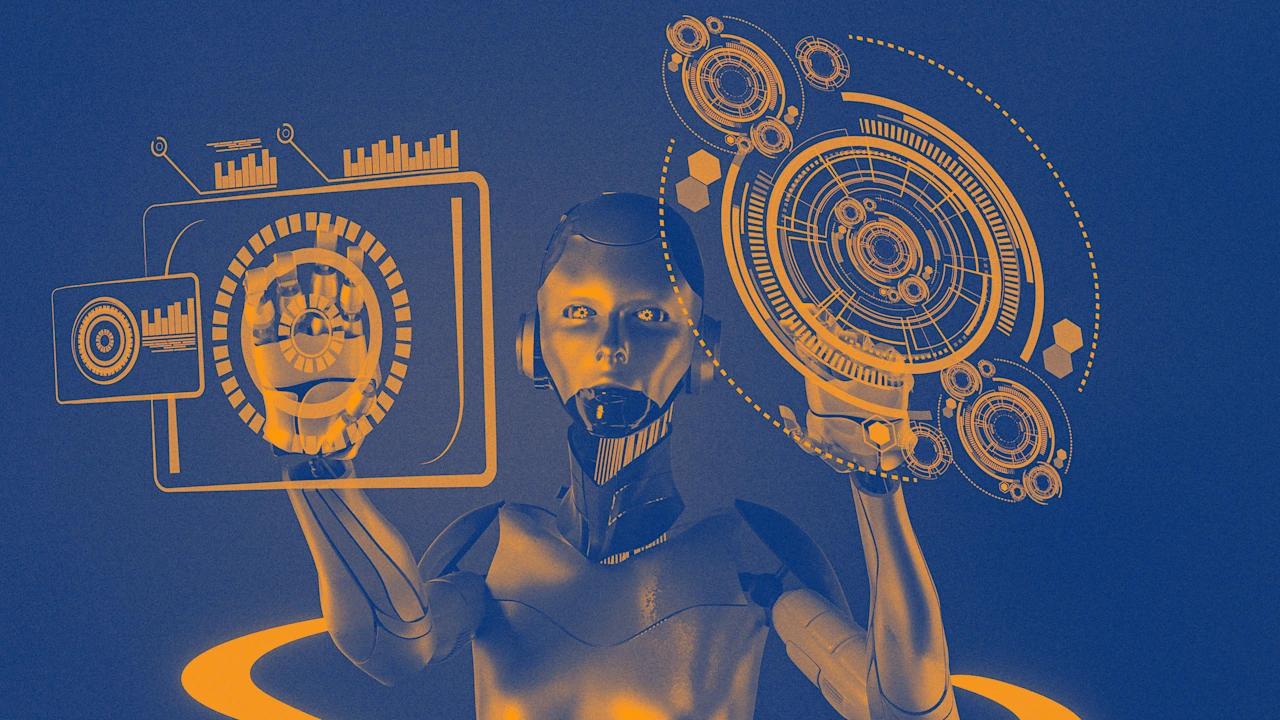
Adobe, a leader in creative software for over four decades, is pioneering new frontiers in design through its AI-driven ecosystem. Tools like Adobe Firefly enable generative image creation, Substance 3D offers photorealistic modeling, and Express accelerates brand-consistent content production. At luxury brands such as Coach and Kate Spade, Adobe's AI custom models help preserve brand identity while enhancing design speed, creating digital twins of products like handbags and shoes for more efficient development. Newell Brands uses Adobe Firefly to revolutionize content production for faster, tailored marketing campaigns, including digital creation methods that replicate traditional handcrafted styles. Despite AI's significant role in boosting creativity and productivity, experts emphasize that true artistry remains rooted in human emotion and experience, as AI lacks the capacity to feel and replicate the soul behind creative work.

Although a partnership is in place to deploy Elon Musk's Grok chatbot across federal agencies, the Trump administration has yet to integrate Grok into its main AI platform due to ongoing safety and bias assessments by the General Services Administration (GSA). Despite Grok being offered at discounted rates to agencies, the GSA repository for the USAi platform currently includes AI models from Google, Meta, OpenAI, and Anthropic, but not Grok. Government workers are guided to engage with AI tools neutrally and factually, avoiding controversial topics. The rollout delay follows earlier concerns about Grok's offensive output and scrutiny over Musk's expanding ties with the U.S. government. Officials emphasize that individual agencies must independently evaluate Grok if they choose to adopt it. The situation underscores the government's cautious approach to integrating new large language models amidst other ongoing AI partnerships with major tech firms.

Anthropic, an artificial intelligence company, announced a $50 billion investment in computing infrastructure including new data centers in Texas and New York. Concurrently, Microsoft revealed the construction of a new data center in Atlanta, Georgia, designed to connect with another in Wisconsin to form a massive supercomputer powered by hundreds of thousands of Nvidia chips for AI technology. These projects highlight the tech sector's significant spending on energy-intensive AI infrastructure despite concerns about financial risks, environmental impact, and political issues related to rising electricity costs in host communities. Anthropic is partnering with Fluidstack to build new AI systems, with projects set to create approximately 800 permanent jobs and 2,400 construction jobs. Microsoft’s Atlanta site, named Fairwater 2, will support Microsoft’s and OpenAI’s AI workloads. The surge in data center capacity leasing reflects the rapid demand growth for AI capabilities. Industry players continue pursuing cost-effective expansion strategies amid fears of an AI investment bubble.

Japanese technology giant SoftBank Group Corp. announced it sold its stake in Nvidia for $5.8 billion in October, reflecting a strategic shift toward investing in artificial intelligence, particularly OpenAI. The company’s profit nearly tripled in the first half of the fiscal year, reaching about $13 billion (2.5 trillion yen), with sales increasing 7.7% year-on-year to $24 billion (3.7 trillion yen). SoftBank’s chairman Masayoshi Son is pivoting the company’s focus toward AI projects, including a major $500 billion initiative called Stargate alongside OpenAI, Oracle, and other partners. Nvidia, valued recently at $5 trillion, plans significant investments in AI infrastructure with OpenAI, strengthening its computing capabilities. Despite selling its Nvidia stake, SoftBank maintains strong ties through its investments in AI-related companies like Arm Holdings and Taiwan Semiconductor Manufacturing Co. SoftBank's stock has nearly doubled in the past year, while Nvidia’s shares experienced recent volatility. Overall, the move underlines SoftBank’s commitment to AI-driven growth strategies.
